Published on 6/29/2026
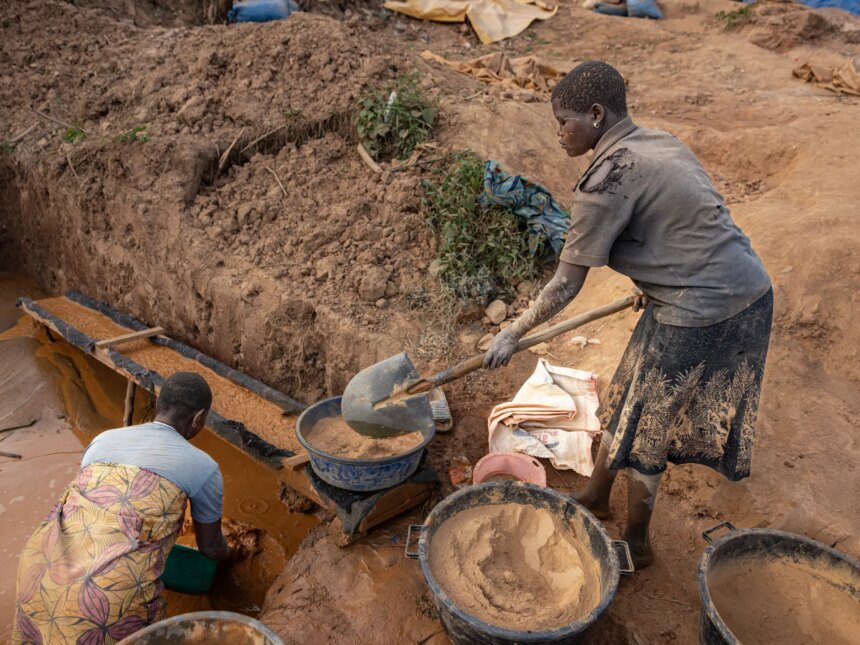
Although Africa has vast wealth in gold, as it possesses about 40% of global reserves according to estimates by the United Nations Environment Programme, it achieves only limited gains from its huge reserves of the precious metal.
Most of the gold extracted in Africa is exported abroad, especially to the United Kingdom, where it is refined, priced and sold, which deprives Africans of the great added value that could be achieved in their country if these operations were carried out there instead of simply exporting raw gold.
Read also
list of 4 itemsend of list
In this context, Kate Collett, an analyst at Africa Practice, told Al Jazeera English that the gold industry in Africa suffers from structural problems, including limited gold refining capabilities, a lack of available capital, and a historical trade pattern that favors the export of unrefined gold.
As a result of this situation, according to Colette, foreign markets achieve the greatest gains from the process of refining and trading in gold, away from the African countries that produce it.

Support financial reserves
African governments seek to gain more control over gold, and view it as a strategic financial asset that can contribute to supporting cash reserves, reducing dependence on foreign markets, and supporting the economic sovereignty of their countries.
The matter is not limited to African countries, but extends to large economies such as China, India, Russia, and Turkey, as these countries seek to increase the weight of gold in the cash reserves of their central banks, in exchange for reducing the weight of the dollar and American assets such as treasury bonds, according to data from the World Gold Council.
The increased weight of gold in monetary reserves contributes to reducing the impact of changes in financial markets on African economies that have suffered for long periods of economic pressure from external powers, especially with the rise in gold prices.
Experiences of Ghana, Nigeria and Tanzania
On the African continent, Ghana – one of the leading countries in gold production – has increased its share of the locally produced precious metal, which the central bank purchases as part of a local gold collection programme, according to reports issued by the Bank of Ghana.
For its part, Nigeria – one of the gold and oil producing countries – is working on a strategy to diversify its cash reserves to increase the weight of gold, according to data from the Central Bank of Nigeria.

In Tanzania, the government requires mining companies to sell about 20% of gold production to the central bank, as part of its efforts to benefit more from the gold that the country produces.
Guinea bans the export of gold
In the same context, Guinean President Mamadi Doumbouya recently announced a halt to the export of raw gold, in a move he said aims to oblige companies to refine and process the metal within the country before selling it on international markets.
The announcement came during a meeting that brought together industrial gold producers, artisans, and officials of gold purchasing offices last week. Under the procedure, Guinean gold will only be exported after it has been melted, certified and processed within Guinea.
“Guinean gold will be melted, certified and processed in Guinea before being exported to international markets, and any operator who continues to export raw gold will have its license suspended and its mining agreement terminated,” Doumbouya said.
The authorities explained that the industrial and artisanal gold will be directed to the Nimba gold refinery being installed in the Gbesia neighborhood of the capital, Conakry.
Politics in the Sahel region
In the Sahel region, the governments of Mali and Burkina Faso moved towards extending state control over the assets of the mining sector, as part of broader efforts to reduce economic dependence on France, which colonized West Africa for long periods.
Malian President Assimi Goeta is seeking to restructure the mining sector to enhance the state’s role, relying on Russia in light of the dispute with France. He is also working to establish a state-owned gold refining plant in the capital, Bamako.
In turn, Burkina Faso strengthened the state’s participation in the mining sector and sought to increase its gold reserves. It also worked alongside Mali and Niger, within the framework of the “Coalition of Sahel Countries”, to deepen economic coordination.
The Al Jazeera.com report indicates that, despite these efforts, large gold mines in this region are still managed by foreign companies due to the lack of available capital and weak local technical capabilities.

Production in Sudan
The picture appears different in Sudan compared to other African countries that produce gold as a result of the war, as Business Insider Africa magazine indicated that the Sudanese army controls most of the gold mines in eastern Sudan, while the Rapid Support Forces controls most of the mines in the center and southwest of the country.
In its report last April, Business Insider Africa magazine quoted Sudanese Finance Minister Jibril Ibrahim that Sudan produced 70 tons of gold in 2025, an increase of 13% above the national target, but official exports did not exceed 20 tons, which reflects the large scale of smuggling and informal trade in Sudanese gold.
According to data from the Central Bank of Sudan, reported by Business Insider Africa, revenues from official gold exports in 2025, which are 14.7 tons, amounted to $1.5 billion.
At the same time, Chinese companies continue to maintain their presence in the organized mining sector in Sudan, despite the instability in the country.
Gold smuggling represents a problem for a number of African countries, including Sudan, and a study conducted by the Swiss Aid organization in 2024 indicated that between 321 and 474 tons of African gold are smuggled annually, with a value ranging between 24 billion and 35 billion dollars.
List of the largest productive African countries
Africa contributes about half of its production from the west of the continent, and the list of the top 10 gold producing countries in 2024 is as follows:
- Ghana: 140.6 tons
- Mali: 100 tons
- South Africa: 98.9 tons
- Burkina Faso: 94.4 tons
- Sudan: 73.8 tons
- Guinea: 68 tons
- Ivory Coast: 58 tons
- Tanzania: 51.8 tons
- Zimbabwe: 50.9 tons
- Democratic Republic of the Congo: 42.3 tons