Published on 6/29/2026
The Israeli war on the Gaza Strip did not leave a natural matter in the lives of Gazans without destroying it. Homes, mosques, and schools remained as they were, and even tens of thousands of lives were claimed. As for childhood, it became almost non-existent, among worn-out tents, and small bodies that were pushed into the labor market instead of sitting on school desks or having fun in the designated squares.
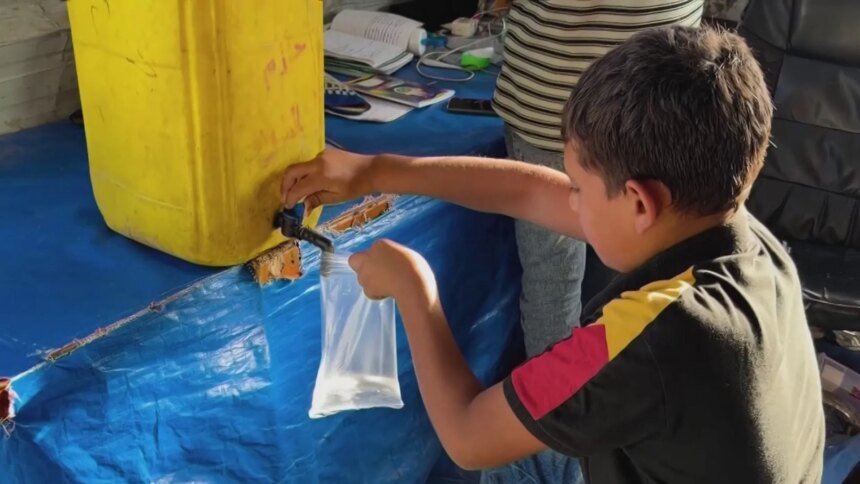
Among these children is Yazan, who no longer wakes up to the sound of the alarm clock in preparation for going to school, but rather wakes up to a greater concern, which is going to work, after he suddenly found himself in the position of breadwinner for his family after losing his father in the ongoing war.
Yazan’s mother says: “After I lost my husband, poverty took hold of us. My son started going out alone to look for work in order to support his brothers. I was hoping that he would complete his studies and become a doctor, not have to work at this age. I want him to live his childhood like the rest of the children in the world.”
Yazan’s story is no exception. In the Gaza Strip, the war has pushed hundreds of children into the labor market after losing their parents or breadwinners. Yazan says: “I no longer go to school in order to bear responsibility at home. I am looking for work, and I found work in a small stall where I sell water and soft drinks to support my family.”
According to recent UN estimates, thousands of children lost one or both of their parents during the war, and the war left at least 2,700 orphans.
In turn, United Nations Children’s Spokesperson Louise Witterdog refuses to separate the issue of child labor in Gaza from the comprehensive collapse that befell childhood itself. She told Al Jazeera: “What we are witnessing today are children who should have been in their schools, but they spend their days searching for food and medicine just in order to survive.”
In a displacement camp in the city of Khan Yunis, the child “Aanaam” learns to make bread and baked goods with her mother to support her family after the loss of the breadwinner. Her mother says: “I taught my daughter to bake and knead to help me secure a living. We sell bread to people to provide our basic needs.”
Through the video clips, these children are shown suffering the pain of loss and the pain of displacement, and facing responsibilities and burdens far beyond their ages, which makes minds wonder whether these fragile arms are capable of carrying burdens that exceed the weight of their bodies?
According to a statement by the government media office in the Gaza Strip, the Israeli occupation is still imposing restrictions on the entry of humanitarian aid, as only 55,000 humanitarian aid trucks have been allowed to enter since the ceasefire was announced, while the agreement stipulates the entry of 156,000 trucks daily.