Published on 6/26/2026
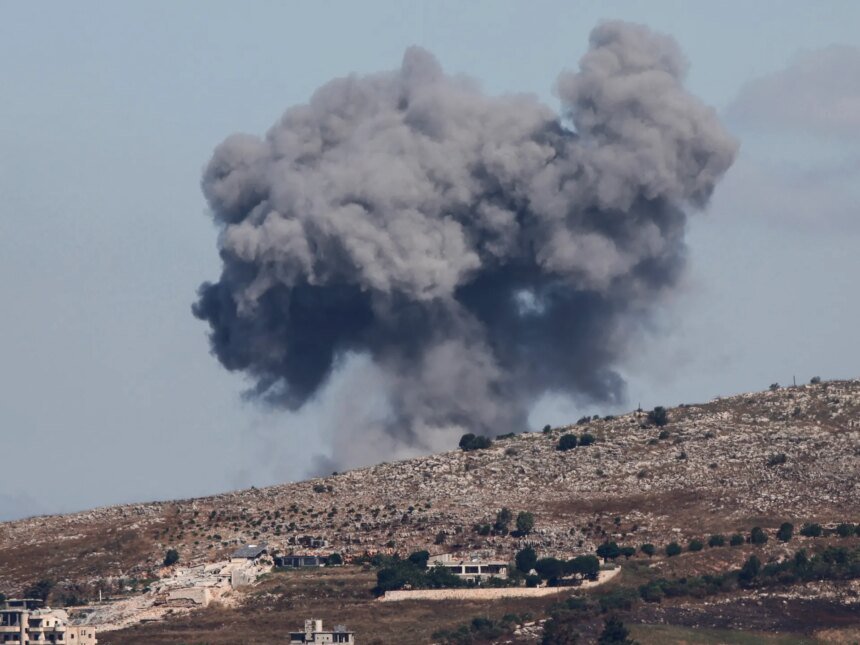
Ali Al-Taher Heights, located on the eastern outskirts of Nabatieh District in southern Lebanon, represents a pivotal turning point in the course of the ongoing battles between the Israeli occupation army and Hezbollah, due to its strategic location that grants fire control over wide areas extending from Nabatieh in the west to the Iqlim al-Tuffah Heights in the east.
The Israeli army claimed, in a statement on Friday evening, that the Ali al-Tahir Heights are completely under the control of its forces, and said that these heights “will not constitute a starting point to threaten Israel’s security, and that the structures that Hezbollah has built over the years are collapsing one by one.”
However, Hezbollah denied, in a statement, the Israeli army’s claim of control over Ali Al-Taher Hill, and the party confirmed that it is still under its control and free of any occupation presence.
Hezbollah said that its fighters are fully prepared to confront any attempted advance or incursion carried out by the occupation forces.
A Lebanese military source also told Al Jazeera that the field reality in the Ali Al-Taher Heights has not changed for a week, explaining that the Lebanese army did not monitor the progress of the occupation forces to this hill.
To clarify the strategic importance of the heights, journalist Suhaib Al-Assa said on the interactive map that these heights overlook westward on the city of Nabatiyeh, southward on Kafr Tibnit, and toward the east on the slopes and forests that the Israelis believe Hezbollah fighters are using to launch operations, which makes controlling them a primary goal for securing the area between the border and the Litani River.
Ali Al-Tahir is located at an altitude of 600 meters above sea level, and about 5 kilometers from Beaufort Castle, which the occupation took control of late last month.
Beginning of movements
The Israeli movements towards Ali Al-Taher began after the occupation forces arrived at Beaufort Castle, where they moved in two main directions: the first north towards Ali Al-Taher, and the second west towards Yahmar, Deir Siryan, Al-Qusayra and Zawtar Al-Sharqiya, on both banks of the Litani River.
The interactive map showed an expansion of the yellow line, or the so-called Israeli “front defense line,” to include Ali Al-Taher Hill, Kafr Benit, Al-Bayyada, Zibqin, and Al-Ghandouriyah, in a bend that controls the corner where the Litani River bends.
Al Jazeera’s Beirut bureau director, Mazen Ibrahim, pointed out a sharp discrepancy between the Israeli narrative and field reality, noting that Lebanese military and field sources confirm that the situation in Ali al-Tahir Heights has not changed for more than a week.
Ibrahim explained that what is happening in that area is limited to Israeli fire control through artillery shelling, marches and fighters, without recording any ground progress or clashes towards the heights.
The director of Al Jazeera’s bureau linked this Israeli announcement to the ongoing negotiating process in Washington, noting that the Israeli delegation had proposed 3 days ago the idea of making the Ali al-Taher Heights an “experimental area” for the entry of the Lebanese army, which was met with categorical rejection by the Lebanese side, which considered that the area was not occupied and there was no room to install any experimental areas in it.
Ali Al-Taher Heights gains its historical importance from the fact that it was under Israeli occupation between 1982 and 2000, which makes its return to the forefront now a milestone in the course of the current war.
Reality has not changed
While the Israeli army claims that it is imposing a new security reality that will “put an end to Hezbollah’s presence” in the region, the party and the Lebanese military source who spoke to Al Jazeera stress that the reality on the ground has not changed, which creates a state of ambiguity about the fate of this strategic region that may decide the course of negotiations or expand the scope of confrontations.
On Friday evening, Lebanon and Israel signed, with American mediation, a framework agreement regarding a ceasefire during the direct negotiations ongoing in Washington.
Al Jazeera bureau chief Mazen Ibrahim in Beirut said that two model occupied areas had been agreed upon from which Israeli forces would withdraw according to a sequential timetable.
Israeli Prime Minister Benjamin Netanyahu described the agreement as a “major achievement for Israel” and said that his forces would remain in the security belt in southern Lebanon until Hezbollah was disarmed.
On the other hand, the Lebanese ambassador to Washington considered the agreement to be a first step on the path to restoring sovereignty, while a Lebanese official source told Al Jazeera that the timetable for withdrawal from the two areas is a prelude to a complete Israeli withdrawal later.