


Published On 7/8/2026
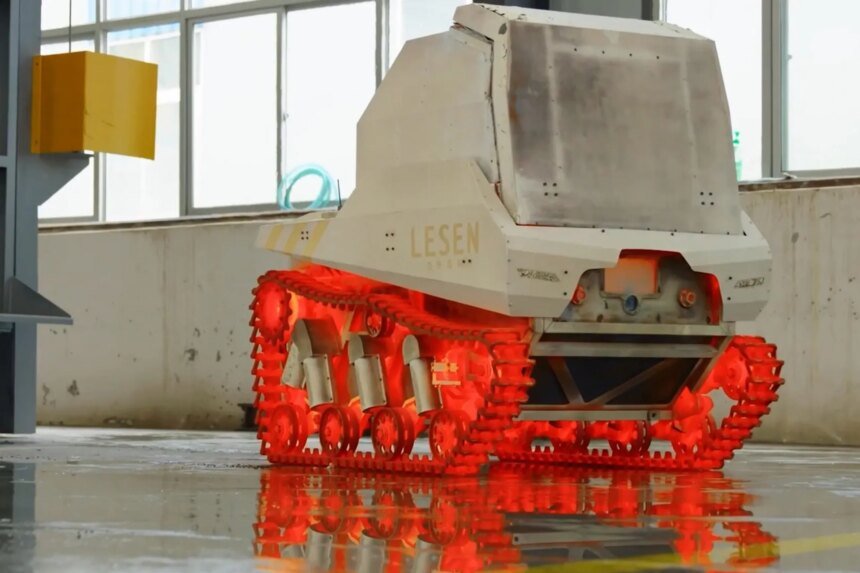
A Chinese robot dedicated to fighting fires succeeded in passing an extremely harsh thermal experiment, after it was placed in an industrial oven whose temperature exceeded one thousand degrees Celsius and remained inside it for half an hour before being taken out. It was found that it maintained its efficiency and operational systems and continued working as if nothing had happened.
This test was carried out by the Chinese technology company Lesen Technology with the aim of evaluating the ability of the firefighting robot to confront dangerous environments that are difficult for humans to work in, especially sites of major industrial fires that witness high temperatures and conditions that threaten the safety of fire brigades.
The robot continues to work after being exposed to intense heat
During the experiment, the robot was exposed to a harsh thermal environment inside the oven that reached 1,000 degrees Celsius, in an attempt to simulate the conditions that emergency teams may face when entering burning buildings or facilities.
According to the test results, the robot was able to survive inside the oven for a full half hour, and after it was taken out, its basic systems continued to work without recording malfunctions affecting its operational ability. Its internal components, including electronic circuits, wiring and control systems, maintained their performance despite exposure to extremely high temperatures.
The robot’s design relies on a set of engineering solutions aimed at protecting it from harsh thermal conditions, including the use of heat-resistant materials and thermal insulation layers that reduce heat transfer to sensitive components.
These robots also include internal cooling systems and electronic protection technologies that help control, communication and sensing devices continue to function even in environments that exceed the endurance of traditional equipment.
The role of robots in the future of firefighting
This experience comes at a time when global investments are increasing in developing robots capable of carrying out rescue and emergency tasks, with the aim of reducing the risks to which firefighters are exposed while dealing with disasters.
These systems can be used in many hazardous scenarios, such as factory fires, power plants, chemical facilities, and sites containing toxic or explosive materials, where robots can enter dangerous areas and collect data before sending human teams.

Artificial intelligence enhances the capabilities of rescue robots
The capabilities of modern firefighting robots are not limited to movement and heat tolerance, but also rely on advanced technologies that include thermal cameras, environmental sensors, and remote communication systems, in addition to artificial intelligence algorithms that help them analyze the surrounding environment and make faster decisions.
These technologies allow rescue teams to obtain accurate information about the location of the fire, heat levels, and potential risks, which helps improve response plans and reduce losses.
Technology experts believe that the success of such tests represents an important stage in the development of emergency robots, but it does not mean replacing the human element, but rather providing smart tools that help firefighters carry out their tasks more safely.

As robots and artificial intelligence continue to develop, these systems are expected to play a greater role in dealing with disasters and fires in the coming years, through their ability to work in environments that humans cannot withstand for long periods.
The Chinese robot test confirms that the future of firefighting is moving towards greater reliance on smart machines capable of facing harsh conditions, becoming an essential partner in protecting lives and facilities.