

The International Crisis Group issued a study entitled “Reasons for Peace in the Age of Hard Power: Crisis Management in the Age of Military Power,” about the profound transformations that the international system is witnessing with the decline in the effectiveness of multilateral institutions, the return of military power to the forefront of international relations, and the search for new tools to prevent wars and manage crises in a world heading toward more conflicts.
The study believes that the international system that was established after World War II, and was based on the United Nations Charter and the rules of international law, is going through an unprecedented stage of decline, until it is close to collapse.
Trust in international institutions has eroded, and countries have become increasingly dependent on strengthening their military capabilities to ensure their security, while restrictions that curbed the use of force have declined, and the number of armed conflicts has increased in various parts of the world.
The study confirms that this reality does not mean it is impossible to prevent wars, but it requires abandoning the assumptions that governed the post-Cold War era, and searching for more realistic tools for crisis management. What is required, according to the study, is not to defend the old regime as it is, nor to accept its complete collapse, but rather to build a new approach based on a careful reading of the current balance of power, identifying the parties capable of mediation and peacemaking, and the means that still have influence in a world governed by military force more than ever before.
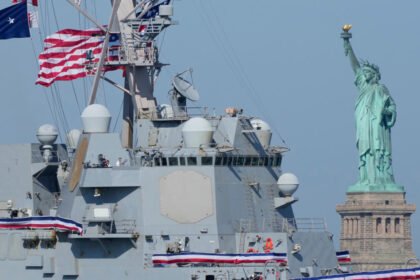
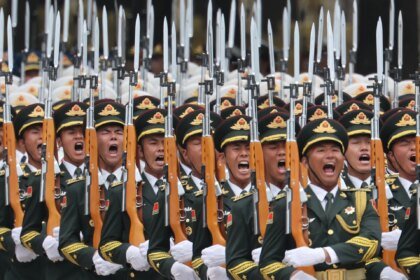
The study believes that one of the most dangerous transformations is that the major powers themselves, which were responsible for protecting the rules of the international system, have become among the countries that most violate them. It cites the Russian war on Ukraine, the American interventions in Venezuela and Iran, and Chinese policies in the surrounding seas, in addition to the extended civil wars in Sudan, Myanmar and others, as indicators of a decline in respect for the rules of the use of force, and an increasing reliance on military deterrence as the basic language of international relations.
However, the study rejects the absolute pessimistic view, stressing that history proves that wars may occur automatically, while peace is only achieved if there are reasons to create and maintain it. From this standpoint, the study seeks to search for “reasons for peace” in the new international environment, whether through strengthening diplomacy between opponents, expanding the role of middle powers in mediation, reforming international institutions, or developing legal and political mechanisms that limit the possibility of sliding into wars.
First: The decline of the old international order and the return of the logic of power
The study reviews the emergence of the international system that was established after World War II, explaining that it was based on two main principles: restricting the use of military force in international relations, and expanding legal protection for civilians during conflicts. The end of the Cold War strengthened this order, with the rising role of the United Nations, the proliferation of peacekeeping operations, the flourishing of international justice institutions, and the belief in the possibility of building a more cooperative and stable world order.
However, the study believes that this system has had structural weaknesses from the beginning, most notably its submission to major power balances, double standards in applying international law, and the inability of international institutions to impose their decisions on the most influential countries. Over time, these imbalances began to expand, especially with the escalation of geopolitical competition between the United States, Russia, and China, and the return of the logic of conflict between the major powers.
The study indicates that Western military interventions in Kosovo and Iraq, then the Russian war on Ukraine, and finally the American-Israeli war on Iran, all revealed a decline in practical commitment to the rules on which the international system was based.
The Security Council has also become unable to deal with most major crises due to the conflicting interests of permanent member states, while many regional and international organizations have lost their ability to manage conflicts as they did during previous decades.
The study confirms that the most dangerous thing at this stage is not only the abundance of wars, but rather the use of force has become a natural means to achieve political goals, which is gradually returning the world to an international environment governed by the balance of power more than the rules of law, and makes peace more difficult, but does not make it impossible.

Second: The arms race… when security becomes a reason for increasing wars
The study believes that the world today is witnessing a clear return to the logic of military competition as the primary means of achieving security. After decades of believing that globalization and economic integration would reduce the potential for conflict, countries have returned to increasing defense spending, developing their military arsenals, and expanding their security alliances, based on the conviction that possession of power has become the first guarantee of survival in an increasingly turbulent international environment.
The study indicates that this phenomenon reflects what is known in strategic studies as the “security dilemma,” whereby a state’s attempt to enhance its security leads to other states feeling threatened, which in turn responds by strengthening their military capabilities. Thus, all parties enter into a continuous cycle of an arms race, even though none of them necessarily desires the outbreak of war. The study confirms that this pattern has become clear in Europe, East Asia, and the Middle East, where military expenditures are increasing at an unprecedented pace since the end of the Cold War.
The study believes that the problem does not lie in the possession of military power per se, but rather in the absence of effective political and diplomatic channels to manage the competition between major powers, which makes any error in calculations or any limited incident capable of turning into a wide confrontation, especially with the tremendous development in precision weapons, cyber capabilities, and military artificial intelligence. Therefore, the study calls for not being limited to deterrence policies, but rather working in parallel to establish permanent communication mechanisms that prevent misunderstanding and limit the risks of unintended escalation.
Third: How can diplomacy work in a divided world?
The study discusses the future of diplomacy in light of the current transformations, stressing that the decline in confidence between the major powers does not mean the end of diplomatic work, but rather increases the need for it. It believes that mediation is no longer limited to the United Nations or Western powers, but rather that growing roles have emerged for middle powers and regional countries that have been able, in a number of crises, to open channels of dialogue between parties that are difficult to communicate directly.
The study confirms that the success of mediation does not necessarily require complete political agreement between the opponents, but rather depends on finding common interests that prevent the continuation of the war, reduce its cost, or provide a way out that saves the face of all parties. This is why it stresses the importance of maintaining communication channels even at the height of conflicts, because the interruption of dialogue makes the possibilities of escalation more dangerous, and reduces the chances of reaching later settlements.
The study also points out that regional organizations, despite their weakness, can play important roles in containing crises if they possess political will and international support, while the United Nations, despite its crises, remains the most legitimate framework for managing conflicts, even if it needs reforms that enhance its ability to keep pace with the transformations taking place in the international system.
Fourth: Middle powers…the new actor in crisis management
The study believes that the transformations taking place in the international system have opened the way for the rise of the role of middle powers, after the competition between the United States, China, and Russia began to hinder the ability of the major powers to lead settlement efforts.
It indicates that countries that do not have a military weight equivalent to the great powers, but enjoy balanced relations with opposing parties, have become more capable of playing mediation roles and opening channels of dialogue, benefiting from their political position and their network of regional and international relations.
The study confirms that the success of these forces is not related to their size, but rather to their ability to gain the trust of the conflicting parties, maintain a degree of neutrality, and provide acceptable guarantees for the implementation of agreements. She cites a number of mediations led by average countries in recent years, explaining that some of them succeeded in stopping escalation or launching negotiating paths, even in conflicts that initially seemed difficult to resolve.
The study believes that the importance of these powers will increase in the coming years, because the international environment has become more pluralistic and no longer allows one power to impose its solutions on everyone, which makes collective mediation and regional understandings more realistic tools for managing crises than relying on the interventions of major powers alone.

Fifth: What does the world need to avoid wars?
The study presents a set of principles that it deems necessary to maintain international peace in the next stage, stressing that a return to the previous international order is no longer possible, but that does not mean abandoning the idea of the international order itself, but rather requires rebuilding it in a way that is compatible with the new balance of power.
The study stresses the necessity of maintaining channels of communication between opponents, and not turning political differences into a complete rupture, because dialogue remains the only means capable of containing crises before they turn into widespread military clashes. It also calls for strengthening early warning mechanisms, developing mediation tools, and reducing escalatory rhetoric that pushes public opinion toward supporting military confrontations.
The study believes that international law, despite the challenges it faces, still represents an indispensable reference, but its effectiveness depends on the willingness of major countries to respect its rules and not employ it selectively. It also stresses that reform of the United Nations, especially the Security Council, will remain an urgent necessity if the international community wants to maintain a minimum capacity to manage future conflicts.
Conclusion
The study concludes that the world has already entered a new phase in which the absolute dominance of the rules that ruled the post-Cold War era is declining, while military power returns to play a pivotal role in international relations. However, this transformation does not mean that wars have become an inevitable fate. Rather, it confirms that peace today needs more realistic tools that combine deterrence and diplomacy, and rely on building balances, maintaining channels of dialogue, engaging middle powers, and reforming international institutions, instead of being satisfied with slogans or waiting for the return of an international order that no longer exists.
The study confirms that preventing wars in the twenty-first century will not be achieved through force alone or law alone, but rather through intelligent management of international competition, based on awareness of mutual interests, reducing the risks of miscalculation, and promoting a culture of compromises, even in a world that has become more divided and more dependent on the balance of power.