


At least five ships have been targeted near the Strait of Hormuz since the signing of the memorandum of understanding between the United States and Iran on June 17, an indication that the military truce has not translated into complete navigational stability in one of the most important energy corridors in the world.
An analysis of navigational data conducted by the Al Jazeera Network’s Open Source Unit, supported by satellite images of incidents related to the Gulf of Oman, showed that the targeted ships included 4 energy tankers and a cargo ship, while the attacks prompted other ships to retreat from crossing or close their automatic tracking devices while passing through the Omani route south of the strait.
Read also
list of 3 itemsend of list
These attacks came in the context of a gradual maritime escalation that the region has witnessed since late June, after a series of incidents targeting commercial ships near the strait.
3 carriers in one day
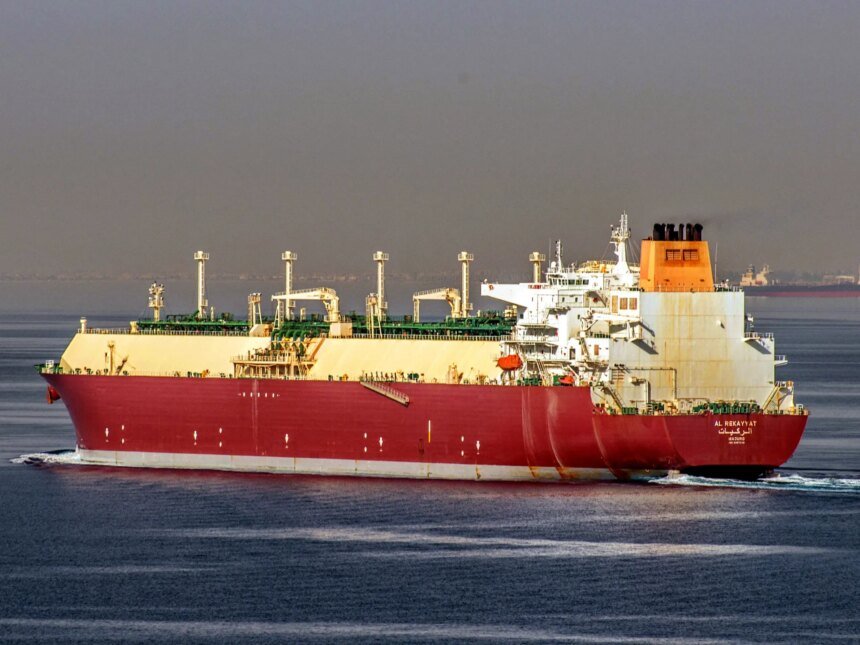
The maritime escalation reached its peak yesterday, Tuesday, with the targeting of 3 tankers in one day: the Qatari gas tanker “Al Rekayyat,” the Saudi tanker “Wedyan,” and the Liberian tanker “Cyprus Prosperity,” according to a statement by the US Central Command.
Qatari condemnation
Qatar condemned the targeting of the “Rakyat” and described the attack as an attack on the security and safety of international maritime navigation and the security of global energy supplies, and a violation of the rules of freedom of navigation and safe transit in international lanes.
Marine Traffic and Kepler data indicate that the “Al-Rakyat”, which bears marine registration number 9397339, is a liquefied gas tanker flying the flag of the Marshall Islands. Its ownership and commercial management are linked to Qatari entities, and its capacity is about 216 thousand cubic meters of liquefied natural gas.

A review of Marine Traffic data shows that the last announced signal for the tanker was about 18 days ago, on June 18, near the western coast of India, and its data showed a speed of 15 knots and an announced destination to the Indian port of Dahej, which left a gap in tracking its path between the last announced appearance and the targeting incident near the entrance to Hormuz.
In one of the British Maritime Trade Operations Authority’s reports about Tuesday’s attacks, the authority said that a tanker that was moving south was hit in the left side by an unknown projectile, causing a fire to break out on board, without recording injuries or environmental effects, while the authority did not name the ship or the party responsible for the attack.
Saudi condemnation
In the same context, the Saudi Ministry of Foreign Affairs condemned in the strongest terms Iran’s targeting of the Saudi tankers “Wadyan” and the Qatari tanker “Al-Rakyat” as they were crossing the Strait of Hormuz, according to a statement published by the Saudi Press Agency, “SPA.”
The ministry said, “Iran’s continued launching of these attacks constitutes a grave violation of international law and norms,” calling on Tehran to “immediately stop everything that might threaten the security of the region and the safety of international navigation and energy supplies.”

Cypress Prosperity…the third name
In addition to the “Rakyat” and “Wadyan”, the US Central Command said that Iran also targeted the tanker “Cyprus Prosperity”, which flies the flag of Liberia, as it was crossing the Strait of Hormuz.

Retreat instead of crossing
After Tuesday’s attacks, the impact of the escalation was evident not only in the targeted ships, but also in the movement of ships near the strait. Analysis of navigation data showed that the two oil tankers, “Lila Vadinar” and “Prestige Pride,” retreated from crossing the Strait of Hormuz, today, Wednesday, after they took the Omani route, before turning back.
By examining the ownership and management record of the two tankers, it was found that they were operated by two companies in Japan and the Emirates, while the destination data showed that they were heading to Oman and the Emirates.
The decline of 3 liquefied gas tankers in the Indian Ocean was also monitored: Al Ghariya, Duhail, and Al Ruwais.
Analysis of the path of the three tankers showed that they were sailing towards the Gulf of Oman, but they changed their course and retreated after Tuesday’s attacks.
According to Kpler data, the three tankers operated by Qatar Energy Company were empty and heading towards the Qatari port of Ras Laffan for loading.

These movements indicate that the targeting did not affect the affected ships alone, but rather changed the decisions of other ships that were about to cross or load, which makes the impact of the attacks broader than the direct damage to the tankers.
Hidden transit
Following Tuesday’s attacks, the Open Source Unit monitored a collective shutdown of the tracking devices of 8 ships that crossed the Strait of Hormuz from the Omani route, and then their signals appeared again in the Gulf of Oman after they turned off the Automatic Identification System (AIS) during the crossing.

The ships that crossed incognito included 4 oil tankers, a liquefied gas tanker, and 3 bulk cargo and cargo ships.
Tracking the records of the ships in transit showed that they were operated by companies based in Indonesia, India, Singapore and the UAE.
According to the same monitoring, no ship crossed the Omani route in an announced manner except the cargo ship “MSV NAFEA” since Wednesday morning until 12 noon Mecca time, while 9 ships crossed the Iranian route, in one of the lowest transit rates since the signing of the US-Iranian memorandum of understanding.
This behavior reflects an important shift in the nature of risks, as the danger is no longer limited to direct targeting, but rather extends to the pattern of crossing itself, between ships that retreat before reaching the strait, and others that cross without broadcasting their location.
Indicators that preceded the July escalation
On June 27, the KIKU oil tanker, flying the Panama flag and operated by a Japan-based company, was targeted near the Strait of Hormuz, after leaving the Qatari Al Shaheen oil port.
Kepler data showed that “Kiko” was carrying about two million and 11 thousand barrels of Qatari oil, and was scheduled to unload its cargo at the Emirati port of Fujairah.

The targeting of “Kiko” is of particular importance because it did not target a ship directly linked to a military party in the escalation, but rather an Asian commercial tanker carrying a Gulf oil shipment, which expanded the scope of risks from a US-Iranian confrontation to a direct threat to the energy, shipping and insurance chains.
After targeting “Kiko” on June 27, the unit observed a clear shift in the ships’ behavior during the hours following the attack, as the Omani route was devoid of ship traffic from noon that day until the morning of June 28, while the ships headed to cross the Iranian route south of Qeshm Island.
Two days earlier, the first prominent security test of the Omani route came with the targeting of the cargo ship “Ever Lovely,” as US Central Command said that Iran had struck the ship on June 25 with a unidirectional drone as it was exiting the Strait of Hormuz along the Omani coast.
Navigational data showed that the ship continued its movement towards the Indian Ocean after the accident, according to its last signal captured by Marine Traffic, while Iran did not claim responsibility for the attack.

This incident represented the beginning of the dispute over the Omani route moving from the level of warnings and political messages to the level of actual targeting, especially since it came after Iranian warnings to ships against using routes not determined by Tehran within the strait.
Vector war without complete closure
Successive facts since the signing of the memorandum of understanding between Tehran and Washington reveal that the Strait of Hormuz has not left the circle of escalation, but rather has turned into an area of pressure and testing between Washington and Tehran. Within less than two weeks, a cargo ship and at least four tankers were targeted, including Al-Rakyat, Widyan, and Cypress Prosperity. Other tankers retreated from crossing, and ships turned off their tracking devices while passing through the Omani route.
These indicators indicate that the military truce has not yet produced stable navigation rules. The Omani route, which was used by dozens of ships, has become the subject of targeting and warnings, and the Iranian route has returned to attract part of the traffic under the pressure of danger, while shipping companies face a difficult equation, which is to show the route and risk being targeted, or hide the signal and risk losing transparency and insurance.
Thus, the recent ship accidents do not appear to be merely isolated maritime incidents, but rather an indication of the return of the “tanker war” in a new form. A war does not completely close the strait, but it makes every crossing into it a high-risk decision.