


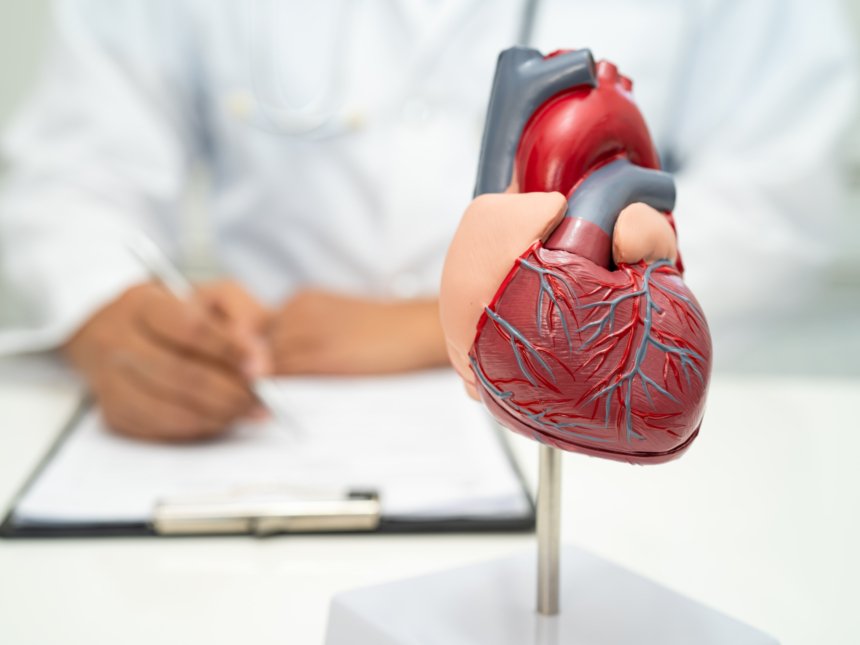
From the first moment in the mother’s womb until the last breath, the heart never stops working. He does not take time off, nor does he ask for a break. Rather, he continues to beat in silence, pushing blood and life to every cell in the body. However, we often only pay attention to him when he falters.
The heart does not speak in words, but it has its own language; A rapid pulse may indicate anxiety or stress, sudden palpitations may stop the person experiencing it, and chest pain may be the first real warning bell. The problem is that these messages may come faintly, late, or hidden behind other symptoms, thus wasting valuable time that could have changed the course of the disease.
Small pump with precise calculations
The size of the heart does not exceed approximately the size of a fist, and it is located in the middle of the chest with a slight inclination towards the left side, protected behind the rib cage. Despite its small size, it is a very complex organ, consisting of four chambers: two atria that receive blood, and two ventricles that pump blood to the lungs and the rest of the body.
These chambers are separated by four valves that act as one-way doors, allowing blood to pass forward and prevent it from returning backward, thus maintaining pumping efficiency and regular blood circulation.
The heart does not depend on muscles alone in its work, but rather has an internal electrical system that starts from the sinoatrial node, which is the natural generator of the pulse, and then the signal is transmitted through the atrioventricular node and conduction fibers, to ensure the contraction of the heart chambers in an accurate and regular sequence.
The irony is that this pump, which nourishes the entire body, itself needs continuous nourishment through the coronary arteries, which wrap around the heart muscle and supply it with oxygen and food. Any defect that affects these arteries often causes the most serious heart diseases.

How does the heart get sick?
Although the heart’s design is precise, it is not invincible. Long years of exposure to risk factors may turn this disciplined organ into an exhausted organ that suffers in silence, before suddenly announcing its illness.
The story often begins with atherosclerosis, a silent process that may last for years without symptoms. Initially, the inner lining of the artery is damaged as a result of high blood pressure, high harmful cholesterol, smoking, or diabetes. Over time, fatty deposits known as atheromatous plaques form inside the artery wall, which gradually enlarge and lead to narrowing of the artery.
There are factors that cannot be controlled, but they increase the risk, such as advanced age, a family history of early heart disease, and some sex-related differences. Women before menopause often enjoy a degree of protection due to the hormone estrogen, but the risk converges between men and women after this stage.
Therefore, some people may develop heart disease despite their healthy lifestyle, but controlling modifiable factors remains the most effective way to reduce the overall risk.
Heart attack… is not just a gradual blockage
Many people think that a heart attack occurs because the artery gradually narrows until it closes completely. However, many clots occur suddenly as a result of the rupture of an unstable atheromatous plaque, which results in a clot forming that severely blocks the artery and prevents blood from flowing to part of the heart muscle.
This is why monitoring symptoms alone is not enough, because the disease may develop silently. Prevention through controlling blood pressure, cholesterol, and sugar, quitting smoking, and conducting periodic examinations when risk factors are present remains the best means of early detection and reducing the possibility of infection.
The many faces of heart disease
Heart disease is not a single disease, but rather a wide range of conditions. Some are caused by atherosclerosis, others are related to valves, a disorder in the electrical system, or a weak muscle’s ability to pump.
Coronary artery disease results from narrowing or blockage of the arteries that supply the heart muscle. The risk of developing it increases with smoking, diabetes, high blood pressure, high cholesterol, obesity, lack of physical activity, and a family history of the disease. It may remain silent for years, before appearing in the form of angina pectoris or myocardial infarction.
-
Angina and infarction… a warning and a race against time
Patients often describe angina as pressure, heaviness, or constriction in the middle of the chest, and it may extend to the left arm, lower jaw, or back. It usually appears during effort or emotion, then improves with rest or appropriate treatment. This is an important opportunity for early intervention before myocardial infarction occurs.
As for infarction, it occurs when one of the coronary arteries is completely blocked, and the heart muscle cells gradually begin to die due to lack of oxygen. Here time becomes a decisive factor, which is why cardiologists say a famous phrase: “Time means a heart muscle.”
An infarction often begins with severe chest pain or pressure, which may extend to the arm or jaw, and may be accompanied by shortness of breath, cold sweats, nausea, or dizziness. When these signs appear, you must immediately go to the emergency room.
But the classic image does not always appear, especially for women. Symptoms may be less obvious, such as unexplained extreme fatigue, nausea, or jaw or back pain without obvious chest pain, which may delay diagnosis and treatment.
A distinction must be made between myocardial infarction and sudden cardiac arrest. Infarction often occurs due to a blockage in an artery that prevents blood from flowing to part of the muscle while the heart continues to beat. Cardiac arrest occurs as a result of a severe electrical defect that stops the heart from contracting. It is an emergency condition that requires cardiopulmonary resuscitation and the use of an electric shock device, if available.

-
Heart failure, arrhythmia and valve disorders
Heart failure does not mean that the heart has stopped working, but rather it means that it is no longer able to pump blood as efficiently as the body needs. It may occur after a previous infarction, or due to uncontrolled high blood pressure, valve disease, cardiomyopathy, or certain genetic diseases.
Its symptoms include shortness of breath, especially with exertion or when lying down, swelling of the legs and ankles, constant fatigue, rapid weight gain due to fluid retention, and waking up at night due to sudden shortness of breath.
In recent years, the treatment of heart failure has witnessed clear development, with the emergence of new drug classes that have proven effective in reducing death rates, including SGLT2 inhibitors, which are drugs that reduce the reabsorption of glucose in the kidneys, so that part of it is excreted in the urine, and have shown an important benefit in treating heart failure in groups of patients.
As for heart rhythm disorders, the patient may feel them in the form of palpitations, rapid pulse, severe slowdown, dizziness, or fainting. The most common is atrial fibrillation, which is a disorder that increases the possibility of clots forming inside the atrium, which may travel to the brain and cause a stroke if the disease is not diagnosed and treated with anticoagulants in appropriate patients.
The heart valves work to direct blood in its correct path, but when one of them narrows or regurgitates, blood flow is disturbed, and symptoms such as shortness of breath, fatigue, palpitations, or fainting may appear.

-
Blood pressure, diabetes and cholesterol
Millions of people suffer from high blood pressure without symptoms, which is why it is known as the “silent killer.” Continuing high blood pressure gradually damages the arteries, increasing the risk of myocardial infarction, stroke, heart failure, kidney failure, and retinopathy. Therefore, measuring blood pressure regularly, even in those who feel healthy, is one of the simplest means of prevention.
Diabetes increases the risk of heart and arterial diseases, and the problem may sometimes develop without obvious symptoms. Therefore, diabetic patients are advised to monitor cardiac risk factors regularly, and to see a cardiologist at least once a year when early detection is needed.
As for cholesterol, it is an essential substance for the body, but high harmful LDL cholesterol or low good HDL cholesterol increases the risk of arterial disease. Risk is not assessed from the cholesterol number alone, but from a combination of factors such as age, blood pressure, smoking, diabetes, and family history. High triglycerides may also be associated with an increased risk of heart disease, and often increase with obesity, diabetes, and excess sugar and alcohol.
-
A sore throat may harm the heart
Not all heart disease is inevitable. Some of them can be prevented with a simple step. This includes acute rheumatic fever, which may occur after untreated bacterial tonsillitis in children, and leaves serious effects on the heart valves.
This is why doctors stress the importance of not neglecting sore throat in children, and the necessity of receiving appropriate treatment when a bacterial infection is proven. A few days of proper treatment may be an investment in heart health for life.

Diabetes increases the risk of heart and arterial diseases (Shutterstock)
Factors that can be changed
Most heart risk factors are formed from daily habits repeated for years. Smoking is at the forefront, as it not only harms the lungs, but also directly attacks the lining of the arteries, accelerates the formation of atheromatous plaques, and increases the risk of clots. What is noteworthy is that the risk of infection begins to decrease in the first days and weeks after quitting, which makes the decision useful at any stage.
The danger of obesity does not lie in excess weight alone, but in the type and location of fat. Visceral fat around the abdomen is linked to increased inflammation, insulin resistance, and high blood pressure. As for physical inactivity, the risk increases even for those who do not suffer from obvious weight gain, because it reduces the efficiency of the heart and blood circulation, and weakens the regulation of sugar and fats.
Regular physical activity, even moderate, helps lower blood pressure, improve cholesterol, increase the body’s sensitivity to insulin, and has a positive effect on the heart within a relatively short period.
Sleep and stress: heart and mind on the same track
Good sleep is no longer a luxury. Research has shown that chronic lack of sleep or obstructive sleep apnea is associated with an increased risk of high blood pressure, arrhythmias, and myocardial infarction.
It is also no longer possible to separate mental health from heart health. The American Heart Association issued a scientific statement confirming that chronic stress, anxiety, and depression can lead to continuous activation of the pituitary-adrenal axis and cause an imbalance in the autonomic nervous system, which increases the risk of cardiovascular disease.
Stress also increases the risk indirectly, when it prompts some people to smoke, overeat, or neglect physical activity. But this factor can be modified through physical activity, adequate sleep, mental meditation, and deep breathing exercises.

When does the heart ask for help?
There are signs that cannot be postponed:
- Severe pain or pressure in the middle of the chest that lasts more than several minutes or recurs, and may extend to the arm, shoulder, jaw, or back.
- Sudden shortness of breath.
- Cold sweats with nausea or dizziness.
- Loss of consciousness.
- Severe palpitations with dizziness, or sudden onset of weakness in one of the limbs or speech disturbance due to the possibility of a stroke.
When any of these symptoms appear, you should call 911 immediately, and avoid driving to the hospital as much as possible. If a person loses consciousness and is no longer breathing normally, starting cardiopulmonary resuscitation (CPR), and using an external electric shock device (AED) if available, can double the chances of survival until the emergency team arrives.
How do we protect the heart?
The heart is a lifelong companion. It beats on average more than 3 billion times over about 80 years, and pumps about 7,000 liters of blood daily through a network of vessels extending nearly 100,000 kilometers. He does this day and night, without asking for rest or compensation.
Protecting it does not require miracles, but rather a simple daily commitment: completely abstaining from smoking, engaging in regular physical activity for at least 150 minutes per week, and choosing a Mediterranean diet based on vegetables, fruits, legumes, whole grains, fish, and olive oil, while reducing salt, sugars, and processed fats.
Maintaining a healthy weight and appropriate waist circumference also helps reduce visceral fat. A waist circumference of less than 80 centimeters in women, and less than 94 centimeters in men, is an indication of low accumulation of this fat, while health risks increase as these values increase.
Prevention is completed by controlling blood pressure, sugar, and cholesterol, getting adequate sleep of at least 7 hours, and conducting periodic examinations, especially when there are risk factors or family history.