


UK fishing communities say shellfish catches have been badly hit as warming seas bring predatory octopus
UK fishing communities say shellfish catches have been badly hit as warming seas bring predatory octopus
A marine heatwave could reach “extreme” levels around parts of the UK later this week, according to the Met Office, raising concerns for marine life.
Long periods of sea heat can trigger mass die-offs among some seagrasses, shellfish and other species, as well as encouraging greater numbers of warm-water creatures including octopus.
The heatwave is currently strongest off the coasts of eastern and southern England, and sea temperatures could reach 4-5C above average in places.
The marine heatwave has been fuelled by the “heat domes” that brought record-breaking air temperatures in May and June, on top of long-term ocean warming due to climate change.
Important marine habitats such as seagrasses and kelp forests are suited to cooler waters and can experience high levels of heat stress when temperatures surge.
This can reduce their growth or even lead to mass mortality events, which could have knock-on effects for species that rely on these habitats.
The UK has experienced marine heatwaves – prolonged periods of unusually high sea surface temperatures – before.
But scientists fear this event could be particularly intense and long-lasting, particularly for parts of the English Channel and the southern North Sea.
“We’re starting to see temperatures now that we would expect to see at the height of summer, [at the] end of August,” said Dr Zoe Jacobs of the National Oceanography Centre in Southampton.
“So, if this event keeps coming… we might start seeing some serious impacts on ecological systems.”
Researchers have also noticed longer-term shifts in the UK’s marine life. Cool-adapted species such as cod are generally moving further north, while numbers of some warm-water species such as octopus have risen around south-west England.
While natural cycles and fishing practices can affect the abundance of these creatures, many scientists point to the crucial role of warming seas.

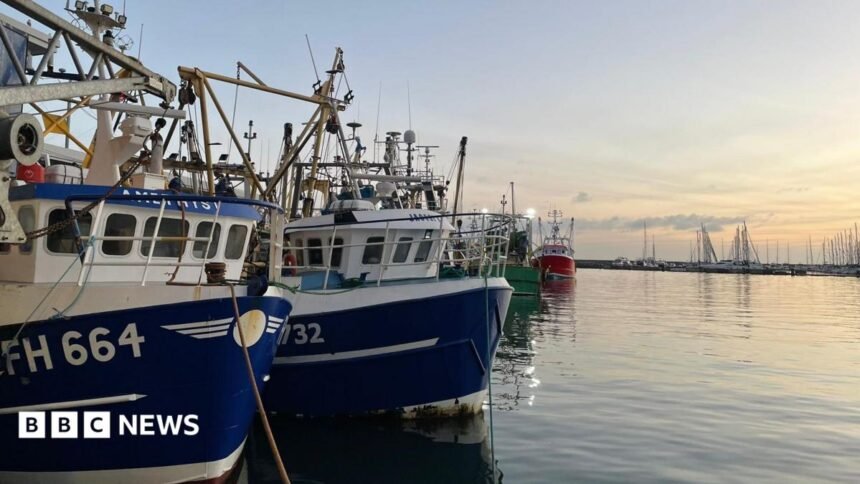
Fishermen in some parts of the UK have changed their catch to octopus as numbers surge
Fishermen in some parts of the UK have changed their catch to octopus as numbers surge
“It can be exciting to see new species arrive and we all enjoy seeing something like an Atlantic bluefin [tuna] or an octopus, but the problem is we’ve also got the negative impacts of that,” said Prof Matt Frost of the Plymouth Marine Laboratory.
“We’re seeing a decline in the numbers of cod and other key species… you’re also getting other species that could displace native species. That could bring disease [and] all sorts of problems.”
Increasing numbers of octopus may offer a new market for fishermen, for example, but can hit populations of crabs, lobster, scallops and other shellfish on which they prey.
Marine heatwaves becoming more intense
The southern North Sea and the English Channel are quite shallow, which means they can heat up quickly when the air above is warm.
This year in late May and late June, high-pressure systems parked themselves over Europe, allowing air temperatures to build. Eventually, that warmth was transferred to the seas.
But extreme marine heatwaves have been relatively rare for the UK.
Intense events are now much more likely because these temporary blasts of extra heat are happening in an already hotter ocean.

The UK’s seas have been getting steadily warmer since the 1980s, driven by human-caused climate change.
“We are likely to see marine heatwave conditions becoming average towards the middle-to-end of the century,” warned Dr Ségolène Berthou, air-sea interaction specialist at the UK Met Office.
“So, this is projected to increase if we don’t cut greenhouse gas emissions.”
Additional reporting by Tom Ingham
Record warm seas help to bring extraordinary new species to UK waters
‘Year of octopus’ declared after warmer seas lead to record UK numbers
A really simple guide to climate change
‘Hotter and hotter and hotter’ – Europe’s new climate in seven charts

Sign up for our Future Earth newsletter to keep up with the latest climate and environment stories with the BBC’s Justin Rowlatt. Outside the UK? Sign up to our international newsletter here.