

Israel is once again putting itself before any possible path to rebuild the Gaza Strip, as international and regional parties accuse it of obstructing the proposed plans, whether by rejecting the proposed security arrangements, delaying the entry of international forces, or adhering to conditions that make implementing any plan almost impossible.
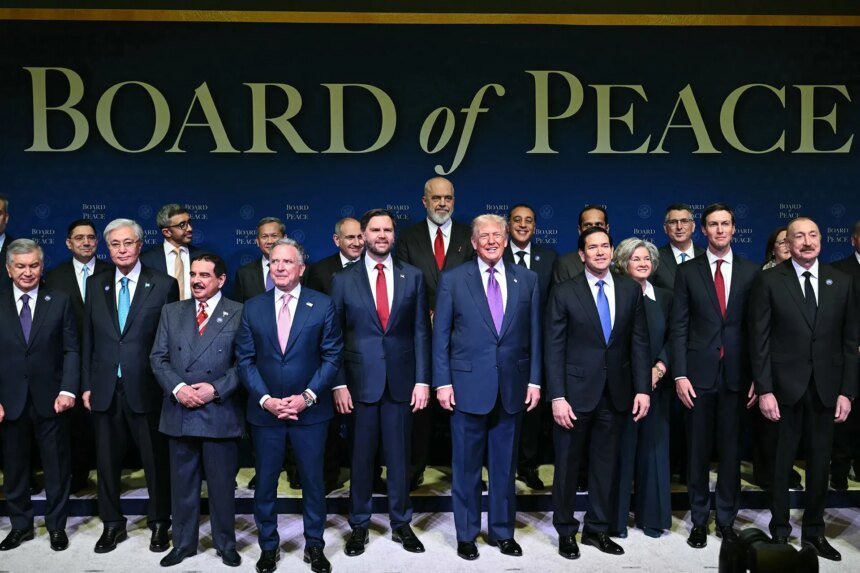
Journalist Lisa Rozowski – in an analysis published by the Israeli newspaper Haaretz – discusses the impasse that the “Peace Council” has reached today, stressing that it now has three options to begin the reconstruction process, but the Israeli government is obstructing them all.
Read also
list of 2 itemsend of list
According to the analysis, the three paths are as follows:
- The first track: Building refugee camps in Rafah as part of a pilot project without the approval of the Islamic Resistance Movement (Hamas), in accordance with Article 17 of US President Donald Trump’s peace agreement.
- The second track: Negotiating and waiting for Hamas to agree to a gradual disarmament plan.
- The third path: allowing a “technocratic” committee to take over management of the Strip based on partial agreements with Hamas, but without guarantees of disarmament.

Rozovsky warns that the faltering of these paths means that the residents of Gaza will enter a fourth winter in tents that lack the most basic necessities of life, and a repetition of the tragedies that the people of Gaza witnessed in past years.
Below is the author’s detail of how Israel undermines all solutions – according to what was stated in the analysis – along with a summary of the analysis of the three paths.
Israeli Aqaba
Despite the multiple paths, the obstacle is one, which is the Israeli government led by Prime Minister Benjamin Netanyahu, who finds himself stuck between pleasing the Israelis domestically and the possibility of Washington running out of patience internationally, according to the author.
On the one hand, Netanyahu refuses – with the elections approaching – to accept steps that he previously described as representing surrender to Hamas, especially after reports that spoke of the US administration’s willingness to abandon the condition of disarming the movement as an entry point to reconstruction.
On the other hand, the White House is pushing things in a different direction, and in this regard, the author points out that the US administration advisor and the person responsible for the Gaza file in the “Peace Council,” Aryeh Lightstone, sent a letter to Netanyahu weeks ago that included practical demands to facilitate reconstruction.

The demand – according to what Haaretz reported from its sources – included expanding the scope of the entry of humanitarian aid, allowing the entry of prefabricated homes, fuel, solar panels and medical equipment, in addition to approving the entry of the International Stabilization Force and the National Committee for the Administration of Gaza into Rafah to implement the pilot project, but without Israeli approval so far.
First: The path to excluding Hamas
The author expands her analysis by reviewing the first track, noting that it is based on Article 17 of the peace plan, which stipulates the establishment of a humanitarian zone in Rafah to be administered away from Hamas control if the movement continues to reject the plan.
In this context, it refers to the meetings held in Cyprus with the participation of American officials, members of the Peace Council, and representatives of the Technocrat Committee, which discussed the details of implementing the path without reaching a final decision, mainly due to the absence of Israeli approval.
However, the author points to another factor, which is the desire of some to give an additional opportunity to negotiations with Hamas.
The analysis here addresses a dispute that has emerged within the Peace Council itself, between those pushing for rapid implementation of the project, and those who fear that bypassing Hamas will undermine the chances of reaching an agreement with it, especially after the movement expressed a willingness to discuss the principle of gradual disarmament.
Second: The course of action with Hamas
As for the second and third tracks, they lead to a negotiated settlement with Hamas with the continuation of Egyptian mediation, and the possibility of reaching a transitional administration through a committee of technocrats.
According to the analysis, the progress of this path will be helped by the Hamas government emergency committee announcing its resignation in preparation for transferring its powers to the National Committee for Gaza Administration.
Despite the symbolism of the decision – according to the author’s words – it reflects a degree of flexibility on the part of the movement and a willingness to engage in the arrangements for the next stage, especially in light of the pressures exerted by the mediators, and the messages that suggest the possibility of proceeding with the plan even without its approval in accordance with Article 17.
The analysis quotes informed sources that the movement has already agreed to 13 out of 15 items in the proposed framework document, while two basic points remain in dispute, the first related to disarmament, and the second to the future of employees and security services affiliated with Hamas and the mechanism for integrating or compensating them.

A plan stuck in the middle
The author then moves on to dismantle the reasons for the failure of the pilot project on the ground. The plan to establish a humanitarian zone in Rafah requires a limited withdrawal of the Israeli army beyond the yellow line, and the entry of a stabilization force, along with elements affiliated with the Technocratic Committee.
However, the author emphasizes that this plan still lacks clear mechanisms for organizing the movement of residents and managing the region, in addition to that its implementation depends entirely on the approval of Israel, which has not yet signed an agreement allowing the deployment of the necessary forces to deploy the international force, which gives it the actual ability to disrupt or postpone the project.
On the other hand, the author believes that the negotiating path faces a political obstacle that is no less complex, as Hamas links its agreement to disarmament to obtaining a political framework that leads to the establishment of a Palestinian state, while the author expects Israel to reject this condition even though Trump’s plan itself includes a reference to a political horizon for the Palestinians.
By tracing the executive and negotiating paths, the author concludes that all options stall at one point, which is the Israeli position.