



New Delhi:
Three weeks.
That’s all it took for Elon Musk to go from becoming the world’s first trillionaire to slipping below the 13-digit mark.
When SpaceX made its blockbuster Nasdaq debut on June 12, investors couldn’t get enough of the stock. Shares were priced at $135, opened at $150, and surged sharply in the following sessions. At one point, the company was worth nearly $2.8 trillion, briefly overtaking Amazon in market capitalisation. Musk’s personal fortune climbed past $1.4 trillion, rewriting financial history. In India, retail investors bought shares through tokenisation.
But the euphoria didn’t last.
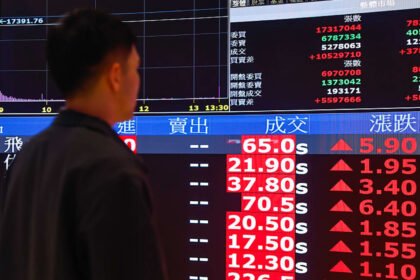
By early July, SpaceX shares had fallen more than 30 per cent from their peak, erasing hundreds of billions of dollars in market value. Musk’s fortune dropped below the trillion-dollar mark once again, fluctuating around $992-$997 billion depending on the wealth tracker. He remains the richest person in the world, but no longer a trillionaire.
SpaceX IPO: So what changed?
Nothing Was Wrong With SpaceX’s Business
Contrary to what the stock chart suggests, the company’s fundamentals have not suddenly deteriorated.
Starlink continues to expand rapidly, adding millions of subscribers. SpaceX is also pushing aggressively into artificial intelligence after announcing a $60-billion all-stock acquisition of AI coding startup Cursor. Analysts continue to see long-term growth across launch services, satellite internet and AI infrastructure.
“The correction isn’t about SpaceX suddenly becoming a weaker company,” says Viram Shah, Founder and CEO of Vested Finance.
According to Shah, what investors are witnessing is a classic case of expectations running ahead of reality.
“When companies list at extremely rich valuations, even strong businesses can see sharp corrections. Investors often confuse a great company with a great stock. They’re not always the same thing.”
The IPO Was Too Big; And Too Small
That may sound contradictory, but it explains much of the volatility.
SpaceX pulled off the largest IPO in history, raising around $75 billion and valuing the company at nearly $1.8 trillion on listing day. Investor demand was overwhelming. The issue was reportedly oversubscribed multiple times.
Yet only a relatively small percentage of total shares actually became available for public trading.
That “low float” meant there weren’t enough shares changing hands daily. As a result, relatively modest buying and selling activity created unusually large price swings.
“It’s important for investors to understand market structure,” Shah explains.
“When the freely traded share count is limited, volatility naturally becomes amplified. It doesn’t necessarily reflect changes in business quality.”
The Cursor Deal Added Another Layer
Just four days after going public, SpaceX announced its $60-billion all-stock acquisition of Cursor.
Strategically, the deal strengthens SpaceX’s AI ambitions. Financially, however, it also raised questions about dilution and whether management was taking advantage of an elevated stock price while it lasted.
Many analysts viewed the acquisition as sensible over the long term but acknowledged that it added pressure on an already expensive valuation.
Shah says investors should separate long-term strategy from short-term market reactions.
“Large strategic acquisitions often make sense over a five- or ten-year horizon. But public markets tend to price immediate uncertainty first.”
Valuation Was Always The Bigger Risk
SpaceX wasn’t being valued like a traditional aerospace company.
Investors were pricing in future dominance across satellite broadband, reusable rockets, AI infrastructure and next-generation computing.
That’s a powerful story.
It also leaves very little room for disappointment.
“When valuations become stretched, even minor concerns can trigger outsized corrections,” Shah says.
“Markets eventually ask whether future growth can justify today’s price. That’s a healthy process.”
Musk’s Wealth Works Both Ways
Most of Musk’s fortune comes from his ownership in SpaceX.
That means every sharp move in the stock has an outsized impact on his net worth.
The same mathematics that helped him become the world’s first trillionaire within days also pulled him back below the milestone just weeks later.
Paper wealth moves much faster than operating performance.
More Volatility May Still Lie Ahead
The story may not be over.
Most insider-held shares remain locked up, with phased releases expected after the company’s August earnings. Until then, the stock’s relatively limited float could continue to exaggerate price movements.
Wall Street, however, remains optimistic about SpaceX’s longer-term prospects. Several analysts continue to maintain bullish price targets, arguing that the recent correction reflects valuation adjustment rather than weakening fundamentals.
For investors, Shah says the episode offers an important lesson.
“Extraordinary companies can create extraordinary wealth over time. But investors shouldn’t mistake short-term excitement for sustainable value creation. Discipline matters most when optimism is at its highest.”