

Published On 5/7/2026
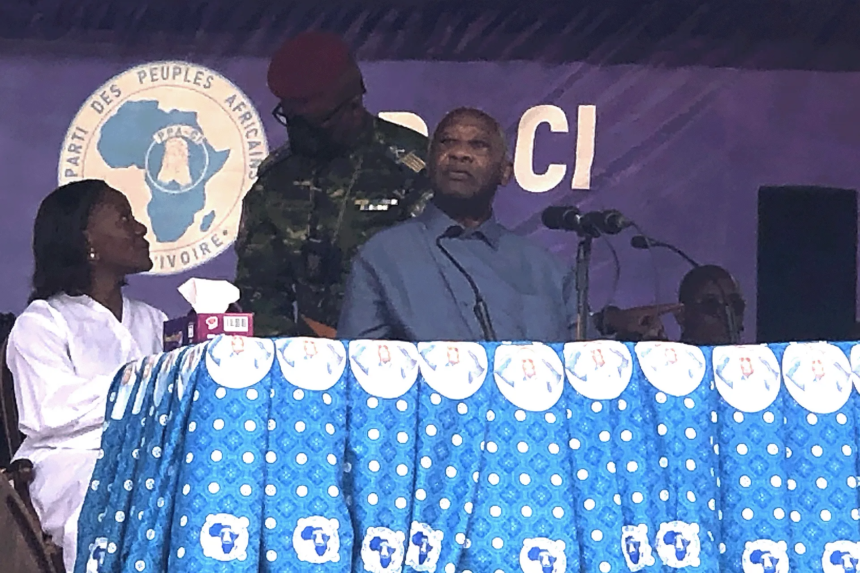
During a press conference in Abidjan, former Ivorian President Laurent Gbagbo presented a political document called the “Social Charter,” in which he presented his vision for what he described as “new governance” in Côte d’Ivoire, while directing sharp criticism of the country’s current administration. The leader of the African People’s Party – Côte d’Ivoire proposed a “new social contract” to the Ivorians, criticizing what he saw as a decline in democratic gains, according to the African news agency APA News.
APA News reported that the former president denounced what he described as the “explosion of poverty” in the country, and the demolition of homes linked to urban expansion, describing it as “aggressive.” He objected to economic growth that he said would only benefit a “clan,” recalling that he had launched a movement called “Enough Means Enough” (Trop c’est trop) to denounce the high cost of living, forced evictions, and widespread unemployment.
The charter is based on seven commitments, the first of which is to defend the purchasing power of families in the face of inflation, then provide real job opportunities for young people, enhance the independence of women and protect the family, in addition to restoring confidence in the judiciary, ensuring basic freedoms, balanced development between regions, and lasting national reconciliation. The former president also denounced the situation of imprisoned dissidents, considering the image reflected by the judiciary to be “worrying,” and called on judges to exercise their duties completely independently and without being subject to any political influence, hinting at the possibility of organizing a protest march to demand the release of detainees.
Gbagbo announced a wide consultation campaign in all regions of the country and among the community abroad, during which the contributions of young people, women, farmers and entrepreneurs are collected before writing them down in a “white book” to enrich the project, stressing that the document “goes beyond the framework of personal or electoral ambition.”

Electoral reform…a deferred response
Regarding reforming the apparatus in charge of elections after the dissolution of the Independent Electoral Commission last May, Gbagbo said that his party would reveal its proposals “at the appropriate time,” according to the Ivorian Press Agency. The agency explained that the party was absent from the meeting to which Prime Minister Robert Bouguer-Mambé called on the political parties on June 22, and Gbagbo justified this by the absence of information about the subject of the meeting, saying, “We received the invitation letter, and on the same day we asked to know the reasons for the meeting or its agenda, and to this day we have not received any response.”
On the other hand, the former president renewed his readiness for dialogue with the authorities, declaring, “I do not have red lines that cannot be crossed in a dialogue with the authorities,” stressing that his party remains open to any consultation initiative with the government, according to the same agency.
Restructuring and deferred succession
The introduction of the charter comes in the context of an internal reorganization that the party has witnessed since its first conference last May, as Gbagbo signed a decision to dismiss members of several central bodies, including the Strategic and Political Council, the General Secretariat, the permanent political council, the official spokesman, the party school, and technical committees, while ending the tasks of all party representatives abroad, and keeping some officials temporarily to conduct business, according to the Ivorian News Agency. The decision was justified, according to the agency, by “the necessity of enabling an effective reorganization of the party’s central organs” and “ensuring the administrative continuity of the party and establishing a new organizational dynamism.” The day after his re-election to head the party at the conclusion of its first conference, Gbagbo announced the delegation of his powers within the party without immediate succession.
In response to criticism related to his age, the former president said: “At this stage of my life, it is not my duty to prepare my future, but rather to help Côte d’Ivoire prepare its future. Man passes, generations pass, but values must remain.”