Published On 5/7/2026
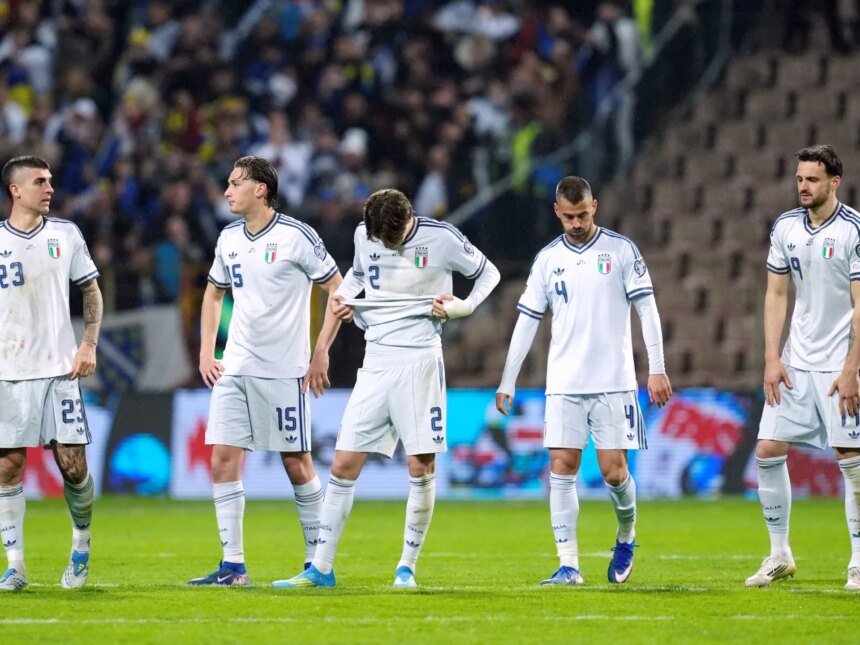
At a time when the 2026 World Cup is attracting the attention of sports circles and fans around the world, the sports community in Italy is living in a completely different reality. A state of deliberate neglect and the prevailing tone of dissatisfaction imposes itself on the Italian street, following the failure of the “Azzurri” national team to qualify for the finals for the third time in a row, in a historical first for the four-time world champions.
In a field report for The Wall Street Journal from the economic capitals of Milan and the political capital of Rome, the newspaper observed a collective behavior that tends to be polite and ignore the World Cup being held in the United States, Mexico, and Canada.
Read also
list of 2 itemsend of list
The newspaper quoted a café owner in Rome as saying that requests to watch the matches are primarily limited to tourists and foreigners, stressing that “many Italians are pretending that the tournament is not taking place at all.”
In the same context, an Italian retiree expressed her complete loss of passion for the game, preferring to fill her evenings with visits to the opera and the theater, saying: “It doesn’t really concern me,” while her friend commented decisively: “I don’t care at all.”
The time difference is an influential factor in indifference
Field data indicate that the time difference, which forces the North American World Cup matches to be held late at night, European time, has made it easier for local fans to drop the tournament from their daily calculations.
The report stated that sarcastic interpretations in the Italian street went so far as to link sociologically and politically between the successive absences and hypothetical positions opposing the countries hosting the last three editions: Russia in 2018, Qatar in 2022, and in the current edition held in the United States, Mexico and Canada.

However, this unprecedented football failure raises – according to identical media reports that accompanied the report – a deeper identity crisis in a nation whose cultural roots are linked to football. This absence came after a dramatic elimination in the European qualifiers, after Italy lost on penalties (4-1) to the Bosnia and Herzegovina team after they tied 1-1. This match turned into a negative turning point after national team defender Alessandro Bastoni was sent off in the 42nd minute.
This exit caused a resounding shock that was described in Italian sports circles as the “third football disaster,” prompting political forces within Prime Minister Giorgia Meloni’s government coalition to immediately demand the resignation of the head of the Italian Football Federation, Gabriele Gravina, describing what happened as an “unacceptable shame.”
System malfunction
The scene also reopened the files of the country’s sports structure, amid harsh criticism from major sports newspapers such as Corriere dello Sport and La Gazzetta dello Sport, which focused on the decline in the system for developing young talent in local clubs and the increasing dependence of the first division (Serie A) teams on foreign players, which reduced the Italian player’s participation space to only about 31% of the total competitive playing minutes.
Although winning the European Cup title, “Euro 2020,” five years ago represented a temporary boom, it later contributed to the confusion of the scene and the blurring of technical evaluation. Today, the Italian sports street finds itself faced with an entire generation of children and youth growing up without having the opportunity to watch their country’s national team compete in the most prominent football forum on the face of the earth.