

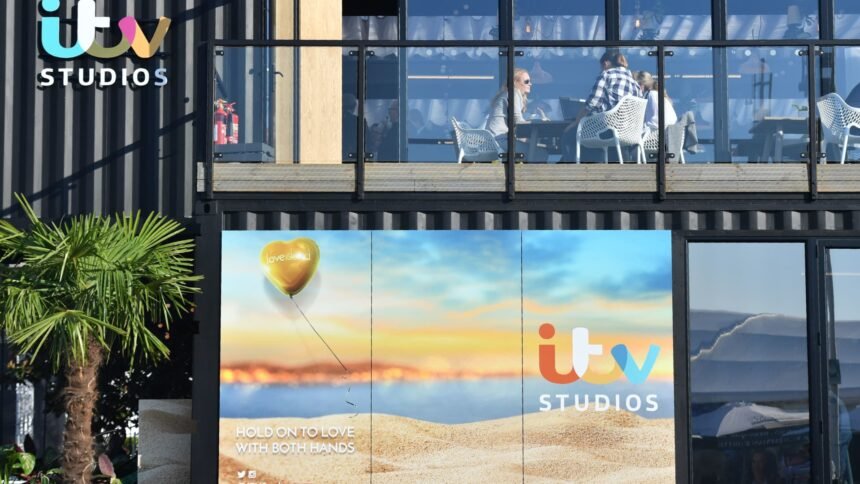
ITV Studios is pictured at the MIPCOM trade show in Cannes, France, on October 17, 2017.
YANN COATSALIOU | AFP | Getty Images
Comcast’s Sky has agreed to buy the broadcast channels and streaming service of Britain’s ITV for £1.6 billion ($2.13 billion), creating a British champion to compete with global players YouTube, Netflix, Amazon and Disney.
Sky CEO Dana Strong said the deal, announced on Monday and confirming a Reuters story, was a “defining moment” in British broadcasting.
The combination of Britain’s biggest free-to-air commercial broadcaster, home of “Coronation Street,” and pay-TV company Sky would have been unthinkable just a few years ago, but the rise of YouTube and the streaming giants has left traditional companies exposed.
Regulators and lawmakers will now decide whether to accept the company’s argument that the radical change warrants greater flexibility in how deals are assessed.
Sky-ITV will have large share of TC ad market
The merger of ITV’s public service channels and Sky’s leading pay-TV business, founded by Rupert Murdoch in 1989, would account for more than 70% of the U.K. television advertising market, including contracts for third-party broadcasters, analysts have said.
Strong said the deal would deliver “outstanding British programming” in a rapidly changing world.
“ITV will remain a public service broadcaster at the heart of British life, and we’re excited about the future we can build together,” she said.
ITV Chief Executive Carolyn McCall said that combining ITV’s channels and the streamer ITVX with Sky would benefit viewers and advertisers.
“At a time of really rapid change in viewer behavior and growing competition from U.S. streamers for both audiences and advertisers, this deal strengthens British content investment,” she told reporters.
Shares in ITV traded up 1.2% to 83 pence on Monday.
ITV will remain a public service broadcaster, safeguarded by its license, which lasts until 2034, with commitments to news and original content. In return, it has a prominent position on TVs and access to protected programming like the World Cup.
Both companies expect the deal to face a lengthy antitrust review and public interest tests.
To satisfy concerns, Sky may have to relinquish third-party ad sales contracts, for example, for Paramount-owned Channel 5.
Straightforward commercial logic
News will be a focus for regulators and lawmakers. Sky has a rolling news service, Sky News, while ITV has national bulletins made by news provider ITN and its own regional news programs.
Giao Pacey, partner at law firm Simkins, said the deal was “less like opportunistic consolidation and more like an acknowledgment of market reality.”
He said the real story would be the regulatory process. “The commercial logic may be straightforward, but obtaining the necessary approvals will be considerably more challenging,” Pacey said.
Strong said Sky would commit to Sky News beyond 2029, in line with guarantees from Comcast, and that Sky News and ITV News would remain distinct.
“We’re quite excited about ITV regional news specifically and the ability for us to make that more visible,” she said.
ITV will retain a 20% stake in ITN, while another 20% stake will transfer to Sky.
Strong said there would be some job losses, but the majority of £200 million in savings would come from marketing, technology, and non-British content.
The combined company will reach over 20 million households. But at a time when traditional television is losing audiences to streaming and YouTube, particularly among 16-24-year-olds, the companies will argue they need to merge to compete.
ITV left as standalone production business
ITV has for years struggled with a tough ad market, and its shares have lost 36% over the last five years.
The deal will leave ITV as a standalone production business, making shows for the combined ITV-Sky, such as “Love Island,” as well as other broadcasters and streamers globally, such as “Rivals,” made for Disney, and “The Reluctant Traveller” for Apple TV.
The merged company has committed to spend a minimum of £2.1 billion with ITV Studios over 2028-2032.
ITV will receive £1.2 billion in cash and, in an earn-out agreement, will get up to £200 million, depending on its advertising performance in the 2027 financial year. It will give around £950 million to shareholders.
ITV will also get Love Productions, maker of “The Great British Bake Off,” which will join the remaining ITV Studios business.
In Britain, Sky was for decades synonymous with the Murdoch family, with Rupert’s son James holding key positions.
Sky was sold to Comcast in 2018. The U.S. giant said in June it would spin out its media assets, including NBCUniversal and Sky, from its cable business, reflecting the growing pressure from streaming rivals.
Britain’s Culture Minister Lisa Nandy showed she had the appetite to shape media deals when she said last week that she could intervene in the U.S. Paramount-Warner tie-up.