


Published On 7/3/2026
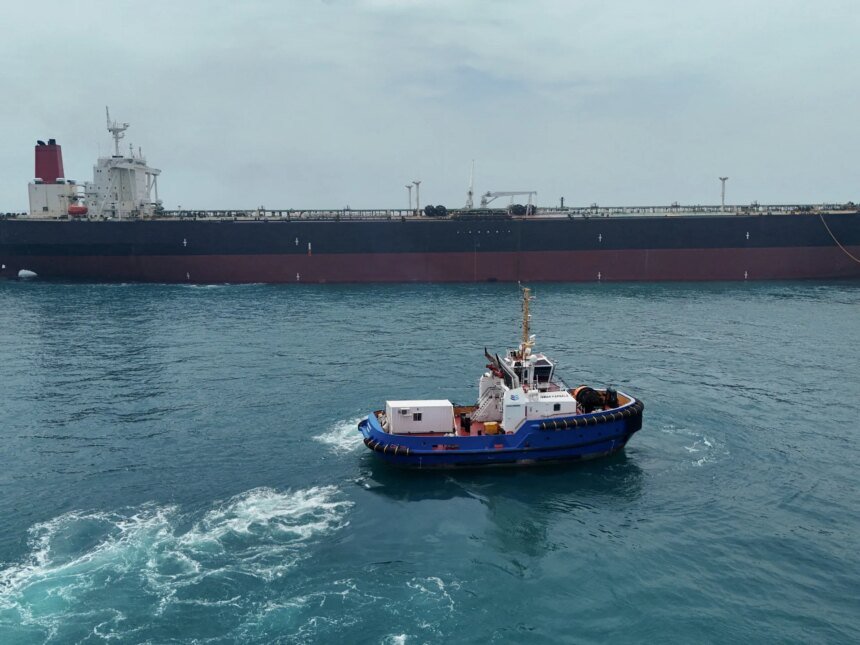
Reuters reported, citing Kpler data, that oil exports from the Gulf jumped in June by more than three million barrels per day, compared to May, to exceed ten million barrels per day, with shipping traffic through the Strait of Hormuz increasing after the war stopped.
Despite this recovery, exports remained about 40% lower than their levels recorded before the outbreak of the US-Israeli war on Iran.
Read also
list of 4 itemsend of list
Reuters reported that millions of barrels of crude that had been stuck in the Gulf flowed into global markets, allowing producers to increase supplies and reduce oil prices to pre-conflict levels.
Kpler data showed that total exports of crude and condensates from Saudi Arabia, the UAE, Kuwait, Iraq and Iran rose by more than 3.5 million barrels per day compared to May, reaching 10.07 million barrels per day.
“A sustainable recovery in crude oil prices is likely to be achieved once the market absorbs the oil currently stuck on board tankers and stored in warehouses,” Tamas Varga, an analyst at BVM, told Reuters.
Analysts at Commerzbank explained to Reuters that oil prices were under pressure, as investors’ hopes for a complete opening of the Strait of Hormuz were strengthened as a result of talks between the United States and Iran.

Expectations of a decline in oil prices
In a related context, the Financial Times newspaper quoted the American Citi Bank as predicting that the price of Brent crude oil may reach $60 per barrel by the end of this year, with expectations of a surplus of oil supply in the markets.
Analysts at Citi Bank believe, according to what the newspaper reported from a memorandum issued on Friday, that despite the temporary escalations, both the United States and Iran have important reasons to adhere to the memorandum of understanding that was signed in mid-June.
The analysts said in their note, “We expect the memorandum of understanding to continue, not because trust suddenly appeared between the two sides, but rather there are weak motives for vetoing it on both sides.”
Brent crude reached its peak on April 30, during the US-Israeli war on Iran, when the price of oil rose to $126 per barrel.
Brent crude futures fell slightly on Friday, by only four cents, or 0.06%, to $71.76 per barrel by 1132 GMT. US West Texas Intermediate crude fell 20 cents, or 0.29%, to $68.49 per barrel.
Some shipping operations have resumed through the Strait of Hormuz, according to the agreement between Iran and the United States, but levels of uncertainty are still high, according to what Reuters reported, after the two countries exchanged strikes at the weekend after an Iranian bombing of a cargo ship.