


Published On 7/3/2026
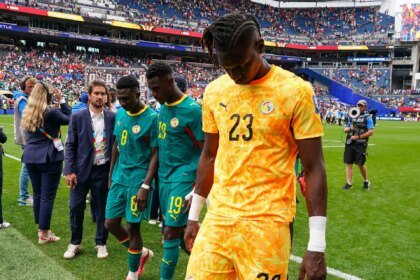
The Algerian national team exited the 2026 World Cup in the round of 32 after losing to Switzerland with two unanswered goals, in a match that represented a clear difference between the Algerians’ technical capabilities, and the strict tactical system and ability to score from the smallest opportunities.
From the beginning, Algeria’s Bosnian coach Vladimir Petkovic restored confidence to goalkeeper Luca Zidane after seating him on the bench in the 3-3 draw with Austria.
Read also
list of 2 itemsend of list
For the fourth match in a row, he made adjustments to his lineup, none of which had been confirmed since the beginning of the tournament.

Without fangs
Petkovic entered the match with a 4-2-3-1 plan, with Ramez Zerrougui given an advanced role alongside Houssem Aouar and Nabil Bentaleb, in an attempt to impose control on the midfield and create early pressure.
Indeed, the advantage in the first minutes was in favor of Algeria in terms of possession and control of the system of play, but the team lacked the most important element, which is an outspoken striker capable of translating control into opportunities and goals, so the advantage turned into possession without real danger.
One attack
Contrary to the course of play, Switzerland took advantage of the first organized counterattack in the best possible way, and Johan Manzambi succeeded in penetrating the spaces behind the Algerian defense before passing the ball to Brielle Embolo, who scored the first goal, taking advantage of poor positioning and a common error between goalkeeper Luca Zidane and defender Issa Mandi.
One of the most prominent reasons for Algeria’s suffering was the Swiss superiority in bilateral confrontations. Every time Manzambi or Ruben Vargas reached the final third, they succeeded in bypassing the defenders easily, which gave Switzerland a clear advantage in offensive transitions.
On the other hand, the Algerian team was content to move outside the penalty area, as its players touched the ball only twice inside the Swiss penalty area until the 35th minute, a number that reflects the extent of the offensive crisis.
Attacker crisis
Algeria paid the price for not fielding a pivotal striker from the beginning. Mazza often retreated to participate in the playmaking, while Ramez Zerrouki was busy monitoring Granit Xhaka in advance, due to the lack of numerical density inside the penalty area. On the contrary, Xhaka himself started the attack for the first goal without being subjected to clear harassment from Zerrouki.
The team also lacked the services of Amine Guiri from the beginning, in light of his non-participation, in addition to the lack of readiness of Nadir Ben Bouali, which made the Algerian attack without a clear offensive reference.

“Quick” bullet of mercy
Despite being one goal behind, Petkovic did not make any adjustments between the two halves, so the same scenario continued, while Switzerland only needed seconds to consolidate its lead, after Dan Ndoye took advantage of more than one new individual error in the Algerian defense, to score the second goal and put the match practically beyond the reach of the “Desert Warriors.”
It seemed clear that the Swiss team did not need to create a large number of chances, as the quality of the offensive transitions and the resolution of individual confrontations was enough to make the difference.
In the 57th minute, Petkovic began trying to adjust the situation, bringing in Amine Guiri as an outright striker, then he made a series of changes with the exit of Nabil Bentaleb, Houssem Aouar and Ramez Zerrouki to revitalize the offensive side. He also pushed Anis Hadj Moussa to try to compensate for the missing solutions of Riyad Mahrez, before giving the opportunity to Adil Boulbina as a final attacking card that Petkovic did not find much use in this version of the World Cup, but the substitutions came after Switzerland completely imposed its rhythm, and did not succeed in changing the shape of the match or threatening the goal. Really Swiss.
In the end, Switzerland succeeded in exploiting its opportunities as efficiently as possible, while Algeria was unable to convert its control into goals, suffering a 2-0 loss and exiting the 2026 World Cup in the round of 32, after a match that revealed that the quality of the decision inside the penalty area is a dividing factor between the winning party and the losing party.