Al Jazeera correspondents
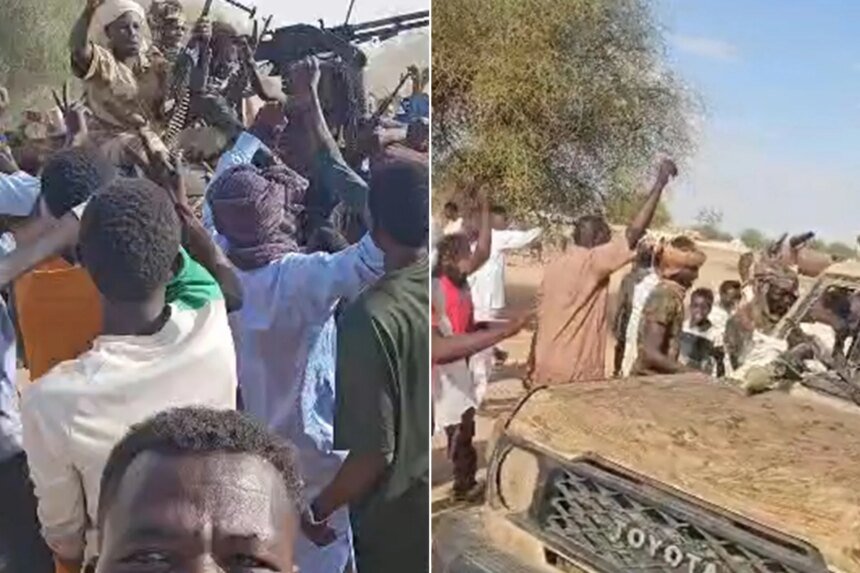
Khartoum- About 8 months after the last direct ground confrontations in the Darfur region, the Sudanese army and the joint force made surprising progress by regaining control of the “Abu Qamra” area, then the city of “Kulbus” and the Jebel Moon area in the states of North and West Darfur.
Military experts considered the new development a field transformation that will have repercussions on the course of the war that has been ongoing between the army and the Rapid Support Forces for more than 3 years.
Since the Rapid Support Forces took control of El Fasher, the capital of North Darfur state, last October, no direct clashes have taken place between the army and its allied forces on the one hand, and the Rapid Support Forces on the other, except for limited skirmishes in the Al-Tina border locality in the far northwest of the state.
The city of Kulbus and Kulbus locality – which is about 160 kilometers from El Geneina, the capital of West Darfur state – gain their importance due to their geographical location adjacent to the Chadian border and their rugged nature, which makes them a vital area for monitoring the border and cutting off any military and logistical supply to the Rapid Support Forces through Chadian territory.

“break a bone”
A military official in the joint force fighting alongside the army told Al Jazeera Net that their forces made new progress a day after the liberation of the city of Kulbus and two days after the liberation of Abu Qamra in North Darfur state, where control was restored, today, Tuesday, over the Jebel Moon area, which is 74 kilometers from El Geneina, the state capital.
The military official – who requested to remain anonymous – explained that confrontations are taking place in the localities of Sirba, Sali’a, Jurjira and Bir Saliba, where the army and its allies are using offensive tactics aimed at dismantling Rapid Support positions, and they are considered bone-breaking battles.

For his part, spokesman for the joint force, Mutawakkil Wakil, said in a statement yesterday that their forces, in coordination with the army and the popular resistance, were able to “liberate the entire Kulbus locality from the grip of the rebel militia, following decisive battles in which our forces demonstrated great courage and valor,” as he described it.
Regarding what happened in the battle of the city of Kulbus, the spokesman for the Popular Resistance in North Darfur State, Abu Bakr Tammam, revealed in a statement today the details of the losses of the Rapid Support Forces in the battle, where the commander of the forces in the locality, Brigadier General Saleh Dudin, and 21 of his members were captured, 15 combat vehicles with full military equipment were seized, 12 other vehicles were destroyed, and two huge stores of ammunition and equipment were found.
The Chief of Staff of the Army, Lieutenant General Yasser Al-Atta, said during his address to the officers of the Armored Corps in Khartoum, last Sunday, that the army is moving steadily towards resolving the battles after preparing the necessary plans and equipment for that, and he pledged to purge the Kordofan states of the Rapid Support Forces and move the battle deep into Darfur soon.
The Rapid Support Forces did not officially comment on the ongoing operations in the states of North and West Darfur, but an official in the forces’ media office said that talk of progress by the army and its allies was in the media and not on the ground.
The official – who requested to remain anonymous because he was not authorized to make a statement – stated that their forces had a limited presence to protect civilians in Kulbus after an agreement with the people of the region, as well as in the Abu Qamra area, which the joint force entered, killed civilians, and broadcast pictures from before leaving.
Political and military goals
Regarding the operations of the army and the joint force in Darfur, the researcher in military affairs, Muhammad Al-Amin Al-Tayeb, told Al-Jazeera Net that they aim to achieve several political and military goals, most notably:
- Responding practically to the Rapid Support Forces by controlling the entire Darfur region, and blocking the way for movements by regional powers that are pressuring Chad to recognize Sudan’s founding alliance, “Establishment,” which is led by the Rapid Support Forces leader, Mohamed Hamdan Dagalo “Hemedti,” and his parallel authority in Nyala.
- The loss of a vital border area hit the morale of the Rapid Support Forces, and sent a message to the international community, whose interest in the Sudan file had increased, that the army was capable of extending its control and turning the military equation in its favor, which would improve its position in any possible negotiations to stop the war.
- Confounding the Rapid Support Forces and disrupting their movement to mobilize their members in North Kordofan State to advance towards important cities with the aim of preventing the army from advancing towards Darfur, and enlisting them to defend their areas of control in the region.
- Controlling Kulbus, which is a main gateway for supply lines coming from the Chadian border, will stifle supplies of fuel, military equipment, and mercenaries that cross the border, and cut off a vital lifeline for any force stationed in and around El Geneina.
- The topographical map of Kulbus and its environs gives those who control it the opportunity to maneuver and position themselves, and represents an advanced base for operations eastwards towards the Amra and Kabkabiya localities in North Darfur State, or southwards towards “For Baranga” in West Darfur State, which is located in the border triangle between Sudan, Chad and Central Africa.

Sultanate of the Moon
Kulbus is a historical stronghold of the “Al-Qamar” tribe. It includes the main headquarters of the tribal sultanate, and during the expansion of the Rapid Support in West Darfur after the outbreak of war in 2023, the Sultanate’s leaders succeeded in reaching an agreement that prevented the city from being attacked, despite the control of the Rapid Support at that time over a number of villages and cities in the state, before Kulbus later fell into its hands in October 2024.
The Rapid Support Forces control the five states of Darfur, except for the localities of Al-Tina, Karnoy and Um Baru in the northern state of the region, which are controlled by the army and the joint force, in addition to the Tawila locality in the north as well and other areas in Jebel Marra in the central Darfur state, which are controlled by the Sudan Liberation Movement led by Abdel Wahid Nour.