
Published on 6/30/2026
|
Last update: 01:13 (Mecca time)
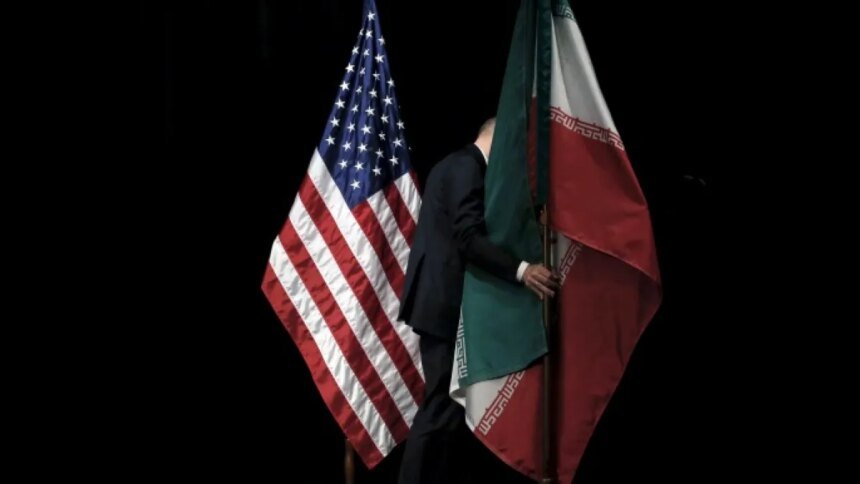
It seems that the United States and Iran are more concerned with the form of the negotiations than their content, in a way that analysts say threatens the entire negotiating process and makes the Strait of Hormuz more complex than the nuclear file, which is seen as a main focus of disagreement between the two countries.
It is not known whether the two sides will hold discussions in Doha today, Tuesday, or not, nor what they will discuss in this round, which Washington confirms and Tehran denies, at least so far.
While US President Donald Trump spoke about an American delegation that has headed or will go to Doha to conduct negotiations at the request of the Iranians, Tehran denies any anticipated meeting with the United States, and says that it learned of the presence of an American delegation in the State of Qatar from the media.
However, denying holding talks does not mean not going to Doha. Iranian Foreign Ministry spokesman Ismail Baghaei confirmed that a delegation of experts will visit Qatar to discuss two matters with Qatari officials: temporarily lifting sanctions on some Iranian oil and petrochemical exports and handing over part of Tehran’s frozen funds.
Reverse path
Not far from these narratives regarding what will happen in Qatar, each side continues to accuse the other of violating the agreement, which was supposed to discuss the Iranian nuclear file, and has become confined to the Strait of Hormuz and the frozen funds.
Indeed, the reverse paths that the two sides took during the past few days made the round of negotiations that took place in Switzerland as if they had not happened, says professor of international conflict resolution, Dr. Muhammad Al-Sharqawi.
Protecting the course of the negotiations required continuing meetings via the hotline, even if the Iranian agenda was different from its American counterpart.
But the recent exchange of strikes over Hormuz “threatens the diplomatic path,” which Al-Sharqawi said in an analysis for Al Jazeera, “cannot continue unless both parties stop resorting to violence.”
Hormuz is a stumbling block
Indeed, the new situation reveals that the Hormuz file has become more complex than the nuclear file, and if the mediators are not able to find a common formula or return the item related to the strait in the memorandum of understanding or remove it from the discussions temporarily, then matters will move towards more complexity, in the speaker’s opinion.
It is clear that the Iranians have recently adopted a new strategy that makes the Strait a deterrent weapon against any American or security threat instead of nuclear deterrence, but they may make a concession in this file “if they obtain some advantages or if they are convinced that the world will not allow them to raise the weapon of navigation in the face of everyone,” as Al-Sharqawi says.
The former commander of the US Fifth Fleet, John Miller, does not differ from Al-Sharqawi’s opinion, and even believes that the Hormuz file “represents the first priority of the American administration,” and that any Iranian tampering with it “means the collapse of the memorandum of understanding.”
Not only that, Miller said that unfreezing Iranian assets or lifting sanctions on them “requires an initial commitment from it to everything it agreed upon regarding opening Hormuz and clearing it of mines, otherwise the negotiations will not continue.”
On the other hand, Iranian researcher Hussein Rioran denies the existence of any arrangement by the Qatari mediator for negotiations in Doha, and says that the Iranian delegation will arrive at the end of the week and not today, Tuesday, as America says.
As for Trump’s speech, it is nothing more than “a new episode of the dictates that he wants to impose,” according to Rioran, who said that the United States sent a delegation to Doha and wants to summon an Iranian delegation to sit with it.

Focus on form, not content
It is true that the spokesman confirmed that his country does not reject negotiations as a principle, but he says that negotiations require arrangements by mediators to determine the date, files, and form of the two delegations that will participate in them, which, according to him, did not happen.
As for the head of the Al-Madar Center for Political Studies, Saleh Al-Mutairi, he does not take much notice of the Iranian talk, because Tehran “often denied the possibility of holding negotiations and then went to them later.”
For example, in the first round of Islamabad, in which the Iranians said that they had not decided to participate, then Foreign Minister Abbas Araqchi went to Muscat and from there to Pakistan, so Iran participated in the negotiations and dealt with the matter as if it had not happened, according to Al-Mutairi, who said that the conflict between statements and actions “is the characteristic of this war.”
Therefore, Al-Mutairi believes that the two sides are creating a very complicated situation for the mediators “because they are focusing on the form of the negotiations, not their content,” adding that the delegation of experts that will visit Doha “is not an ordinary delegation, but rather it was agreed upon in the memorandum of understanding and was supposed to begin work the day after the signing.”
The Iranian narrative about the Strait of Hormuz changes every day and its attempt to justify imposing control over it at times by saying it is territorial waters and at other times for security reasons “reflects interest in the appearance of the positions, not their content,” according to Al-Mutairi.
If the negotiations proceed in this way, “it will not be easy for Washington, Tehran, or the mediators to resolve the remaining outstanding issues, and the internal repercussions will be great in America and Iran,” according to Al-Mutairi.