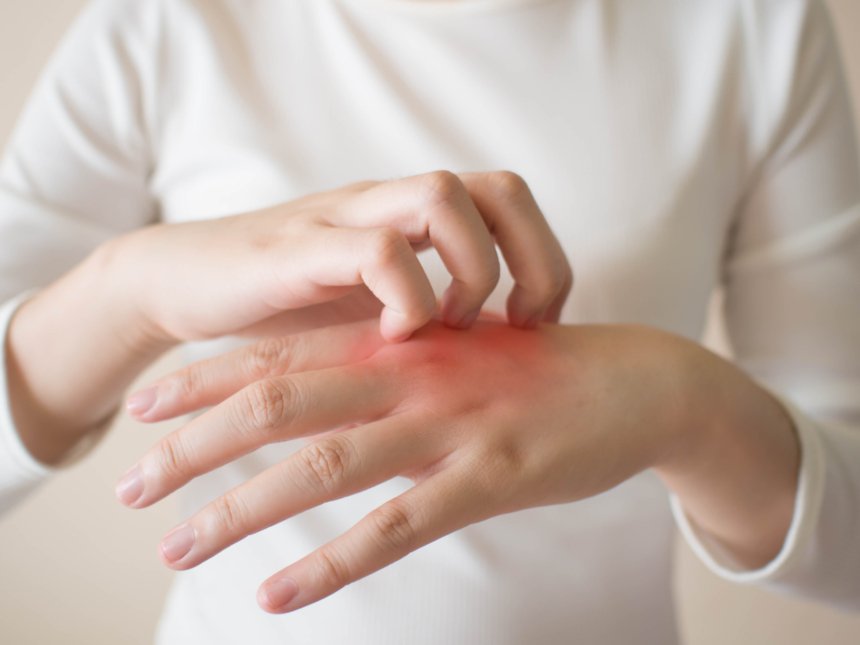
The skin does not appear to be just an outer covering that covers the body and protects it from the surrounding world. Rather, it is a living organ with a wide influence that sometimes reveals what is going on inside before a person realizes that there is a health problem.
Rash, dryness, itching, and inflammation are not always fleeting superficial symptoms, but rather they may be early messages from the body that something is wrong with the immune system or in the balance of microorganisms that live on the surface of the skin.
At the same time, the skin plays the role of the body’s body’s guardian and its first line of defense against pathogens. It not only prevents the entry of germs and irritating substances, but also participates in regulating the immune response, and constantly interacts with millions of microorganisms that live on its surface in a delicate system known as the “skin microbiome.”
But what happens when this balance is disturbed? Can some allergic diseases start from the skin before their effects extend to the respiratory or digestive system?
This question has become the focus of increasing scientific interest, especially with the accumulation of studies linking a weak skin barrier, microbiome disturbance, and the emergence of diseases such as eczema, food allergy, asthma, and allergic rhinitis.

The atopic pathway… when allergies begin in the skin
The term “atopic march” expresses a series of allergic diseases that may affect the same person gradually, and often begin in infancy and then extend to later childhood. These diseases share genetic, environmental, and immunological factors, and usually appear in the form of atopic dermatitis or eczema, then may be followed by food allergy, asthma, and allergic rhinitis.
The term atopic pathway entered the field of dermatology in 1923, after it was described by American allergists Dr. AF Coca and Dr. RA Cooke. Since that time, the concept has been associated with what is known as atopy, which is the body’s tendency to develop allergic reactions, especially those associated with immunoglobulin type E, known as IgE for short. But the definition later expanded to include allergic diseases that are not mediated by this type of immune antibody alone.
Figures indicate that atopic dermatitis is one of the most common allergic skin diseases. The incidence of eczema ranges between 17% and 24% among children, and is about 10% among adults around the world. The importance of this early infection increases because its severity may be linked to a higher likelihood of other allergic diseases appearing later.
More than 60% of children with severe eczema also suffer from asthma, while the incidence of allergic rhinitis among them ranges between 74% and 81%. This means that eczema, in some cases, is not just a local skin disease, but rather it may be the first link in a broader series of immune and allergic disorders.

From chronological order to multimorbidity
For a long time, doctors viewed atopic dermatitis as an outward manifestation of an underlying allergy, but recent evidence has begun to suggest a different view. Eczema may arise primarily from a defect in the skin itself, especially in the skin barrier, and then it is enhanced by environmental factors and a genetic predisposition in the affected person.
With technological advances, and the introduction of artificial intelligence and machine learning algorithms into medical data analysis, researchers have begun to move beyond the idea of the atopic pathway as a fixed time sequence that begins with eczema and ends with asthma or allergic rhinitis. Instead, the concept of “atopic multimorbidity” emerged, that is, the possibility of a person suffering from more than one allergic disease at the same time or in an unconventional arrangement, as a result of damage to the skin barrier or an imbalance in the composition of the microbiome.
In simpler terms, the question is no longer: which disease comes first? Rather, it became: What are the common factors that open the door to these diseases combined? The answer appears, in large part, to be related to the health of the skin and the balance of microorganisms that live on it.
The skin microbiome…a delicate world that maintains balance
A wide community of microorganisms lives on the surface of the skin, including bacteria, fungi, viruses, and microscopic parasites. This system is known as the skin microbiota, while the sum of its genes, functions, and interactions is known as the skin microbiome.
Bacteria occupy the largest share of this system, with the number of their species exceeding 1,000. These organisms do not live on the skin randomly, but rather perform important defensive and immune roles. They help prevent harmful bacteria from taking over the skin’s surface, support the skin barrier, and are involved in regulating the immune response.
The skin microbiota begins to colonize the body’s surface at birth, and then continues to multiply and diversify throughout life. Its composition is affected by multiple factors, including the method of birth. A baby born naturally acquires different types of microorganisms through the birth canal, where Lactobacillus and Prevotella appear, while a baby born by cesarean section acquires organisms closer to those found on the skin.
The microbiome is not distributed on the skin in the same way in all areas, as moist areas, such as the armpit, differ from dry or oily areas. Some types of bacteria excel in certain areas; Staphylococcus aureus may appear in humid areas, while Proteobacteria dominate in drier areas.
As for fungi, they appear on the skin at a later time, the most prominent of which are lipophilic yeasts belonging to the genus Malassezia. Viruses that attack bacteria, known as bacteriophages, also participate in this system. They contribute to biodiversity on the surface of the skin, and their numbers differ between healthy and sick people, which suggests that they have a health role that is still under research.
There are also other microorganisms, such as the Demodex mite, which interact with bacteria and skin fungi. Thus, the skin is not a static surface, but rather an integrated, vital environment that changes, interacts, and maintains a delicate balance between health and disease.

How does the microbiome protect the skin?
The skin microbiome performs multiple defensive functions. It confronts opportunistic pathogens that try to attack the body, and limits their growth and spread by producing antibacterial substances, such as antibacterial peptides and fatty acids.
Its role is not limited to preventing harmful germs, but extends to regulating immunity itself. It stimulates keratinocytes, which are among the basic cells in the outer layer of the skin, to secrete important immune molecules, such as interleukin 1 alpha (IL-1α), in addition to defensive peptides such as defensins and cathelicidins.
These molecules help control the T-cell response and increase the immune system’s ability to coexist with beneficial microorganisms, instead of attacking them excessively. Thus, the microbiome contributes to reducing irritation and inflammation, and maintains the balance and stability of the skin.
From eczema to body diseases
An imbalance in the skin microbiome is linked to the development of a number of skin diseases, such as eczema and psoriasis. But recent research goes further than that, as it suggests a relationship between disruption of the skin microbiome and some systemic diseases, such as diabetes, inflammatory bowel disease, and obesity.
Some researchers explain this relationship through what is known as the gastrointestinal-skin axis or the skin-brain axis, meaning that the skin does not work in isolation from the rest of the body, but rather communicates with other systems through immunity, inflammation, and various vital signals.
In 2023, researchers from the University of California San Diego published a comprehensive review in the journal Frontiers, examining the role of the skin microbiome in maintaining skin health and developing skin diseases. The review concluded that skin exposure to multiple factors may change the distribution and number of the microbiome, allowing some types of staphylococci to multiply, leading to disruption of the skin barrier and weakening overall skin health.
The most prominent factors affecting this balance are: personal hygiene behaviors, skin care method, frequent use of cosmetics, in addition to constant exposure to environmental factors such as sunlight, water, and temperature fluctuations.
The review confirmed that the difference in interactions between microorganisms that colonize the skin may lead to a series of changes that end in a vital imbalance and the emergence of skin diseases. But at the same time, she stressed that the causal relationship is still complex. It is not always clear whether it is an imbalance in the microbiome that precedes disease, or whether it is the disease itself that changes the composition of the microbiome.
The researchers also pointed out that the results of some studies may be limited due to different sampling and analysis techniques, stressing the need to re-evaluate some conclusions with the development of scientific tools.
Does microbiome imbalance predispose to atopic dermatitis?
In 2025, the journal Molecules published a review conducted by researchers from Poland, concluding that a weakened skin barrier resulting from an imbalance in the distribution of bacterial strains and types may exacerbate allergic infections.
The review showed that symptom relief may be linked to restoring normal microbiome balance, reinforcing the idea that this microbiome plays an essential role in protecting the skin from allergens, especially in cases of atopic dermatitis.
However, the researchers did not treat these results as a final verdict; They stressed the need for more clinical trials, noting that there are several limitations, including the lack of accurate analyzes at the level of microbial strains, and the reliance of some studies on short-term experiments, which limits the possibility of generalizing the results on a large scale.
In the same direction, a study published in 2025 in the Journal of Biomedicine & Pharmacotherapy, under the supervision of researchers from India, supported the idea that microbiome disturbance may sometimes precede the appearance of eczema.
The study indicated that dry skin or the use of topical antiseptics and antibiotics may inhibit the growth of beneficial bacteria on the skin, which creates a suitable environment for the growth of opportunistic bacteria, such as Staphylococcus aureus (S. aureus) and Staphylococcus aureus (S. caprae).
What is noteworthy is that these changes may appear at very early stages of life, before eczema appears clearly. This supports the possibility that an imbalance in the skin microbiome is not simply a consequence of the disease, but may be a triggering factor for irritation and inflammation in some cases of atopic dermatitis.
But the study itself cautioned that the absence of uniform standards, technical biases in analysis, and limitations of experimental models are all factors that limit understanding the causal relationship and transferring the results to direct clinical application.

Skin between health and disease.. What do we know so far?
In 2024, researchers from South Korea published a review in the Journal of Bacteriology and Virology, in which they confirmed that the skin microbiome represents an essential pillar for maintaining the health of the skin and the body in general.
According to the review, the imbalance of this microbiome and the dominance of one microbial type over another are linked to a series of skin allergic diseases, and the effect may extend to systemic diseases, as a result of complex interactions between the microbiome, the immune system, and environmental factors.
However, the researchers also stressed that science has not yet settled the most important question: Is disruption of the skin barrier and the microorganisms that live on it the cause of skin diseases, or a result of them? The answer may vary from one disease to another, and from one person to another, depending on genes, environment, age, and lifestyle.
As the relationship between skin, microbiome, immunity and environment becomes more complex, traditional tools alone are no longer sufficient to understand the whole picture. This is why multiple studies recommend employing artificial intelligence and machine learning to analyze subtle patterns in microbiome changes and link them to stages of health and disease.
In the future, these tools could help predict who is more susceptible to eczema, allergies, or asthma, and perhaps design targeted treatments that restore the balance of the microbiome before the disease develops or worsens.
But the road is still at its beginning. Most studies confirm the need for long-term clinical trials and more precise research models, with standardized sampling and analysis techniques, so that we can move from scientific observation to clear medical recommendation.