Published on 6/28/2026
More than two months after the cargo ship “Sward” was detained off the coast of Somalia, appeals from the families of 16 Syrian sailors are escalating, as they talk about the deterioration of their health and living conditions and the loss of communication with them, while the operating company says that negotiations with the kidnappers are still continuing without reaching a final agreement.
Dr. Faryal Suleiman Al-Ali, the mother of one of the kidnapped sailors, said that she appeals to the Syrian government and concerned authorities to intervene urgently to release the sailors, adding that “16 young men like a rose” have been facing harsh conditions since the ship was kidnapped during its voyage to Kenya.
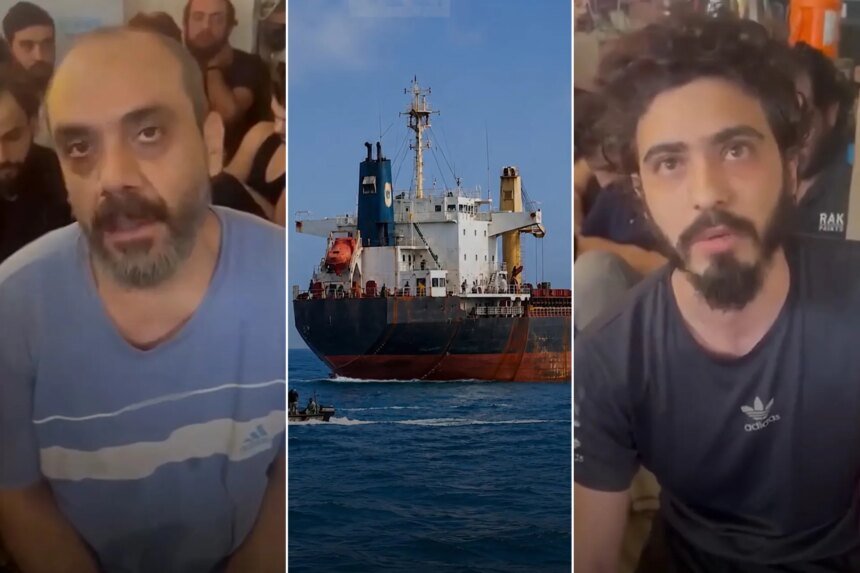
This comes days after the publication of video recordings in which crew members appeared making distress calls, confirming the decline in the quantities of food, water and medicine, at a time when a number of them appeared clearly exhausted, amid the absence of any means of communication with their families.
A number of the kidnapped sailors said in the recording that they spent about two months on board the ship “without adequate internet, food, or medicine,” while one of them indicated that some crew members were suffering from chronic diseases, while another confirmed that among them were parents and their children waiting for their return.
Navigational data monitored by the Al Jazeera Network’s Open Source Unit showed that the last signal issued by the ship “Sward” was recorded on June 14, when it was parked off the Garakad area in the Puntland region, northeastern Somalia.
According to the same data, the ship left the Egyptian port of Adabiya on April 9, heading to the Kenyan port of Mombasa, before it was hijacked near the Somali coast, in an incident confirmed by the European Naval Force and the British Maritime Trade Operations Authority to have occurred in late April.
Families’ appeals
Al-Ali said that she tried to understand the nature of the region in which the ship is being held, noting that the Puntland region has institutions and local authorities, wondering about the reasons for the inability to end the crisis. She also called on the concerned governments and countries of the region to exert more pressure to release the sailors.
She added that the families have not received any direct contact from their children since late May, stressing that all the information they receive comes through video clips that were allowed to be leaked from inside the ship.
The Syrian mother narrates that the greatest shock was when watching the latest recordings, saying that the mothers exchanged the clips through a private group, and that some of them were unable to recognize their children due to the great change that occurred in their features as a result of hunger and exhaustion.
She said: “Every mother was saying, ‘This is not my son, and I did not know my son either,'” considering that the change that appeared on the sailors’ faces reflects the extent of the suffering they have been experiencing since the beginning of detention.
Ongoing negotiations
Regarding efforts to release the crew, Al-Ali explained that the Turkish company that manages the ship constantly confirms that negotiations with the kidnappers are continuing, and that it has asked the families to be patient.
She added that the company informed them that the negotiations had progressed and at one stage reached a financial agreement, but the kidnappers later retracted it, stressing that it did not have independent data that would enable it to verify the details of that story.
The Syrian Seafarers Syndicate on the High Seas had announced in a previous statement that it had been following the case since the first hours of the hijacking, and said that it had received assurances that the crew members were fine and had not been subjected to mistreatment, noting that negotiations were continuing to release the ship and its crew.
The “Sward” case comes as part of a renewed wave of piracy operations off the Somali coast, which has brought to the forefront the security risks facing shipping traffic in the region, at a time when the fate of Syrian sailors is still pending pending the success of negotiations.