Published on 6/29/2026
Government investments in Germany during 2025 recorded the highest growth rate in 25 years, driven by a significant increase in spending on defense and infrastructure modernization, according to data from the Federal Statistical Office in Wiesbaden.
The report showed that total government investments amounted to 147.5 billion euros (about 159.3 billion dollars), an increase of 12.3%, equivalent to 16.2 billion euros (about 17.5 billion dollars) compared to 2024, in the strongest increase since the beginning of the millennium.
Read also
list of 4 itemsend of list
The statistics office said in its statement: “This represents the highest increase in government investments since the year 2000,” noting that 1999 witnessed a relatively larger increase of 14% for statistical reasons linked to reforms in the railway sector.
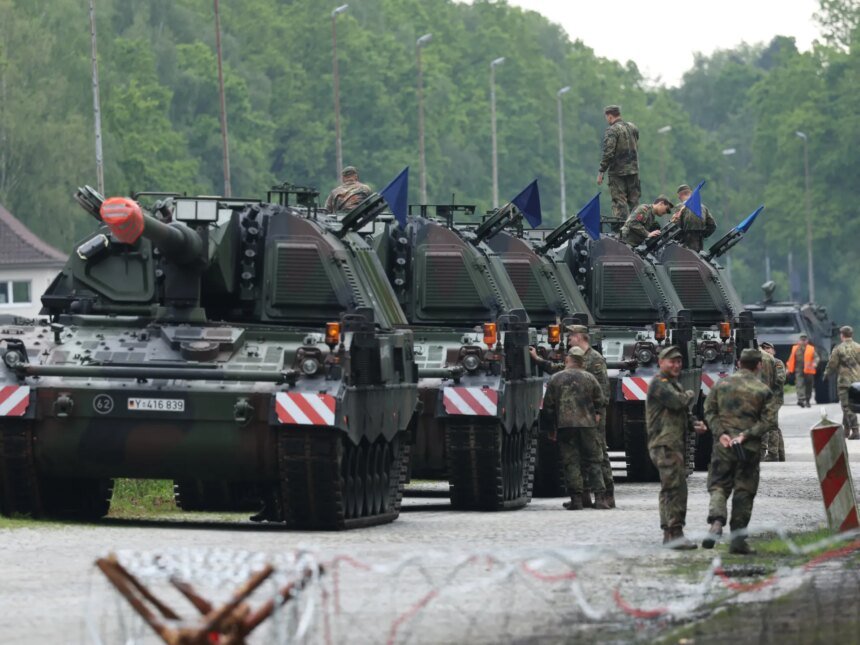
Statisticians attributed this strong growth to the sharp increase in state investments in equipment, which rose by about 47.7%, driven in particular by increased spending on weapons systems and German army purchases.
In this context, Sebastian Dohlen, Scientific Director of the Institute for Macroeconomics and Economic Cycle Research of the Hans Böckler Foundation, said: “Additional borrowing possibilities allocated to defense and investments through private funds are beginning to bear fruit,” adding: “The country’s modernization process is progressing.”

A large share of construction investments
The report indicated that government investments in fixed assets constituted about 16.3% of the total investments in fixed assets within the German economy.
The state also acquired a large share of construction investments, which exceeded 17%, although its growth in this sector did not exceed 2% compared to 2024, which is much lower than previous years.
On the other hand, Dolin called on the German government to ensure that additional borrowing is directed towards actual new investments, saying: “There is still room for movement in this regard,” warning against using part of this money for non-investment expenditures such as reducing taxes and supporting pensions.
Despite this increase, Germany is still below the European Union average in the ratio of government investments to GDP, reaching 3.3% compared to 3.9% on the European average.
Estonia topped the list with a percentage of 7.6%, followed by Poland, France and Austria, which reflects the continuing gap between Germany and a number of European Union countries in the volume of public investment.