Published on 6/28/2026
|
Last update: 20:18 (Mecca time)
Attention is turning to the field reality and the new security arrangements in southern Lebanon in conjunction with the start of the implementation of the ceasefire agreement. This transitional phase raises questions in political circles about the identity of the international bodies that will monitor compliance with the agreement and verify field violations, at a time when security arrangements remain under test.
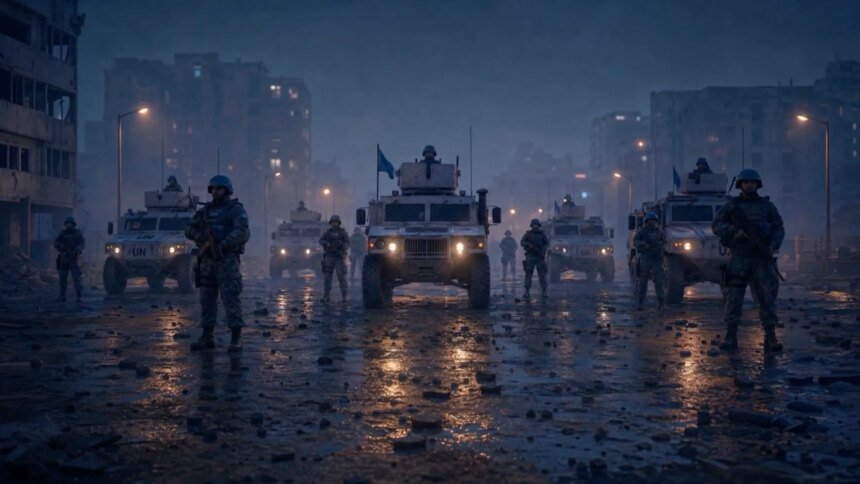
According to a field report prepared by Shaima Boualem for Al Jazeera, the United Nations Interim Forces (UNIFIL) were formed for international contracts along the border.
With the expansion of their tasks pursuant to Resolution 1701, these forces assumed monitoring of the cessation of hostilities and conducting patrols, but their powers did not exceed the limits of monitoring, documenting, and reporting without having the authority to impose commitment by force.
The attacks on its positions reopened the discussion about the feasibility of its continuation, so the Security Council took a decision to extend the force’s mandate until December 2026, with its gradual withdrawal beginning in 2027.
Mechanics Committee
In the face of the vacuum that will be left by the decline of the international role, the Mechanism Committee mechanism has emerged as a practical framework for monitoring the situation on the ground. This committee includes representatives of Lebanon, Israel, and UNIFIL forces under joint American-French auspices, and is entrusted with 4 basic tasks:
- Implementation monitoring: Close follow-up of the implementation of the ceasefire provisions by both parties.
- Verification mechanisms: Establish clear verification and inspection systems at specific points south of the Litani River.
- Information exchange: Collect field data and share it through UNIFIL coordination channels.
- Control support: Supporting the Lebanese army in deployment and control operations over the border area.
Behind the scenes of consultations
Current data indicate a diplomatic movement to present international alternatives, as the leaders of the Group of Seven pushed towards the formation of multinational forces led by French and Italian to support Lebanon, a proposal that faced Israeli reservations about the French role.
In parallel, the corridors of the recent Swiss negotiations between Washington and Tehran witnessed discussions to build a new support framework.
In the same context, observers reported that a phone call between US Vice President J.D. Vance and US Secretary of State Marco Rubio and Lebanese President Joseph Aoun was discussed, during which a proposal was discussed to form a tripartite committee that includes the United States, Lebanon and Iran with the aim of stabilizing the ceasefire and monitoring its implementation on the ground. This proposal is still in the process of political deliberations and has not turned into an announced field mechanism.
The French-Italian initiative to form an international coalition to support Lebanon after the end of UNIFIL’s mandate remains the closest to the official Lebanese position, as it was welcomed by President Joseph Aoun because it is consistent with the Lebanese vision, which sees the Lebanese army as the guarantor of the security of the south and the extension of full state sovereignty.