Published on 6/26/2026
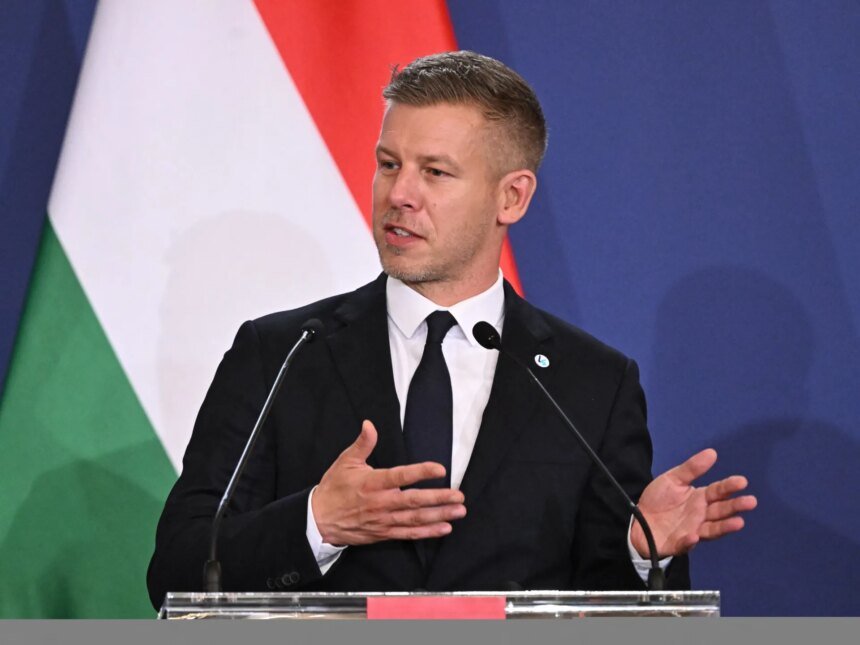
Prime Minister Peter Magar said on Friday that Hungary, which currently does not meet any of the criteria for adopting the euro, may meet these conditions by around 2030, adding that reducing public debt will be the most difficult challenge.
Spending measures taken by former right-wing leader Viktor Orbán before the elections led to the budget deficit rising to levels above initial plans, and prompted a downgrade of Hungary’s credit rating, although rating agencies said that its efforts to join the eurozone would have a positive impact from a credit standpoint.
Read also
list of 4 itemsend of list
Magar received Eurogroup President Kyriakos Perakakis for talks in the Hungarian capital, Budapest, on Friday.
According to what Reuters reported, Perakakis declined to specify a time frame for Hungary’s accession to the eurozone, saying that the Eurogroup would support its efforts to join the monetary union.

Criticism of Orban’s government
Magar criticized Orbán’s government for misleading public opinion, he said, regarding public finances during the press conference held today, Friday.
He said that this review will form the basis of the amended 2026 budget, which is scheduled to be presented to Parliament by the end of next August.
Magar said earlier that the budget deficit this year could reach 6.8% of GDP, exceeding initial estimates of 5%, and constituting more than double the level required to join the single European currency of 3%.
Magar also expressed, according to Anadolu Agency, his support for adopting the euro, noting that the unified currency will bring greater predictability, growth and stability to the Hungarian economy.
He explained that lower borrowing costs, resulting from enhanced market confidence, may achieve significant savings for the state budget.
The euro zone includes 21 of the 27 member states of the European Union, including Germany, France, Italy and Spain.