Published On 6/24/2026
Before the world knew the shock of the Corona pandemic, there was another virus that forced health systems to rethink the way they deal with epidemics. The Ebola virus, which went from local outbreaks in limited areas to a global test of countries’ ability to detect and contain infectious diseases.
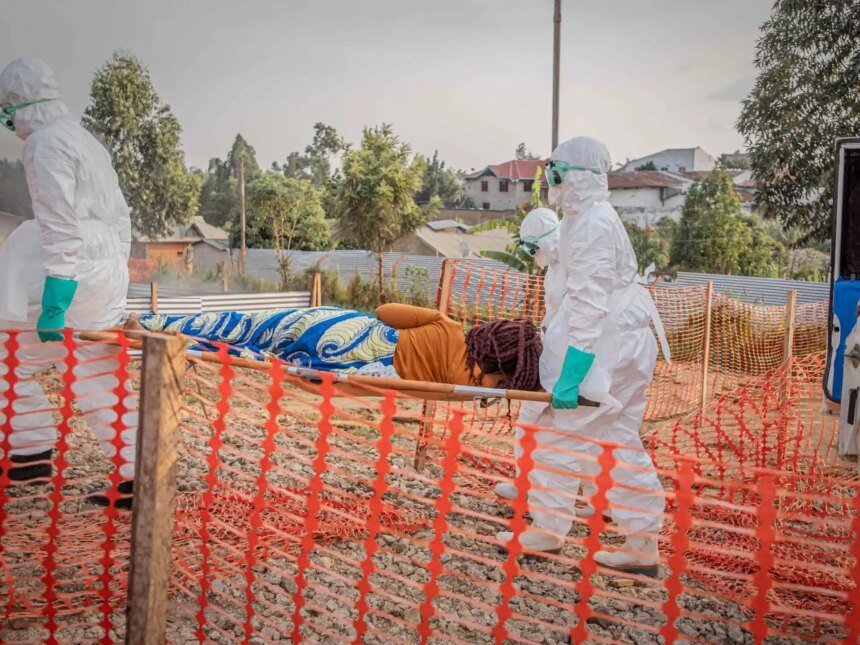
The report prepared by Asmaa Ali for Al Jazeera indicates that the name Ebola has returned to the forefront as the outbreak continues in the Democratic Republic of the Congo, amid warnings that the epidemic has not yet reached its peak, and that controlling it may take many months and may extend to a full year.
Ebola was not just a highly dangerous virus. Rather, it was one of the most complex challenges to public health, due to the high death rates associated with it, which historically averaged about 50%, with a large variation between 25% and 90% depending on the type of virus, the speed of detecting cases, and the quality of care provided.
The complexity of the virus comes from the fact that it is a family that includes several types, most notably the “Zaire” virus, against which the most important approved vaccines have been developed, along with other types such as “Sudan” and “Bundebugyo,” against which the specialized vaccines for the Zaire virus do not provide proven protection.
A watershed moment
But the turning point in the history of Ebola came during the West African outbreak between 2014 and 2016, when the world witnessed the largest wave of the virus since its discovery, as more than 28,000 people were infected, and more than 11,000 died.
This outbreak revealed that the seriousness of epidemics lies not only in the strength of the virus, but also in the ability of health systems to detect and respond to it. Weak early warning systems, difficulty in tracking infection chains, and lack of trust between communities and health authorities have led to the spread of the outbreak.
From the womb of that crisis, major transformations began in the way the world deals with epidemics.
- The first of these transformations was strengthening epidemiological surveillance and early detection systems, after Ebola demonstrated that a delay in monitoring the first cases could turn a limited outbreak into a widespread crisis. The speed of detecting and reporting cases has become an essential part of the first line of defense.
- The second transformation was the development of the concept of contact tracing, as experience has proven that isolating infected people alone is not enough, and that controlling the epidemic requires knowing the people who have been exposed to the infection and carefully monitoring its transmission. Over time, these processes have moved from traditional methods to faster and more effective digital tools.
- The third lesson imposed by Ebola was the importance of community trust. Health response teams in some areas faced resistance due to fear of disease or social stigma, which confirmed that the success of any health response does not depend only on medicine and vaccines, but rather on the involvement of communities and respect for their cultures.
Ebola also contributed to changing the way vaccines and treatments were developed, as repeated outbreaks prompted scientists to accelerate clinical trials during crises instead of waiting for the spread of the disease to end. These experiences contributed to the adoption of the “Ervibo” vaccine against the Zaire strain, and also provided lessons that benefited vaccine development efforts during subsequent epidemics, including the Corona pandemic.
Although Ebola was not the only factor that reshaped the global health system, it was a critical milestone that exposed weaknesses in epidemic preparedness, and prompted countries to invest in health surveillance, rapid response, and international cooperation.
While the virus continues to emerge from time to time, the question that Ebola imposed on the world remains: Has humanity become more prepared to face the next epidemic, or do the lessons still need broader application on the ground?