Published on 6/25/2026
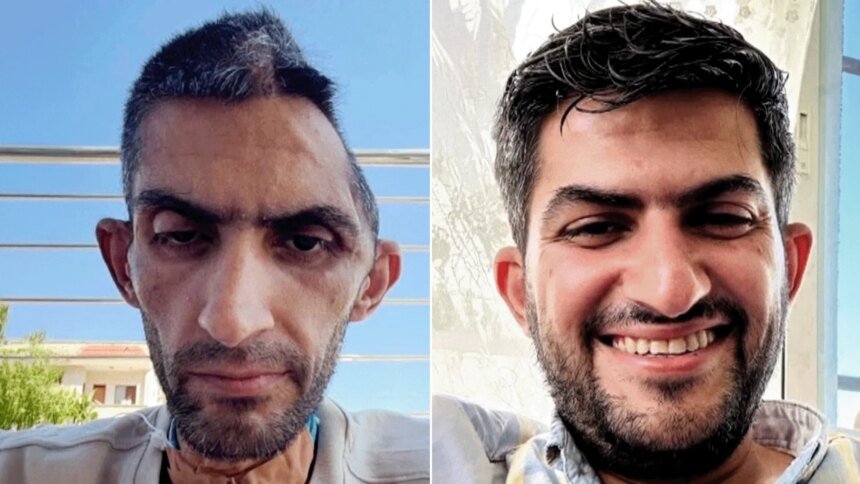
The story of journalist Mujahid Bani Mufleh did not end once he gained freedom and left the gates of Israeli prisons. The body that left the cell carried with it deep scars, and a bitter journey of treatment that continues to this day.
Through poignant words and sincere sentiments that he wrote on social media platforms, Mujahid shared his testimony with the world, describing 7 months of Israeli detention as a harsh lesson in depriving a person of his well-being. There, in the narrow corridors, professional words faded and were replaced by vivid and violent meanings of hunger and complete helplessness, and pain that ravages the body and soul on a daily basis without stopping.
The testimony given by Mujahid was not just a passing complaint, but rather raised the alarm about the terrifying health reality inside Israeli prisons. In this context, the Palestinian Prisoners’ Club confirmed that the case of Mujahid Bani Mufleh accurately embodies the policy of “deliberate medical neglect” that prisoners face.
The Prisoner’s Club statement said: “The sharp deterioration in journalist Bani Mufleh’s health after his release, and his entry into a long and complicated treatment journey, is an accurate reflection of what the prisoners are going through inside.”
The health complications that Mujahid is struggling with today are not simple, as he faces serious health risks, the most prominent of which is a severe cerebral hemorrhage for which he is still receiving treatment, so that his body remains a living witness that freedom from prison does not always mean recovery from its consequences.