As leaders gather at the Jeju Forum for Peace and Prosperity hosted by South Korea to discuss the future of peace in the region, the Korean Peninsula is witnessing a critical political and security moment.
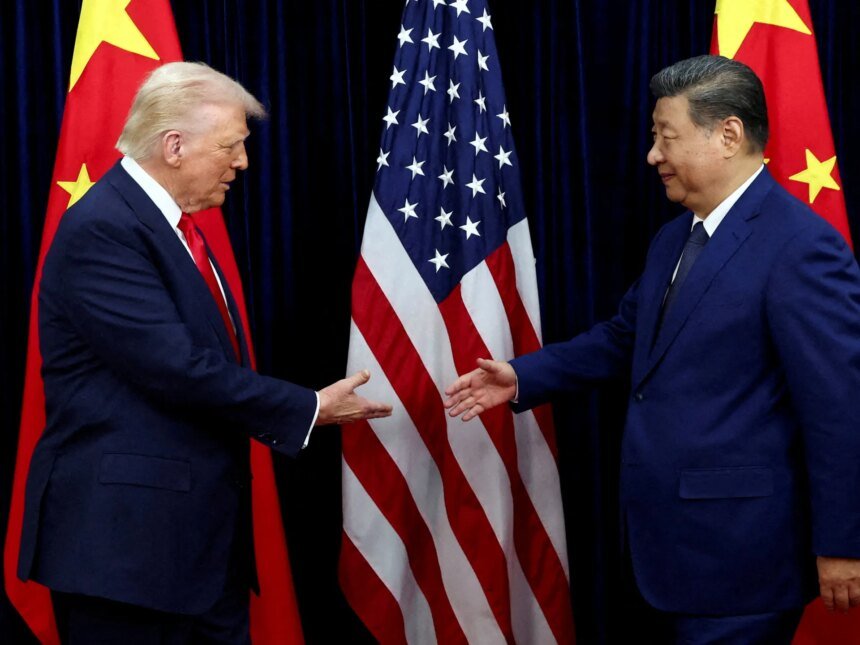
While a diplomatic discourse calling for stability is on the table, developments on the ground and strategic transformations point to a more complex reality, in which the issue of the two Koreas is intertwined with the competition of major powers, most notably the United States and China, as South Korea relies on its security alliance with the United States, in parallel with a deep economic connection to China, which makes any change in the balance of power between Washington and Beijing a direct factor in its security calculations.
Read also
list of 4 itemsend of list
As for North Korea, it has strengthened its position by enshrining its status as a nuclear state in its constitution, and re-characterizing the South as an “enemy state,” based on the expansion of its military arsenal and its partnerships with China and Russia.
Internal southern transformations
The complexity of the scene began from within South Korea itself. In an article in the Asia Times newspaper specializing in Asian affairs, a remarkable shift in South Korean politics was highlighted, as some of the harshest criticisms of Seoul’s policies are coming from Washington more than they are coming from the conservative opposition at home.

The article indicates that American politicians have adopted a critical discourse towards the administration of President Lee Jae-myung, especially with regard to the nature of the alliance relationship with the United States and the influence of China in this equation, at a time when the conservative opposition is in a state of confusion after electoral defeats.
According to what the article quoted from Western reports, the current trends in South Korea may weaken democratic balances and affect the foundations of the alliance with Washington.
Although this proposal was met with official rejection from Seoul, it still reflects growing American concern that the new arrangements will change the rules of the game with a major ally in confronting China.
In this context, the ongoing discussions in Congress and the US administration about the future of the alliance with Seoul appear to be part of a broader reading of South Korea’s position in the influence struggle between Washington and Beijing, and not just a passing disagreement over internal details.
Koh Yu-hwan:
North Korea redefined the South in its constitution as an “enemy state” and abandoned the goal of reunification, effectively torpedoing any political ground on which to launch a new dialogue.
The problem of sovereignty and deterrence
Seoul’s quest to regain wartime operational control from the United States is one of the most sensitive issues within the alliance. The government presents this step as a continuation of national sovereignty, while critics warn – according to the newspaper – that the South Korean army is still heavily dependent on American intelligence, logistical and strategic capabilities, which makes the complete separation of military leadership a complex issue in practice.
The US Congress has reacted to this issue by restricting funding for any leadership transfer unless the administration proves that the step serves American interests, in a clear indication of the level of suspicion within American institutions regarding the timing and limits of this shift.
On the ground, Seoul’s steps to ease military restrictions near the border with the North, including moving the line of civil control and removing some obstacles, sparked internal controversy, as You describe it The government has taken measures to improve living conditions and local development, while critics see it as a gradual undermining of deterrence in the absence of any mutual concessions or confidence measures on the part of the government. Pyongyang.
In addition, the file of freedom of expression emerged as an internal factor with an external extension, after the proposed amendments to the Information and Communications Network Law raised official American concern, as the US State Department warned – as reported by Asia Times – that the broad wording may be used to restrict freedom of expression and complicate technological cooperation between the two countries.
The rise of the Chinese worker
China’s importance in Seoul’s strategic equation is increasing, as President Lee’s administration seeks what it calls a “comprehensive restoration” of relations with Beijing, at a time when concern is growing in Washington about the impact of Chinese influence on the options of allies in East Asia, led by South Korea.
The Asia Times newspaper notes that these concerns prompted the US Senate – for the first time – to ask the Pentagon to prepare an official assessment of the scope of the influence activities exercised by the Chinese Communist Party inside South Korea, and the extent of their impact on US military and commercial interests.
This balance between security dependence on the United States and deep economic connection to China is no longer just a diplomatic challenge, but has turned into a strategic dilemma that affects the foundations of China’s policy. Seoul External, so Pat Each step is read in light of a crucial question: To what extent can South Korea maintain an independent margin of maneuver in light of the intensification of the US-Chinese competition at the level of the entire region?
Blocked dialogue horizon
On the northern front, the South China Morning Post confirms that efforts by Southern President Lee Jae-myung to improve relations with Pyongyang have reached a dead end a year after he took power.
The report quotes Emeritus Professor at Dongguk University, Koh Yeo-hwan, as saying that North Korea redefined the South in its constitution as an “enemy state” and abandoned the goal of reunification, which practically torpedoed any political basis on which to launch a new dialogue.
In addition, Pyongyang has enshrined its status as a nuclear state in its constitution, which makes the process of denuclearization more complex from a political and legal standpoint, at a time when the margin for diplomatic activity in front of Seoul has diminished due to Washington’s preoccupation with other files in the Middle East and elsewhere, and Beijing’s devotion to dealing with rising regional tensions.
According to the newspaper, North Korean leader Kim Jong Un also further complicated the situation by announcing plans to arm the navy with nuclear weapons and build larger warships, with a declared commitment to continuously expand the nuclear arsenal.
In response, South Korea strengthened its cooperation with the United States in the field of nuclear deterrence, and expanded trilateral security cooperation with Japan, in parallel with the development of its self-defense capabilities, which created – according to analysts quoted by the South China Morning Post – a “self-feeding” mutual escalation cycle that is difficult to break in the short term.
The remaining realistic option for peace on the Korean Peninsula is a peace framework involving the United States and China, with the aim of replacing the 1953 Armistice Agreement with a new peace treaty.
Peace as an international equation
In another analysis by The Asia Times about the future of peace on the Korean Peninsula, it put forward the hypothesis that the traditional framework based on the idea of reunification is giving way in favor of the reality of two hostile states, especially after Pyongyang explicitly declared its rejection of the concept of peaceful coexistence and considers the South a permanent enemy.
The analysis linked this shift to increased leadership confidence in the North as a result of expanding nuclear and missile capabilities and deepening cooperation with Russia, which reduces its incentives to open up to Seoul or Washington.
In this context, the South China Morning Post quoted experts as saying that the remaining realistic option is a broader peace framework in which the United States and China participate alongside the two Koreas, with the aim of replacing the 1953 armistice agreement with a new peace treaty.

Academic Koh Yu-hwan points out that nuclear disarmament can be addressed within this broader framework, not as a precondition, but rather as part of a gradual process of reshaping the security environment over a longer period of time.
However, achieving such a path remains dependent on the ability of the major powers to manage their rivalry, because the American-Chinese rivalry, coupled with Russia’s increasing involvement in Pyongyang’s calculations, is reshaping the Korean Peninsula as an arena of open geopolitical conflict.
It seems that peace on the Korean Peninsula is no longer measured only by the nature of the relationship between the North and the South, but rather by the extent of the success of Washington and Beijing in managing their competition and avoiding any direct confrontation in one of the most sensitive hotspots of tension in the world.