
Published on 6/22/2026
“Weightlifting exercises may not be the joy of life, but they may be the secret to a longer life,” with this sentence the British newspaper “The Telegraph” opened a recent report on the benefits of lifting weights.
In the same context, Reg Hensley, an assistant professor of physical therapy at Northwestern University, told the American “Time” magazine: Imagine if you could do something that not only improves your mood, cognition, and energy, but also reduces your likelihood of developing cancer, diabetes, heart disease, and even death. It is not a pill, but rather “strength exercises or weight lifting.”
Read also
list of 4 itemsend of list
Many people avoid weight lifting exercises because they believe that they are limited to building huge muscles, and they – especially women – are not interested in that. But certified personal trainer Kat Kennedy confirms that weightlifting exercises are not only about “huge muscles,” but rather about building a stronger, healthier, more capable personality, and that they are not limited to bodybuilders, but rather to everyone who wants to feel better, move better, and live a more quality life.
Whether you’re 18 or 80 – man or woman – and looking to improve your mood, protect your bones or enjoy better health as you age, weight training “can change your life in ways you don’t expect.”
Does lifting weights reduce the risk of premature death?
A recent study that included about 150,000 people who were followed for up to 30 years shows that doing weightlifting exercises for between 90 minutes and two hours per week “can reduce the risk of premature death from any cause by 13%, and by 19% for heart disease and stroke.”
The study also showed that people who lift weights, do body-weight exercises, or use tools such as resistance bands, “have a 27% lower risk of death from neurological diseases.”

The researchers confirmed that their results support combining “aerobic exercises,” such as cycling, jogging, and swimming, with “strength exercises and weight lifting.” They noted that doing strength exercises for more than two hours a week did not show additional benefits, which means that two sessions per week – each lasting about 45 minutes – seems to be the “ideal dose” for a longer, healthy life.
Tom Burton, responsible for health and well-being policies at Sports England, told the Telegraph newspaper that physical activity based on strengthening muscles is an especially effective tool for supporting healthy aging, as it helps prevent diseases or delay their appearance, and maintains the ability to move and become independent.
What are weight lifting exercises?
Christopher Travers, an exercise physiologist, tells the Cleveland Clinic website that weightlifting is “a type of resistance or strength training that helps you build stronger, leaner muscles, and improves your quality of life by preventing injuries and supporting the ability to perform daily activities.” It can be practiced by:
“Weightlifting exercises rely on using your body to move any resistant object,” Travers adds, even if it is just household items or bottles filled with water or sand.
As your muscle mass increases, you can advance your training by “increasing the weight, number of repetitions, or number of sets in each exercise.”
Scientifically proven benefits of weightlifting
“With all due respect to aerobic exercise, if you want to improve your physical fitness and overcome challenges inside and outside the gym, then weightlifting exercises are the perfect solution,” says K. Alicia Vetters, a certified strength and conditioning specialist, noting that experts agree on the broad benefits it provides.
Weightlifting offers a wide range of “physical, cognitive, and psychological” benefits when practiced correctly, and research confirms its role in “improving muscle mass and strength, metabolic health, cardiovascular function, bone density, mood, and cognitive performance.”

“As you age, muscle mass starts to decline, and you need your muscles to be stronger, and your joints better, so you can move freely and do what you want to do,” Travers says. Among the effects of lifting weights on the mind and body:
How do you start lifting weights without fear?
Weightlifting exercises may seem daunting to beginners, due to the variety of weights, equipment and movements, but Travers emphasizes that “anyone can learn to lift weights at any age, they just need a clear goal and basic knowledge of the correct technique.”
To begin, it is recommended to define the goal of the exercise, for example:
- Building muscle strength: Use heavier weights, with fewer sets and repetitions.
- Building endurance: Lighter weights, with more sets and repetitions.

Since goals may change over time, Travers advises beginners to:
- If possible, seek the help of a specialized trainer to establish a correct foundation in lifting weights and postures.
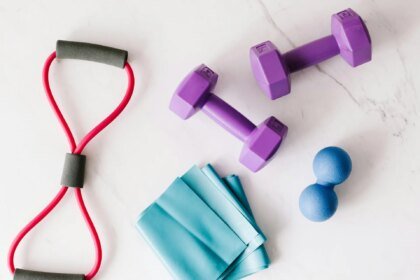
- Start with body weight exercises or resistance exercises using elastic bands (two sets of 8 to 15 repetitions of each exercise) to learn movement and postures.
- Attend two to three full-body weightlifting training sessions per week.
- Gradually move toward using machines or dumbbells and free weights.
- Prioritize safety and recovery, with a warm-up and rest between sets, to avoid injuries and muscle strain.
According to the Mayo Clinic:
- If you have a chronic disease or are over 40 and have never exercised before, consult your doctor before starting.
- Choose a weight or resistance level that makes you feel muscle fatigue after repeating it 12 to 15 times, and when the exercise becomes easy, gradually increase the weight or resistance.
- Listen to your body, if exercises cause you pain, stop and try a lower weight, and do not forget to breathe during the exercise.
- Give each muscle group a day of rest between sessions, to allow it the opportunity to recover.