
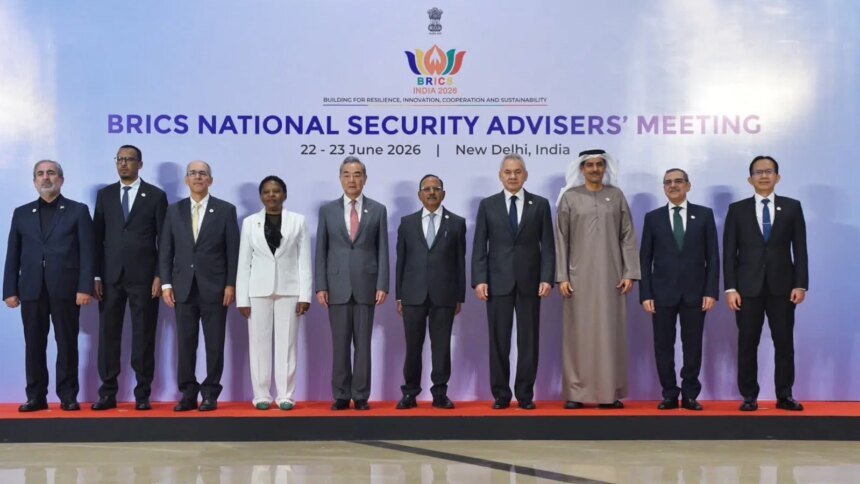
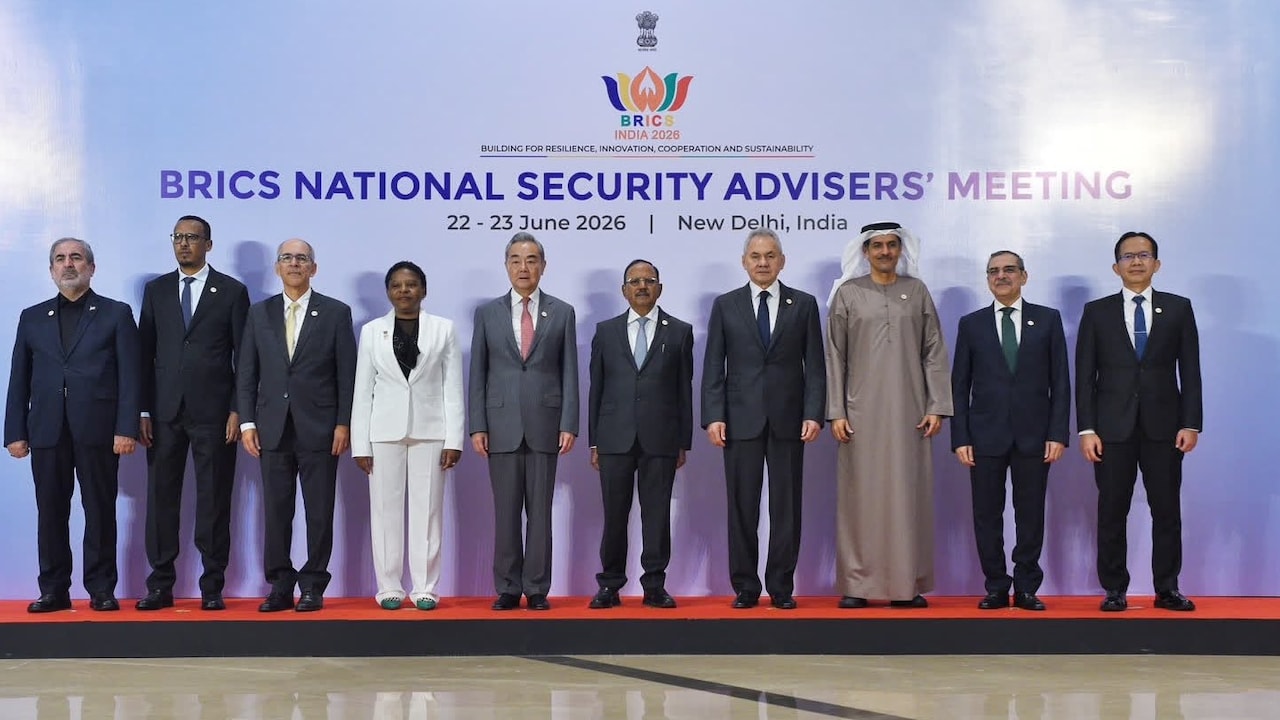
National Security Advisers (NSAs) and senior security officials from BRICS nations on Tuesday called for stronger cooperation to address a widening range of global security challenges, including terrorism, cyber threats, energy insecurity and disruptions to global supply chains, during a high-level meeting hosted by India in the national capital.
The 16th BRICS National Security Advisers’ Meeting, held under India’s chairship of the grouping, led by India’s NSA Ajit Doval, brought together top security representatives from member countries to discuss both traditional and emerging threats confronting the international community.
According to India’s Ministry of External Affairs (MEA), the discussions focused on evolving security risks that increasingly transcend national borders. Delegates exchanged views on issues ranging from energy and food security to climate-related instability and the misuse of emerging technologies by terrorist organisations.
The meeting highlighted growing concerns over the security implications of rapid technological advancements, particularly as extremist groups and criminal networks adopt sophisticated digital tools. Participants stressed the need for coordinated responses to counter such threats while ensuring the secure use of information and communication technologies.
A major focus of the deliberations was strengthening collaboration among BRICS members in the fight against terrorism. The NSAs reviewed the outcomes of meetings held earlier this year by BRICS Joint Working Groups on Counter-Terrorism and on Security in the Use of Information and Communication Technologies.
Officials emphasised the importance of enhancing information-sharing mechanisms, building institutional capacities and improving coordination among law-enforcement agencies across member states. The participants reaffirmed their collective commitment to combating terrorism in all its forms and manifestations, including efforts to curb the exploitation of new technologies by terrorist networks.
The discussions reflected a broader recognition that security challenges are becoming increasingly interconnected. Delegates noted that disruptions in supply chains, food shortages, cyberattacks and climate-related crises can have significant implications for national and international stability, requiring greater multilateral cooperation.
India used the platform to advance its 2026 BRICS agenda under the theme “Building for Resilience, Innovation, Cooperation and Sustainability”. The theme has guided New Delhi’s efforts to promote practical cooperation among member countries across a range of sectors, including security, technology and sustainable development.
The participating delegations expressed full support for India’s leadership of the bloc this year and welcomed initiatives aimed at deepening cooperation among BRICS countries. Observers said the endorsement underscores the growing importance of the grouping as it seeks to expand its role in addressing global governance and security issues.
The meeting also underscored the increasing relevance of non-traditional security concerns in international diplomacy. While conventional security threats remain significant, policymakers are paying greater attention to challenges posed by cyber vulnerabilities, climate change, technological disruption and economic shocks.
Following the conclusion of the meeting, the NSAs and heads of delegation jointly called on Prime Minister Narendra Modi. The interaction provided an opportunity for leaders to discuss the outcomes of the deliberations and reaffirm their commitment to closer cooperation within the BRICS framework.
India’s hosting of the meeting comes at a time of heightened geopolitical uncertainty and growing concerns over global security risks. By bringing together senior security officials from BRICS nations, New Delhi sought to reinforce collective approaches to emerging challenges and strengthen cooperation among member countries on issues that increasingly require coordinated international action.