Published on 6/23/2026
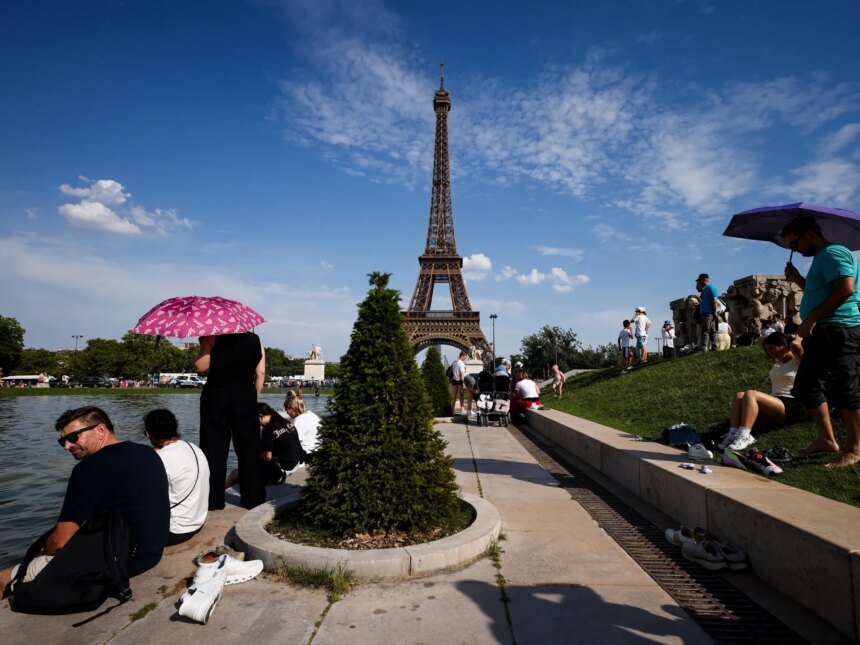
The French authorities announced the death of at least 18 people, including two children, as a result of the severe heat wave hitting Western Europe, amid a rise in the number of victims and record temperatures in a number of countries, while meteorological agencies warned that the coming days may witness unprecedented levels of temperature in several European countries.
French authorities said that two children – aged 2 and 4 – died after being found inside the family car in the southeast of the country, in an incident that reflects the increasing dangers of high temperatures.
Three elderly people also died in the Bordeaux region due to health complications resulting from the current heat wave, while the authorities recorded 13 drowning cases – since last Sunday – with large numbers of residents heading to beaches, rivers and bodies of water to escape the heat.

Standard grades in France
This toll comes at a time when France recorded record levels of temperature that it had never seen before during the month of June. The Meteorological Authority declared a state of maximum red alert in 54 provinces, including more than half of the country’s regions and inhabited by about 38.8 million people, and an orange state of alert was imposed in 40 other provinces.
Several French cities recorded new records, as the temperature reached 41.9 degrees Celsius in Bordeaux, exceeding the previous record in August, and it reached 41.2 degrees in Poitiers, exceeding the highest level recorded since 1947. The city of Rennes also recorded 40.6 degrees Celsius, while the temperature in Chateaumiens reached 43.3 degrees, which is one of the highest temperatures recorded during the current wave.
The French Meteorological Authority said that the country recorded – yesterday, Monday – the highest average temperature for the month of June since data recording began, noting that more than 90% of France’s population is affected by the current heat wave.
The exceptional climate conditions prompted the authorities to take broad measures that included closing 1,342 schools and educational institutions or modifying their academic schedules, as well as adopting measures to protect workers, especially in the construction sector.
Commenting on the developments, French Civil Safety Service spokesman Jerome Boulanger called on residents not to swim except in controlled areas, warning of the increased risk of drowning during periods of extreme heat. Official data indicate that drowning deaths rose by 172% in France during heat waves last year.
Europe is on fire
The effects of the heat wave spread to other European countries, prompting the authorities to take precautionary measures.
The country entered its second day of the heat wave, with a red alert issued in the Basque region in the north, after temperatures exceeded 40 degrees Celsius. The temperature in the capital, Madrid, reached 40 degrees, prompting the authorities to open air-conditioned shelters for the homeless and the most vulnerable groups.
In the city of San Sebastian in northern Spain, temperatures approached 40 degrees Celsius, a level more than double the usual rates for this time of year. The streets of southern cities – such as Cordoba and Seville – also seemed less crowded, with residents resorting to staying indoors during daylight hours.
Italian authorities issued red warnings in 12 cities, including Rome, Milan, Turin, Venice, Florence and Bologna, with calls for the elderly and sick to avoid direct exposure to the sun. The Red Cross in Milan allocated cooling centers equipped with solar-powered air conditioning systems to receive the most affected groups.
The Belgian Meteorological Authority expected that this week would be the hottest ever in the country, with average temperatures exceeding 27 degrees Celsius, which prompted the railway authority to cancel a number of trips during peak heat periods. In the Netherlands, a yellow alert is in effect due to what the authorities described as “suffocating and annoying heat,” with temperatures expected to reach 37 degrees Celsius by the end of the week.
The British Met Office has issued a rare red alert for large areas of southern England, warning of an “extreme heatwave” that could push temperatures to between 38 and 40 degrees Celsius in some areas, including London, Birmingham and Cardiff. Expectations also indicate that the temperature in the coming days will exceed the record recorded for the month of June, amounting to 35.6 degrees Celsius.
Akshay Deoras, a specialist in atmospheric sciences at the University of Reading, warned that Britain is facing a “severe and unprecedented” heat wave, expressing his fears about its repercussions on public health, infrastructure and basic services.
The heat wave in Germany was accompanied by extreme weather phenomena, as some areas witnessed strong storms and heavy hail over the weekend. The police also announced the death of 5 people by drowning, while meteorology expects temperatures to exceed 40 degrees Celsius in the west and southwest of the country, with the possibility of breaking the national record of 41.2 degrees Celsius.

Other countries are also preparing for a more severe wave in the coming days, as Portugal, Switzerland, and Austria expect the high temperatures to continue until at least the end of the week, while areas of Croatia, Serbia, Bosnia and Herzegovina, and North Macedonia are likely to witness temperatures approaching 35 to 38 degrees Celsius.
This is the second major heat wave to hit Western Europe in less than a month. Scientists confirm that climate change caused by human activities contributes to increasing the frequency and severity of extreme weather phenomena, especially heat waves, which have become more intense and persistent compared to what they were in previous decades.