Published on 6/21/2026
|
Last update: 22:53 (Mecca time)
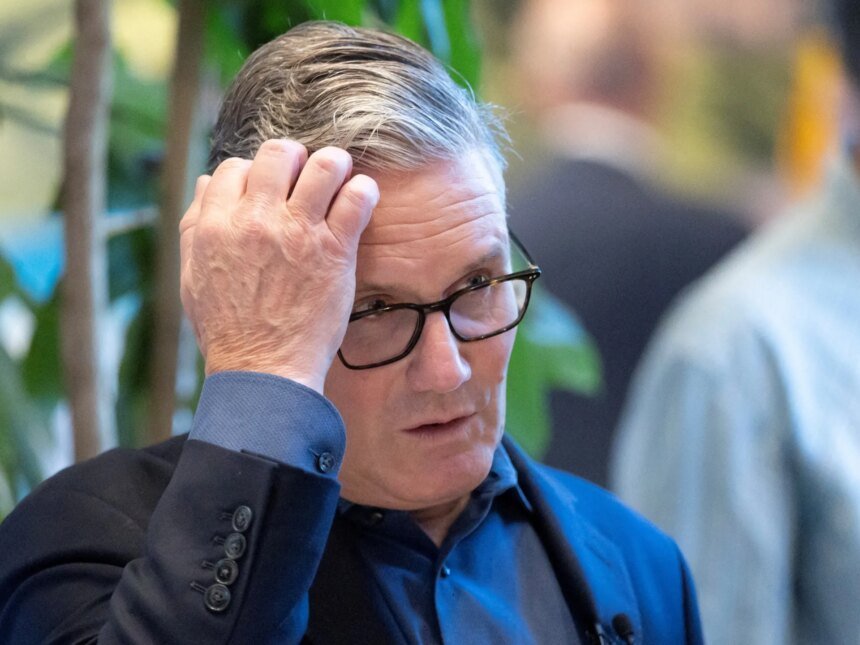
The British political arena is witnessing a remarkable escalation in pressure on Prime Minister Keir Starmer, which intensified after Andy Burnham won a parliamentary seat, in light of divisions within the Labor Party, amid internal and external political movements that reflect the depth of the crisis he is going through.
Resignation or confrontation?
Starmer faces a pivotal moment in his political career, between the option of stepping down or engaging in a potential confrontation with Andy Burnham.
British Business and Trade Minister Peter Kyle said on Sunday that Starmer “takes his time to think about the political reality and the challenges and opportunities he finds himself facing,” stressing that he is holding “conversations with a very wide range of people,” in statements that came after a “frank” dialogue that he said he had with Starmer on Friday.
Kyle’s statements come in conjunction with media reports about the possibility of Starmer resigning within days, at a time when political data indicate a decline in support for him within the ruling party.

Pressures and invitations
Sky News also quoted sources as saying that Foreign Minister Yvette Cooper informed Starmer of the need to step down, an indication that pressure is shifting to within the narrow government circle.
The Observer newspaper also reported – citing members and officials of the Labor Party – that the Prime Minister may announce his resignation tomorrow, Monday, noting that “he now appears to have resigned himself to the idea of leaving” after realizing the decline in the level of political support necessary for his continuation.
The newspaper added that Starmer intends to set a timetable for his departure, while holding extensive consultations over the weekend from his country residence in Checkers.
On the other hand, Reuters earlier quoted a government source as saying that Starmer “remains focused on his duties,” in an attempt to contain the escalating speculation.

Burnham wins
These developments came after Andy Burnham, the mayor of Greater Manchester and nicknamed the “King of the North,” won a parliamentary seat in by-elections, which allows him to officially run for the leadership of the Labor Party.
Burnham stressed – in his speech after the victory – that the party now has an “opportunity for change,” indicating his readiness to enter the leadership race. He is expected to be sworn in as a member of parliament, which is a prerequisite for running for party leadership.
If he wins the party leadership, he will automatically become prime minister since the Labor Party has a parliamentary majority.
Despite these pressures, Starmer – who lacks popularity among voters, according to polls – has previously stressed that he will confront any attempt to oust him.
Starmer, who took power in July 2024, has been trying to remain in power for months, under a term marred by many mistakes, policy shifts, and resignations among ministers.
External criticism
At the international level, US President Donald Trump expressed his position on the crisis, writing on his “Truth Social” platform that “Keir Starmer will step down as Prime Minister of the United Kingdom.”
Trump added that Starmer “failed miserably on two very important issues… immigration and energy,” calling for “opening the oil fields in the North Sea,” before concluding by saying: “I wish him success.”
Scenarios
The proposed scenarios range from Starmer’s immediate resignation to an agreement on an orderly transitional phase with his opponents, allowing him to leave without sparking a widespread internal conflict within the party.
Although Starmer has publicly confirmed his commitment to remaining in his position, the pressure on him is mounting with the growing conviction within the Labor Party that his term is nearing its end, amid expectations that he will announce a timetable for resignation tomorrow, Monday, coinciding with Burnham being sworn in as a member of the House of Commons.
The option of holding internal elections also remains, as Starmer has the right to run automatically, while his rivals, including Burnham and former Health Minister Wes Streeting, need the support of a sufficient number of MPs to run.
If Starmer resigns, Britain will have its seventh prime minister in nearly a decade, an indication of the state of political instability the country is experiencing, as the overthrow of party leaders has become easier due to internal pressures and a decline in popular confidence.
The British Cabinet also announced months ago its support for Starmer, who has been under increasing pressure to step down due to the repercussions of Peter Mandelson’s appointment as ambassador to Washington despite his ties to Jeffrey Epstein, who is convicted of sex crimes.