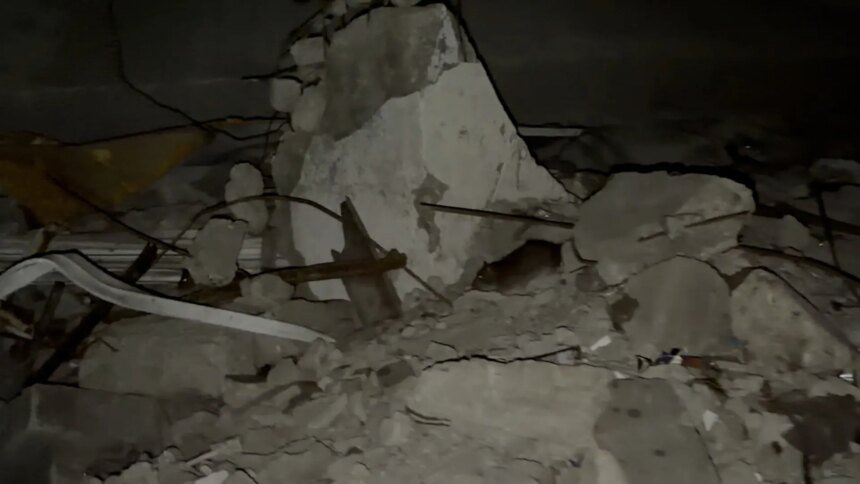
Gaza- A war hidden from the eyes of the world reaches its climax with sunset in the displacement camps in the Gaza Strip, where rodents emerge from their nests among the rubble, piles of waste, and sewage manholes, and sneak into the crowded tents to begin a night battle that the displaced wage in defense of their children and what remains of their human lives.
Before going to sleep, mothers and fathers close the zippers of the tents tightly, tighten the frayed ends, and gather their children next to them. Then they take turns staying up and watching, watching for any movement outside or any sound coming from among the luggage and covers.
It is not enough to survive bombing, hunger, and displacement, as another danger imposes itself on the details of their daily lives, sneaking in the darkness and sharing with the displaced their tents, food, and even their children’s sleeping places.

Stones are defense barricades
This battle is not an exception for some families, but rather a recurring scene in most displacement camps. During Al Jazeera Net’s field tour in the Yarmouk camp in central Gaza City, fear of rodents appeared to be a collective condition shared by residents, no matter how strict the measures were.
With slow steps that were almost impossible to bend, Attaf Al-Naizi was dragging her feet towards her tent, carrying two small stones in her arms. The task seemed larger than the size of the two stones; The woman who was displaced from the Shujaiya neighborhood about 3 years ago with her elderly husband, and who suffers from chronic diseases, including diabetes and high blood pressure, was barely able to continue walking.
White warts spread on her palms, leaving clear traces on the skin, while she held the two stones to her chest as if carrying a last means of defense. As soon as she reached the door of her tent, she quickly placed them at the edges of the nylon spread on the ground.
Attaf told Al Jazeera Net that these stones are nothing but a daily attempt to block the holes and outlets through which rodents may sneak into the tent, as “I put nylon and close it with stones to prevent rodents from intruding,” explaining that rats are often able to dislodge the covers or sneak through the openings created by the aging and wear of the tent.

Endless night battles
The night hours are a constant source of terror for Attaf, who added, “When darkness falls, I curl up on myself. My husband is old and cannot defend himself, so I spend the night awake crying in fear and terror.”
But the stones that Attaf collects every day, and all the other attempts that the displaced resort to to close the openings of their tents, do not always succeed in repelling rodents. In the neighboring tent, the rats reached the children, turning the night into a direct confrontation for Ahmed Harz to protect his six children.
Ahmed reveals to Al Jazeera Net his hand, which shows traces of the last bite of a rodent, after it pounced on him while he was trying to keep it away from his infant child. This was not the first time; He was bitten 3 times, once on his foot while he was sleeping inside the tent.
While Ahmed engages in a night battle in a race with them, he spends his day working so that he can buy poisons to try to combat the rodents that are disturbing them.
Losses affecting the necessities of life
However, the suffering of families does not stop at bites, fear and long stays. Rather, it extends to other losses, including food and the few possessions that the displaced were able to keep amid repeated displacement.
Umm Ahmed Al-Bawab stands at the entrance to her tent, destroying bags of rice and legumes. She comments to Al-Jazeera Net, saying: “The rats spoiled all of this. They spent the night eating them and lying among them.” She continued, “These are predatory rodents, and we have never seen anything like them before. They ate my child’s shoes.”
Umm Ahmed holds in her arms her little girl, whose body is covered with marks of mosquito bites. She points to the pillows lying on the floor, saying that mice often come out from under them to share the space that is barely large enough for them.
Outside the tent, stray cats are widespread and roam throughout the night between the tents, fighting and digging up whatever remains they find, while residents spend the night hours listening to the sounds and constant movement around them.
Umm Ahmed adds to Al Jazeera Net: “We are almost out in the open, and there is no way to do anything,” noting that all the family can do when rodents or cats approach is to hit the sides of the tent to expel what is hovering around it.
Rodents do not appear to be a passing phenomenon, but rather a direct result of the collapse of the environmental services system in the Gaza Strip since the start of the Israeli war of extermination on October 7, 2023.

Stimulating environment
For his part, the Executive Director of the Joint Services Council, Abdul Rahim Abu Al-Qumbuz, says that campaigns to combat rodents and insects stopped when the necessary pesticides ran out, while millions of cubic meters of rubble, piles of accumulated waste, and open sewage ponds provided food sources for them and suitable environments for them to reproduce.
In his interview with Al Jazeera Net, Abu Al-Qumbuz warned that the various types of rats spread in Gaza do not limit their damage to destroying food and stocks, but also transmit diseases through urine, feces, and the parasites they carry, which exacerbates the health risks to the population, especially in crowded camps.
According to him, rodents reproduce at very high rates, as one rat can produce thousands of rats within one year under the current conditions, which makes controlling them more difficult with the absence of the necessary capabilities for control.
The situation is no different for insects, as he points out that untreated sewage water, which is pumped daily to different areas and to the seashore, has contributed to increasing the spread of mosquitoes and disease-carrying insects, pointing out that before the war, municipalities relied on regular biological and chemical control programs to limit their spread.

Do pesticides stop the danger?
Although during the past weeks, limited quantities of pesticides were allowed to enter, they only meet a small part of the actual needs. Abu Al-Qumboz confirmed that the Gaza Strip needs about 100 tons of pesticides to confront the current crisis, while what actually entered did not exceed 15 tons, including limited quantities allocated for control operations in camps, waste dumps, and sewage stations.
He also warned against citizens resorting to mixtures and poisons of unknown origin to combat rodents, stressing that dealing with these materials requires specialized technical supervision, and that the use of unlicensed materials may cause serious health and environmental risks.
He stressed that municipalities are trying, despite limited capabilities, to transfer waste from residential areas to temporary dumps, open closed streets and facilitate cleaning work, but the destruction of infrastructure and the lack of machinery, spare parts and fuel severely limit their ability to respond.
The danger of rodents is also expanding to threaten public health in Gaza, as the Director General of Preventive Medicine at the Ministry of Health, Dr. Abdul Rahman Abu Rahma, warns that rodents are reservoirs of diseases and epidemics, as they can transmit infection through bites or contact with feces and urine remains, or through fleas and insects that live on their bodies, in addition to contamination of food and exposed water sources.
Among the diseases whose spread raises increasing concerns is leptospirosis resulting from exposure to water or soil contaminated with rodent droppings, in addition to salmonella and rat bite fever, in addition to fears of serious viral diseases that may be transmitted through inhalation of droplets contaminated with their droppings.
Rampant diseases and international warnings
Doctor Abu Rahma indicated in his interview with Al Jazeera Net that since the beginning of 2024, the Ministry of Health teams began recording hundreds of cases related to rodent bites and direct exposure to them, especially in displacement camps, warning that children, the elderly, and widespread malnutrition among the population make the health effects more serious in light of the weak capabilities of diagnosis and treatment.
He added that the Ministry has circulated protocols to deal with cases of bites and injuries resulting from rodents, which include cleaning and sterilizing wounds, visiting health facilities, and obtaining the necessary care. However, the continuation of the current environmental conditions threatens to exacerbate health risks unless urgent measures are taken to limit the spread of this pest.
Abu Rahma called for urgent international intervention to provide pesticides designed to combat rodents, and to support municipalities with fuel and the necessary mechanisms to remove waste and rubble, in addition to providing medicines and laboratory diagnostic materials for diseases associated with them, pointing out that the continuation of the current situation may turn the phenomenon into a large-scale health crisis.
Data from the Palestinian Center for Human Rights confirm that more than two million Palestinians in the Gaza Strip live in a polluted environment as a result of the accumulation of waste, leakage of wastewater, and the spread of rodents and insects. The United Nations Development Program also indicated that rodents and pests are detected in about 80% of displacement sites, while skin diseases are widespread in half of those sites.
For its part, the United Nations Relief and Works Agency for Palestine Refugees (UNRWA) says that overcrowding, poor hygiene conditions, and the spread of rodents are direct factors in the spread of diseases, especially among children, most of whom live in crowded tents and shelters that lack the minimum conditions for healthy living.