Published on 6/19/2026
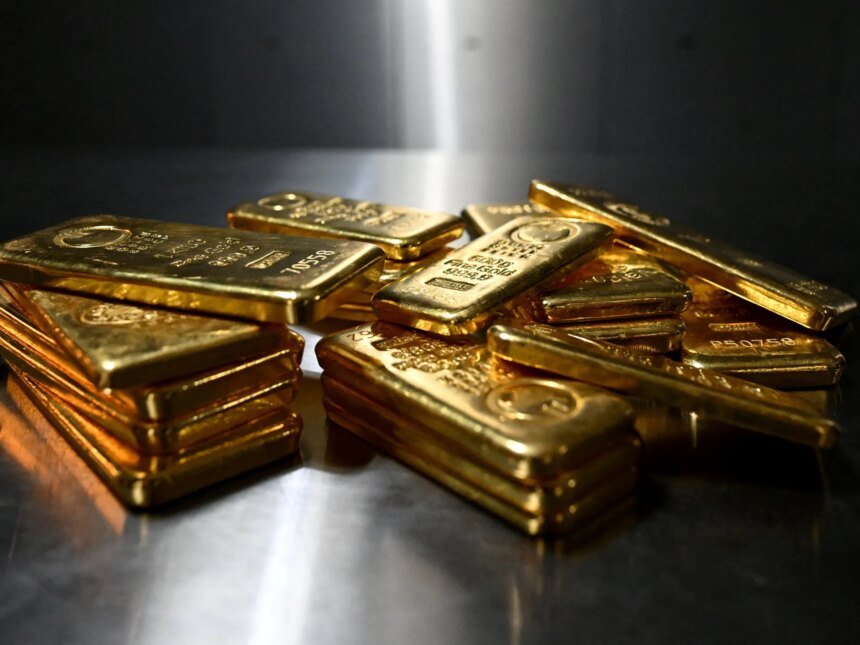
Officials in the global gold sector have warned of the escalation of smuggling operations of the precious metal to record levels, driven by the sharp rise in prices in recent years, stressing that illicit flows have become a major source of financing conflicts, criminal groups, and money laundering around the world.
The CEO of the World Gold Council, David Tait, said that the value of illicit gold flows exceeded $120 billion annually, most of which comes from traditional mining, describing the phenomenon as a “crisis for the international community” due to its connection to conflicts, sanctions evasion and illicit financing.
Read also
list of 2 itemsend of list
He explained that the rise in gold prices, which nearly doubled over the past two years, contributed to increasing the attractiveness of smuggling and illegal mining, especially in areas witnessing conflicts such as Sudan and the Democratic Republic of the Congo.
Conflict financing
Ruth Crowell, CEO of the London Bullion Market Association, said that the rise in gold prices has made combating illicit flows more urgent, noting that the metal has become an attractive tool for moving illegal money across borders.
Gold has a feature that makes tracking its source extremely difficult, as the alloys become chemically identical after refining, regardless of their origin, which allows the source of the metal to be hidden and integrated into official supply chains.
Official data reflects the expansion of the phenomenon globally, as the Indian authorities recorded 3,005 cases of gold smuggling during the fiscal year 2024-2025 ending in March of last year, while the authorities confiscated about 2.6 tons of the precious metal.
Governments, including the United States of America, the United Kingdom and the United Arab Emirates, are considering new measures to reduce gold smuggling, including tightening controls at border crossings, strengthening tracking rules and monitoring sources of supply.
In the United States, Congress is discussing a draft law aimed at developing a strategy to combat illegal mining and investigate gold smuggling networks, especially those linked to Venezuela.

Parallel supply
Despite regulatory efforts, sector estimates indicate that traditional mining represents about 20% of global gold production, while its share does not exceed 1% of gold certified within the “good delivery” system in the London market, which means that the bulk of these quantities is heading to unofficial trading channels that are difficult to track.
Officials and experts called for broader international action, especially from the G7 countries, to strengthen legislation and security and financial cooperation to limit gold smuggling and prevent its use in financing conflicts and organized crime.