Published on 6/19/2026
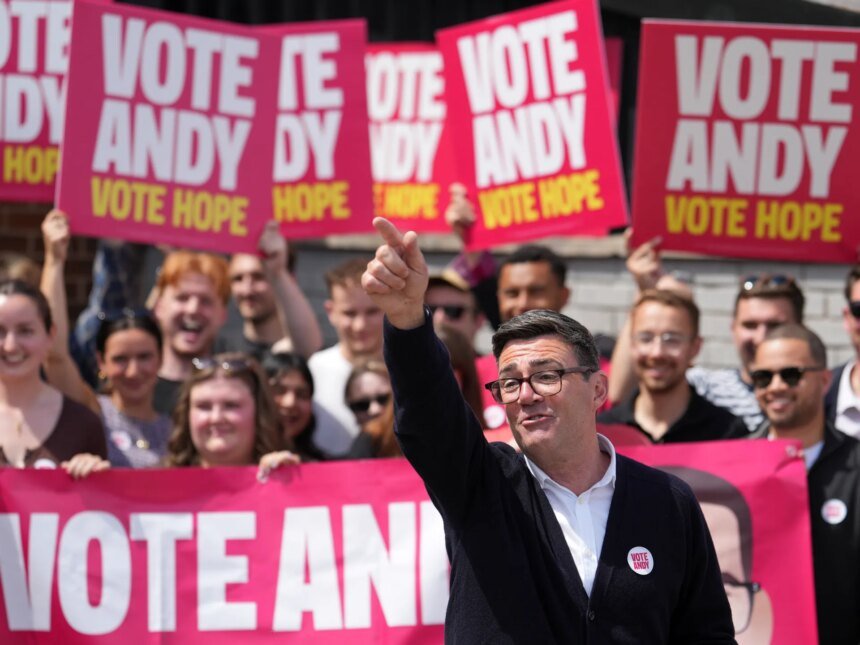
Andy Burnham, a veteran of the ruling Labor Party, paved the way for an attempt to oust British Prime Minister Keir Starmer after winning a parliamentary seat in northern England on Friday, in one of the most important local elections in more than six decades.
Burnham, the mayor of Greater Manchester, nicknamed the “King of the North,” won the Makerfield constituency in northwest England by obtaining 24,927 votes, while the candidate of the populist British Reform Party led by Nigel Farage came in second place with 15,696 votes.
Starmer’s popularity, who came to power in July 2024 after Labor’s overwhelming victory in the legislative elections, fell to its lowest levels following several political missteps, and he now faces severe criticism even from within his own party, especially after Labor’s resounding loss in the local elections in early May and the scandal of his appointment of Peter Mandelson as ambassador to Washington despite his knowledge of his ties to American billionaire Jeffrey Epstein, who is accused of running a sexual exploitation network for minors.
Since the party’s resounding loss in the May elections to the anti-immigration Reform Party led by Nigel Farage, the Prime Minister has faced several calls to resign, including from within his own party.
Among them is Burnham, who once again returned to Parliament, where he was an MP between 2001 and 2017, by running in the Makerfield constituency in the vicinity of Manchester in northwest England.
This step is indispensable for this 56-year-old former minister, who gained great popularity through his defense of the northern region of England from which he hails, to the point that he was nicknamed “King of the North.”
Makerfield makes the event happen
The Prime Minister pledged to fight to remain in his position, and expressed his hope, on Wednesday, that Burnham would “play a major role in his government.” The latter rejected this offer, according to British media.

During the election campaign, Makerfield, with its estimated 76,000 voters, became at the center of the political scene in Britain, and was visited by many political figures, including ministers and MPs, including Nigel Farage.
The Makerfield constituency is traditionally affiliated with the Labor Party, but the party’s dominance declined in the recent elections in which the Reform Party made a breakthrough and won several local seats, including a seat for Robert Kenyon, its candidate in these legislative elections.
Kenyon, who was born in Makerfield, focused during his campaign on the issues of immigration and taxes, but he faced widespread criticism because of previous statements he made that discriminated against women. He is also paying the price for the rise of the more extreme “Reclaim Britain” party, which was founded by Robert Law, who is close to Nigel Farage and supported by American billionaire Elon Musk.
Leadership elections
Wes Streeting, the former Minister of Health and one of Starmer’s most prominent rivals, had confirmed that this week he would be forced to hold elections soon unless the Prime Minister announced the date of his resignation.
Under Labour’s rules, it takes the approval of 20% of a party’s parliamentary members, or 81 MPs, to declare their support for one candidate to launch a leadership challenge.
If Starmer is ousted, Britain will have its seventh prime minister in almost a decade, the highest rate of change in nearly two centuries, as voters punish leaders who fail to improve living standards and public services and tackle illegal immigration.