The political and media arena in the United States is witnessing intense debates that reflect a state of frustration and self-evaluation of foreign policy directions, especially after the recent developments related to the agreement concluded with Iran and its impact on American influence in the Middle East.
Major American newspapers and magazines presented different readings of the current moment through analyses, reports, and opinion articles, all of which converged on the central idea that the war ended with results far from the goals announced by Washington, and that its repercussions may extend beyond the Iranian file to affect the status of the United States and its global strategy.
Read also
list of 2 itemsend of list
Reverse Marshall Plan
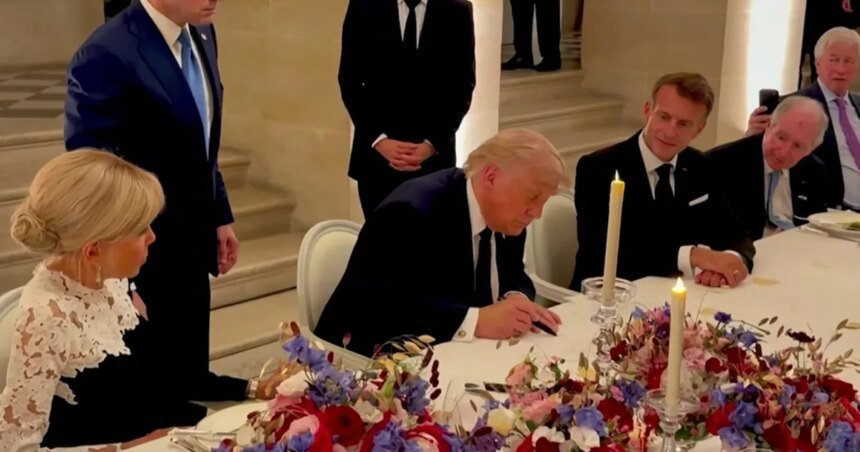
In an extensive political analysis published by The Atlantic magazine, Thomas Wright, a prominent researcher at the Brookings Institution, saw that the agreement signed by President Donald Trump on Wednesday evening at the Palace of Versailles in France represents a radical shift that perpetuates the decline of American influence.
The writer made an interesting historical comparison between this agreement and the famous Marshall Plan for the reconstruction of Europe after World War II, pointing out a fundamental paradox in the goals and results.

While the original Marshall Plan came to consolidate an American victory in Europe, the current plan – according to Wright – aims to manage the repercussions of a “defeat” that pushed the United States an additional step towards withdrawing from the Middle East.
The article recalled the plan announced by then US Secretary of State George Marshall in 1948 to provide massive aid amounting to more than $13 billion for the reconstruction of Western Europe after the massive devastation caused by World War II.
As for Donald Trump’s deal with Iran, it obliges the United States and its regional partners to ensure that Tehran receives at least $300 billion for its rehabilitation and economic development, as Wright described it in his article as, in fact, a “Marshall Plan for the Iranian regime.”
The writer criticized the “extreme ambiguity” surrounding the terms of the memorandum of understanding between Washington and Tehran. In his opinion, it speaks about regional peace and stability and confirms Iran’s commitment not to develop a nuclear weapon, but it does not provide clear details regarding the limits of nuclear enrichment or implementation mechanisms.
Moreover, talk of providing at least $300 billion to rehabilitate the Iranian economy remains, according to the article, closer to a general political framework than to a specific plan.
Wright believes that Iran emerged from the war with tangible gains, most notably the easing of sanctions, allowing oil exports again, and the release of frozen financial assets.
Wright believes that Iran emerged from the war with tangible gains, most notably the easing of sanctions, allowing oil exports again, and the release of frozen financial assets, as well as the possibility of obtaining huge economic financing in the future if a final agreement is reached.
In contrast, the United States did not achieve its stated goals of reducing Iran’s regional influence or imposing strict restrictions on its nuclear program.
The writer goes on to say that the war “should not have been fought in the first place,” and that the way it was managed made the Iranian regime view it as an existential battle after targeting its political leaders, which led Tehran to use pressure tools that it had not resorted to in previous confrontations, most notably closing the Strait of Hormuz and targeting regional interests.
He adds that one of the biggest gains that Iran may have achieved is to weaken the American will to limit its continued playing of a major security role in the Middle East, at a time when the popularity of the American-Israeli alliance within the United States is declining and doubts are increasing about the feasibility of engagement in the region.
Lessons learned
For his part, writer Jason Wellick, in an opinion article in the Washington Post, sees the conflict from a different angle, drawing three main lessons from what he described as the “failed war in Iran.”
Wellick asserts that the war’s ultimate outcome makes it difficult to defend that it served American national interests. According to his article, Washington has consumed large quantities of strategic munitions necessary to deter both Russia and China, and the repercussions of closing the Strait of Hormuz have led to higher prices and the erosion of the economic gains achieved during the first period of Trump’s current term.
The first lesson that the author presents is that “regime change” remains an extremely dangerous war goal. He says that the American administration once again made a mistake that it had previously committed during the Iraq War, when it linked its success to an internal political transformation in a Middle Eastern country.
After the assassination of Iranian leaders at the beginning of the war and the faltering regime change scenario, the United States found itself facing an open-ended conflict with no clearly achievable goals, according to the analysis.
The second lesson, according to Wellek, is that American power is not unlimited. Military, political and economic restrictions impose themselves even on the largest power in the world.
He believes that the agreement that ended the war reflects this fact, as opening the Strait of Hormuz by force would have required greater escalation and a higher cost, while the continuation of the confrontation would have increased economic pressure on the American administration as the midterm congressional elections approached.
The third lesson lies in the constitutional dimension. The author criticizes the decision to go to war without a clear authorization from Congress, considering that the absence of public and institutional debate led to ignoring basic questions about the goals of the war and its possible repercussions.
He believes that the American political system may achieve better results if it restores some of the mechanisms of control and balance stipulated by the Constitution in issues of war and peace.
Historian Baumgartner believes that American history cannot be fully understood as the product of internal struggles only, but also as the result of pressures and criticism that came from abroad and revealed the contradiction between declared principles and actual practices.
External pressure
In a completely different angle, Foreign Policy magazine published an article by Alice Baumgartner, associate professor of history at the University of Southern California, presenting a different vision of the nature of American interaction with the outside world.
While previous readings have focused on strategic failure in the Middle East, Baumgartner argues that international pressures and positions from other countries have historically been a key driver in helping the United States fulfill its founding principles of freedom and justice.
The author reviewed prominent historical milestones, including the role that Mexico played by abolishing slavery in the 19th century, which made it an attractive beacon for those fleeing slavery in the states of the American South, which contributed to undermining the pillars of this economic and social system locally.

It also touched on the role of the joint investigation committees in the 1920s and 1930s, and how governments and foreign communities exploited these international legal platforms to challenge discriminatory laws and practices of racial violence inside America, which constituted a diplomatic embarrassment that pushed Washington to review its human rights record and adhere to international standards.
The author believes that American history cannot be fully understood as the product of internal struggles only, but also as the result of pressures and criticism that came from abroad and revealed the contradiction between declared principles and actual practices.
Baumgartner concludes in her article that foreigners were not always a threat to American values, but rather they sometimes contributed to pushing the United States to adhere to them more.
America’s empire
In an opinion piece published by the New York Times, editor John Guida reviewed Madar in an interview he conducted with Herman Mark Schultz, a professor of politics at the University of Virginia, to answer the question: “Is America an empire?”
Schultz argues that American hegemony is not based on geographic expansion, but rather on military, financial, and cognitive influence that allows the center to impose its conditions globally.
In turn, Guida believes that the current Trump administration is witnessing a conflict between traditional state institutions and the (2025) project, which he accuses of weakening the foundations of American power for the benefit of the billionaire class by undermining scientific research, provoking ill-considered wars, directing policies to serve the interests of a narrow group, and transforming labor globally into a system of “free labor.”
Schultz believes that the Iran war has revealed increasing strategic confusion, while the global order faces a transitional phase with the rise of China, tipping the line towards a more divided and competitive global economy in the coming years.
Source: Atlantic + Foreign Policy + New York Times + The Washington Post