Published on 6/19/2026
|
Last update: 20:38 (Mecca time)
The stories of the 2026 World Cup are not limited to the competition inside the green rectangle, but rather extend to family tales that reflect the transformations that world football has witnessed in recent decades. The participation of 7 pairs of brothers in the current tournament not only highlights the family ties in the game, but also reveals how immigration and multinationalism have redrawn the map of national teams.
The number could have increased to 8 pairs of brothers, had the Dutch defender not been injured Yuren Timber Before the start of the tournament, which prevented him from accompanying his brother Quentin Timber’s twin In the finals.
Read also
list of 2 itemsend of list
Despite the participation of this number of siblings, only 3 pairs defend the colors of the same team, while the rest chose to represent different countries, in a scene that has come to reflect an increasing reality in modern football, where identities and affiliations overlap between the country of birth and the country of family origins.
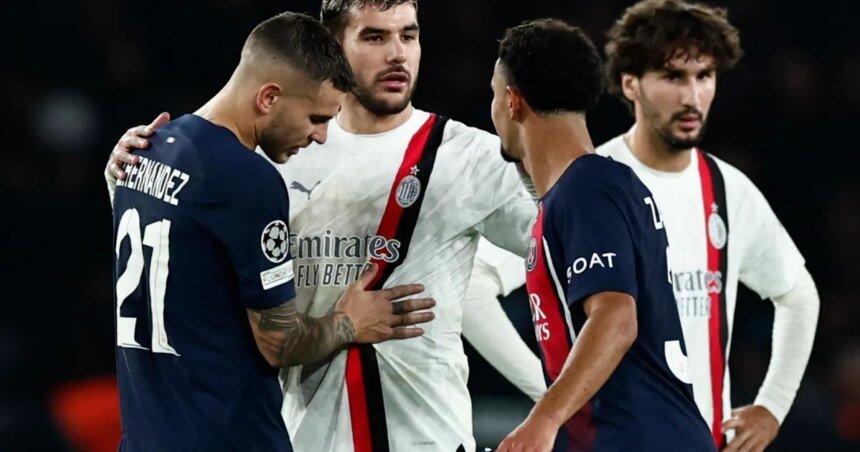
In the Cape Verdean national team, he is… Laros Duarte and his brother Deroy Duarte An example of brothers who came together under one banner, as it stands out Two brothers, Leandro and Juninho Bacuna, with CuraçaoIn addition to Lucas and Theo Hernandez with the French national team.

But the most telling picture appears among the brothers who chose different paths at the international level. And represents Nico Williamsone of the most prominent stars of Spain, the country in which he was born and raised, while his older brother decided Iñaki Williams Defending the colors of Ghana, the country of origin of their parents. Although they wear the same shirt at Athletic Bilbao, they carry two different flags on the international scene.

The story is repeated with Derek Lucassen and his brother Brian Proby; The first chose to represent Ghana, which is linked to his mother’s roots, while the second continued his career with the Dutch national team. The same applies to Frenchman Desiree Douy and his brother Guila Douy Who represents Côte d’Ivoire.


These cases reveal an important shift in international football; Choosing the national team is no longer linked only to geography, but rather reflects a complex balance between personal identity, family roots, and sporting ambitions. Often times, a player finds himself culturally belonging to more than one country, and has the right to represent more than one team thanks to the laws of FIFA.

The waves of immigration that Europe has witnessed over the past decades have also contributed to the emergence of new generations of players with multiple backgrounds, which is clearly evident in African teams that increasingly rely on members of communities born in Europe. In contrast, European teams retain a large number of players of African, Asian, or Latin descent.
This phenomenon does not appear to be an exception in the 2026 World Cup, but rather part of a broader trend that reflects the globalization of football. While in the past, national teams represented clear geographical borders, today they also reflect stories of migration, integration, and dual identity.
Hence, the presence of 7 pairs of brothers in the tournament not only tells an exceptional family story, but also presents a microcosm of a world in which football has become a mirror of the social and cultural transformations that people are experiencing, where brothers may grow up in the same house, but each of them chooses to express his affiliation in his own way on the largest football stage in the world.