Published on 6/17/2026
From time to time, reports and videos appear of individual cases of cows with abilities that seem different and contrary to the stereotyped image of them as an animal not known for intelligence, such as the case of a 13-year-old pet cow in Austria named “Veronica,” who uses brooms to scratch her back, a behavior that is considered a form of using tools, and is a general sign of intelligence in animals.
But a study by researchers from the French University of Tours, published by the journal PLOS One, goes beyond these individual cases to test cow intelligence from another area, which is recognizing and distinguishing between humans, to reveal amazing results related to cows showing a visual preference for unfamiliar human faces, and they can also associate the voice of a known person with his correct face.
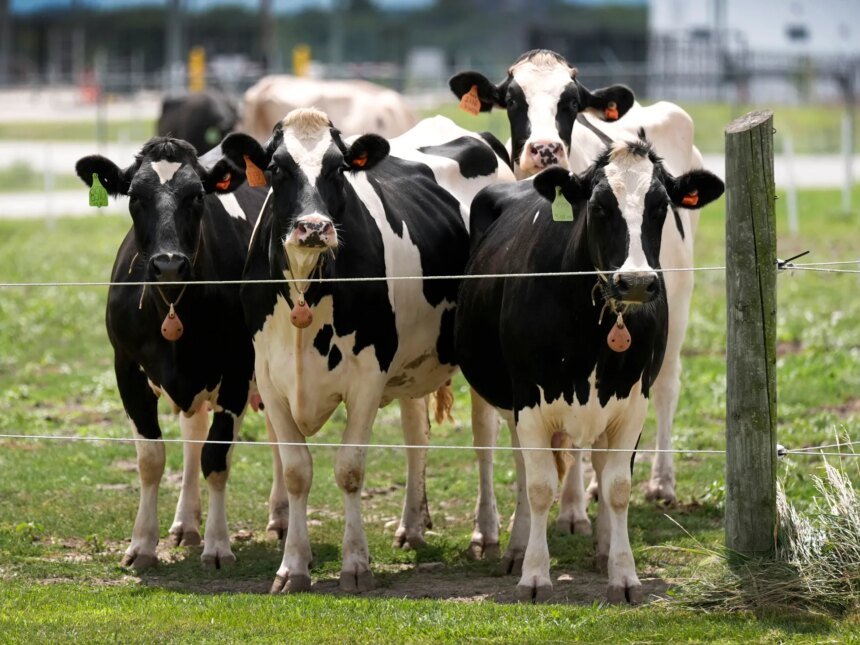
During the study, the researchers collected data from 32 cows of the “Primo Holstein” breed, which is a breed that originated in the Netherlands and is considered the most common in milk production in France, where one cow during the lactation period can produce about 22,000 pounds of milk.
The team showed video clips of familiar and unfamiliar male faces without sound to cows, and measured how long the animals looked at the video. The goal was to determine what is known as “cross-sensory recognition,” that is, the cognitive ability to recognize one thing through more than one sense.
The researchers also showed video clips of familiar and unfamiliar human faces with a sound playing corresponding to one of the men, with each man uttering the same sentence, and the cows’ heart rates were measured while watching to see if they responded emotionally to these clips.

Amazing results in discrimination
The cows did not show fear from the silent videos, but they stared at the unfamiliar faces longer. According to the researchers, this gaze indicates the animals’ ability to distinguish between a known and unknown face.
When the video was paired with sound, the cows spent more time looking at the video when the sound matched the face. This indicates that cows are able to associate the face with the correct voice of a person known to them, a behavior also observed in some large predatory animals in captivity with their caretakers.
Based on heart rate measurements, neither sound (familiar or unfamiliar) showed a clear effect on the emotional response of the cows.
The researchers point out that videos and audio recordings do not represent direct and complete interaction with humans, but the results show that cows are able to distinguish between familiar and unfamiliar people, and recognize humans through face and voice.
The researchers recommend conducting future studies to more precisely understand how cows interact with specific people, which will help improve the animals’ welfare.