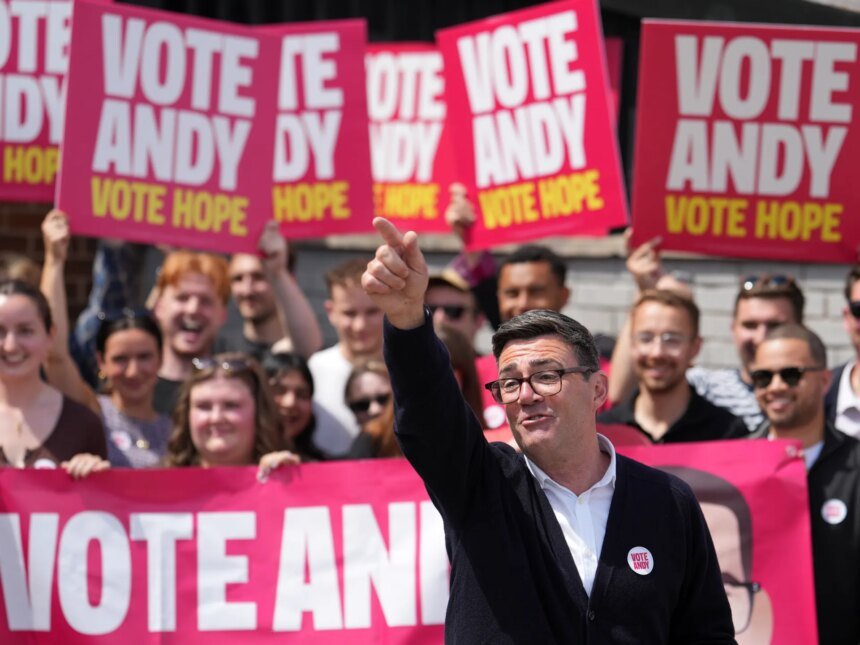
In a small electoral district in northwestern England, Makerfield, located in the Greater Manchester area and whose number of voters does not exceed 70,000, is preparing to run in decisive by-elections whose effects may extend beyond the boundaries of the district to the heart of the British political scene.
Here it is not related The battle Just by selecting a new parliamentarian, it may determine the future prime minister and leader Pt Governor Keir StarmerBecause it may open the door to the return of Greater Manchester Mayor Andy Burnham to Parliament, in a move that observers believe will pave the way for his attempt to oust Starmer from office.
Read also
list of 2 itemsend of list
Analysts point out that the intense competition in this constituency reflects the continuation of the legacy of division left by the Brexit referendum among British voters, in a region that was among the most prominent supporters of leaving the European Union.
However, Burnham’s ambitions to succeed Starmer are hindered by the attempts of former Health Minister and Member of Parliament Wes Streeting to obstruct his rise and run in the race himself, turning Makerfield into a testing ground for the future of the Labor Party, as British reports indicate that these elections, held today, Thursday, may shape the features of the next political stage in Britain.
What’s happening in Makerfield?
Voters in Makerfield go to the polls to choose a new MP after the current MP stepped down, while the ruling Labor Party’s candidate, Burnham, the mayor of Manchester and a former MP, is considered the favorite to win the seat, according to The Guardian.
The newspaper reviews the details of the repercussions of this electoral scene, explaining the following details:
- It is estimated that Burnham’s victory will launch a campaign to remove Starmer from the leadership of the Labor Party and thus from the prime minister’s office, or persuade him to step down.
- If things go according to these expectations, the United Kingdom could see its seventh Prime Minister since 2017 within a few weeks or months.
- Burnham needs to return to the House of Commons so he can challenge Starmer, which is why one of his allies Josh Simons has agreed to give up his Makerfield seat, triggering a by-election to fill a vacant seat between two general elections.
- Most projections suggest Burnham will win the seat, even if it could be a very close result, and his allies hope that will prompt Starmer to set a timetable for leaving office.
- If Starmer steps down and no other rivals emerge, Burnham will become prime minister within weeks.
- However, if the door to competition for party leadership is opened, any candidate must obtain at least 80 nominations from Labor Party representatives before the matter is decided by a vote of party members.

A struggle for leadership
But the scene within the party seems more complicated, because Burnham’s victory does not necessarily guarantee him succession to Starmer, as the Guardian indicates that at least one parliamentarian, former Health Minister Wes Streeting, intends to run in the leadership race, describing him as a “skillful political figure” who belongs to the center-right movement within the party.
Despite the decline in his ratings in opinion polls since his resignation from the government a month ago, the iPaper newspaper notes that the former Health Minister refuses to give up and pave the way for Burnham to win the leadership of the party.
While Streeting seeks to turn the competition for party leadership into an “intellectual battle” related to policies and the party’s direction in the post-Starmer era, his desire to defeat Burnham will remain a difficult task, despite his confirmation that he has the votes of 81 MPs necessary for his candidacy, according to iPaper.
Four possible scenarios
In another report, iPaper outlined four possible future scenarios as follows:
- Burnham wins by acclamationMany party leaders believe that this is the most likely possibility, meaning that he will win the seat and return to Parliament, while pressure is increasing behind the scenes on Starmer to set a timetable for his departure, so that Burnham will ascend to the leadership without internal competition, but this will remain dependent on the size of the victory that he will achieve.
- Starmer stuck to his postWhile Starmer confirms in his statements his adherence to his position, the question remains as to whether this steadfastness will withstand the test of changes in reality.
- Stretching competition: If Streeting’s announcement is true that he has received the support of a fifth of the party’s representatives, he will be able to open the door to the leadership race, which will turn the scene into a public competition that will extend throughout the summer, with the winner being crowned at the party conference in the fall, but doubt about his obtaining these numbers remains widespread.
- Behind the scenes dealsThe competition may be decided through internal deals conducted away from the public, with the possibility of the emergence of other figures from the various wings of the party, but the victory of the right-wing “Reform UK” party in the Makerfield elections will greatly strengthen the position of the Prime Minister.

Britain after Brexit
Although nearly a decade has passed since Britain voted to leave the European Union, the repercussions of Brexit are still casting a shadow on the British political scene in general and on these by-elections in particular, as the Financial Times believes that the choices of Leave camp voters are still shaping British politics.
Says the professor of politics at the University of Manchester Rob Ford – To the newspaper – despite the decline of Brexit as a political priority, it has consolidated quasi-tribal party loyalties, which has led to the division of the scene into two party systems:
- “Survival” system: It mainly includes the Labour, Liberal Democrat and Green parties, along with the Nationalists in Scotland and Wales.
- “Exit” system: Led by the Conservative Party and the Reform UK Party.
Ford believes that Burnham relied on winning over the “Leave” camp voters without losing the “Remain” camp in the Makerfield district elections.
On the other hand, the right-wing Reform UK party – as the report adds – is witnessing rising popularity in national opinion polls, as a Financial Times analysis indicates that more than half of the current Leave camp voters may vote for it if general elections are held today.
Although this momentum gives the Reform UK party a theoretical advantage in the Makerfield constituency, about two-thirds of whose voters supported leaving the European Union, other factors limit this advantage, according to the newspaper.
The constituency itself, in which Burnham remains the most likely candidate to win over his right-wing rival, Robert Kenyon, reveals the extent of the shift that has occurred in the local political mood.
According to a poll conducted by the More in Common Foundation, 45% of Makerfield residents would support returning to the European Union if a new referendum was held, compared to only 38% who preferred to remain outside it, which reflects a noticeable change compared to the trend that prevailed during the Brexit referendum in 2016.