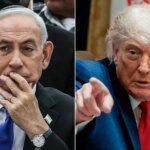
Between the Versailles Palace dinner in Paris, where US President Donald Trump signed, and what are likely the presidential offices in Tehran, where Iranian President Masoud Pezeshkian put his signature after Trump’s, the surprise US-Iranian agreement was born, shaking regional calculations.
With the flow of leaks about the terms of the historic “Memorandum of Understanding” to end the war – from opening the Strait of Hormuz to reconstruction packages – the Lebanese arena does not seem far from these approaches, as Lebanon is not just a sub-item in this deal, but rather the most burning and ambiguous front in recent weeks.
From here, this report opens the complex file: Where is Lebanon located on the map of the distribution of profits and losses between Washington and Tehran?
Where is Lebanon’s position in the agreement?
The agreement, which was read to journalists by a senior American official – according to Reuters – includes 14 broad terms of understanding between the two sides, but it postpones a decision on a number of more complex issues, such as the Iranian nuclear program, until a final agreement is reached. This agreement paves the way for a broader negotiation period of 60 days.
In the first clause of the document – published by Reuters – the text stated the following: “The United States of America and the Islamic Republic of Iran, along with their allies in the current war, announce, upon signing the memorandum of understanding, an immediate and permanent end to the war on all fronts, including in Lebanon, and pledge from now on not to launch any hostile action against each other and to refrain from threatening or using force, and to guarantee Lebanon’s territorial integrity and sovereignty. The final agreement will confirm the permanent end of the war on all sides.” The fronts, including in Lebanon, and the other provisions mentioned in this paragraph.”
This is consistent with what was published by several agencies such as the Associated Press and the Iranian News Agency, and its first clause stated the following: “An immediate and permanent cessation of all military operations between the United States, Iran and their allies on all fronts, including Lebanon, with a commitment not to launch any war or military operation in the future, and not to threaten or use force against each other.”
While the number of times the name “Lebanon” is mentioned varies, all versions are identical in terms of stopping military operations on all fronts, including Lebanon.
Although the leaked texts used the term “allies” repeatedly, they did not explicitly refer to Israel or Hezbollah. Although the United States led the diplomatic path and signed the agreement with Iran, and waged the military confrontation on more than one front in parallel with Israel, the latter was not a signatory to this memorandum.
Observers believe that concerns appear here, as the lack of an explicit Israeli signature means that Tel Aviv may not consider itself literally bound by everything Washington has pledged.
The clause relating to stopping the fighting on all fronts, specifically the Lebanese front, was a shock to the Israeli military elites, some of whom saw the agreement as an instrument of official recognition of Iranian hegemony over Beirut.
In an interview conducted on Radio 103 FM, Major General (Res.) Eliezer Marom (Cheney), former commander of the Israeli Navy, launched a scathing attack on American trends, saying: “President Trump, by signing (…) confirms Iran’s occupation of Lebanon. Do you realize that? He is now signing an agreement with the Iranians regarding Lebanon. The Lebanese president must feel insulted by this, and all Middle Eastern leaders who listen to him (…) must realize that this is an agreement.” “Bad.”
Does the agreement curb Israel?
The two parties that signed the agreement tried to dispel fears in the leaked draft through Clause 14, which stipulates that the final agreement be confirmed through a binding resolution from the United Nations Security Council. Analysts believe that converting the agreement into a binding resolution from a UN body grants international immunity from any political coup attempt coming from everyone.
But for Beirut, the lesson lies in the devils hidden in the details, and with the announcement of the agreement, voices rose asking: Is all of this enough to curb the Israeli desire for escalation and curb surprises on the ground, or will the Lebanon front remain, as it has always been, the arena in which the strength or inability of international resolutions is tested?
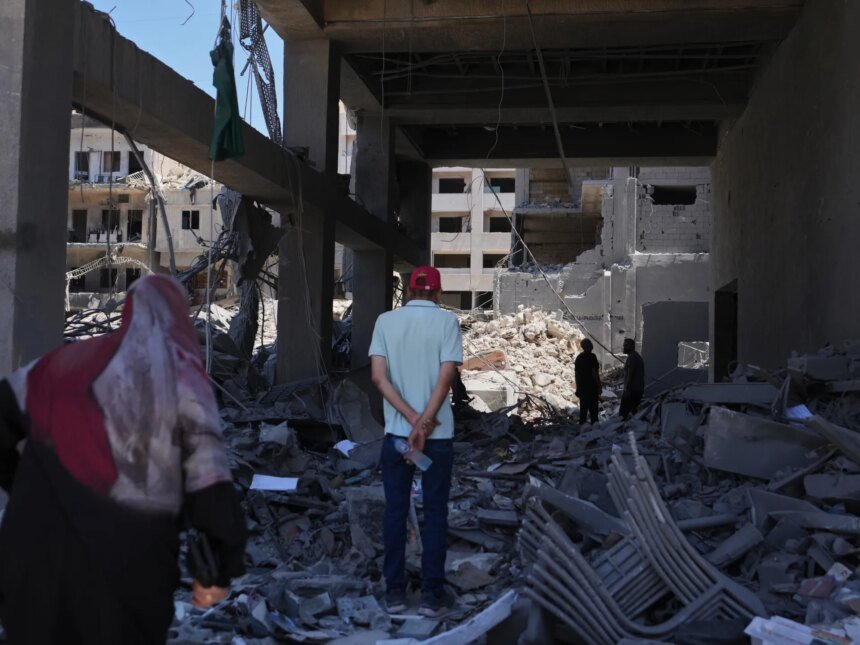
The response came quickly from the field, as one person was killed and another injured, today, Thursday, in an Israeli raid that targeted a car at the roundabout of the towns of Kafr Tibnit-Arnoun in the Nabatieh District, southern Lebanon, a few hours after the signing.
This was accompanied by a letter sent by the Israeli army to the political leadership regarding military action in Lebanon, in which it requested adherence to the freedom to launch attacks throughout Lebanon, maintain a buffer zone, and disarm Hezbollah. Israeli Prime Minister Benjamin Netanyahu also recently announced that the army would continue to occupy what he called the “buffer security zone” in southern Lebanon.
The Israeli army’s message considered that the situation in southern Lebanon for the Israeli army “has become very gray and complicated” since Trump announced on Wednesday the signing of the agreement with Iran. This came in parallel with his acknowledgment – today, Thursday – of the killing of one of its soldiers and the wounding of 7 others, including a deputy division commander, by the explosion of an explosive device in southern Lebanon, yesterday, Wednesday.
The army said in a statement, “First Sergeant Alexander Filin (29 years old), from the city of Haifa, was killed in the explosion, and 7 others were injured, including the deputy commander of the 36th Division and a female soldier,” stressing that 3 of the injured were described as moderate in condition, including the deputy commander of the division and the female soldier, and the other four were slightly injured.
Even on the political level, the Israeli government – especially the far-right ministers – is stubborn in its position of rejecting any agreement with Iran to stop operations in Lebanon or make security concessions, and affirms its adherence to the continued Israeli occupation of areas in southern Lebanon and the continuation of military operations.
Israeli officials have opposed linking the Iranian and Lebanese tracks, arguing that doing so might indirectly protect Hezbollah from future pressure, according to Yedioth Ahronoth.
A right-wing discourse emerged calling for military and political rebellion against the dictates of the White House, and the political correspondent for the newspaper “Israel Hayom”, Sherit Avitan Cohen, wrote an article in which she called on Netanyahu to brandish the weapon of rejection, confirming the existence of a cross-party internal consensus: “The last remaining consensus here is that… decisions regarding security issues in the areas adjacent to Israel should be made in Jerusalem, and not in Washington. The residents of the north cannot be a scapegoat on the altar of peace between the United States and Iran. Netanyahu, who has always stressed the need to know how to say “no,” must use this ability now.

Stubborn negotiations
This Israeli political and military stubbornness did not stop at the limits of internal statements and military messages, as two Israeli officials revealed to Reuters on Thursday that Israel is conducting “stubborn” negotiations with the United States of America regarding efforts to continue deploying its forces in southern Lebanon.
The statements of these two officials, who spoke to Reuters on condition of anonymity and one of whom is high-ranking and close to Prime Minister Benjamin Netanyahu, came just one day after the United States and Iran signed the interim agreement that calls for ensuring “Lebanon’s territorial integrity and sovereignty.”
This violent diplomatic move reflects Tel Aviv’s adherence to the new field reality, as Israel has expanded its incursion into southern Lebanon and launched a devastating air and ground campaign since March 2, which it says is aimed at eliminating Hezbollah.
In the face of this Israeli insistence, another Israeli official told Reuters that the outcome of these ongoing talks with Washington will depend entirely on the position of the American administration, specifically whether President Trump will insist on his position and threaten Israel with dire consequences if it does not adhere to the terms of the temporary agreement concluded with Iran, at a time when Netanyahu’s office has not yet responded to a request for comment.
Israeli criticism went beyond political blame to acknowledge the decline in Israel’s strategic weight regionally. In an analytical reading published by the Hebrew Channel 12, the former senior official in the security establishment and expert in the Iranian nuclear program, Avner Vilan, confirmed that America chose to reduce its losses and abandon its allies, considering that the direct result of the agreement is a dangerous geopolitical repositioning.
In one of the harshest psychological and political readings of the behavior of the crisis-ridden Israeli leadership, writer and analyst Uri Misgav in Haaretz newspaper, today, Thursday, likened Netanyahu’s outbursts of anger at his generals to “Hitler’s last days in the Berlin bunker in 1945” after the collapse of his life’s project, raising a warning cry of a suicidal doctrine that might push Netanyahu to burn the front lines in Lebanon and Gaza to escape his internal entitlements.
In the context of the general scene, the Israeli media unanimously agreed that the Washington-Tehran agreement was terrifying for Tel Aviv, and brought it into a different phase represented by restricting freedom of maneuver in southern Lebanon in exchange for what it described as a financial and political lifeline for Hezbollah under international sponsorship.
Source: Al Jazeera + Reuters + Israeli press