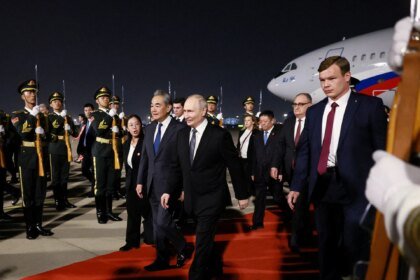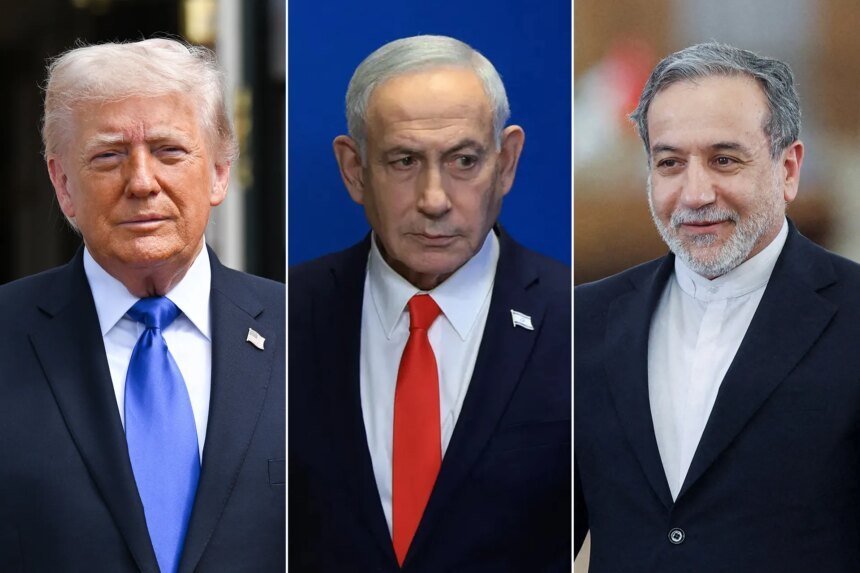
The outcome of what analysts described as the Israeli failure in the war against Iran is evident in a statement from Yair Golan, head of the Israeli Democratic Party, who said on Sunday that “the agreement between the United States and Iran was concluded over Israel’s head,” and that what he described as military achievements “were erased with the stroke of a pen” while Netanyahu stood on the sidelines “weak, isolated, and without influence.”
This came after the announcement of the memorandum of understanding between Washington and Tehran, after more than 100 days of war, and at a moment when Trump tried to present the agreement as a “great deal” that would stop the fire, open the Strait of Hormuz, and restore reassurance to the markets.
Read also
list of 3 itemsend of list
But what appeared to be an achievement in the White House speech appeared in British and Israeli readings closer to a harsh reckoning in Tel Aviv. Tehran remained present in the equation, while Israel left without holding the strings of the end of the war it fought.
Netanyahu found himself facing a settlement that did not give him the language of victory, nor did it allow him to declare defeat. The final decision was written between Washington and Tehran, and then it was left to Tel Aviv to deal with its consequences, after its prime minister raised the ceiling of the war to the promise of “complete victory.”
A promise that is eroding
The British newspaper The Times says that Trump’s truce with Tehran undermined the central promise that Netanyahu kept repeating to the Israelis.
The Israeli Prime Minister based his speech on the idea that the war will not stop until Iran is defeated and its ability to influence the fronts surrounding Israel is eliminated. But this goal – as the newspaper says – is still a long way off.
The Times adds that the leaked details of the deal do not come close to the ceiling set by Netanyahu, a ceiling that was based on curtailing Iran’s extensive missile program, breaking the network of its regional allies, and extracting decisive gains in the nuclear file.
However, reports indicate that the agreement does not provide a solution to these issues, but rather may allow highly enriched uranium to remain within Iranian territory.
Here Netanyahu’s predicament takes shape, according to analysts. The man who has presented himself for years as “the undisputed owner of the Iranian file” finds himself facing an American agreement that does not bear his mark, does not meet its conditions, and does not give him the image of victory he needs on the eve of a new electoral test.

Goals
The Jerusalem Post editorial calculated the deal from the perspective of Israeli conditions. The point – according to the newspaper – is not whether the ships return to the Strait of Hormuz, but rather whether Washington has extracted from Tehran what Tel Aviv demands.
The newspaper asks whether the nuclear program has been dismantled, the missiles and drones have been addressed, Hezbollah has been removed, and what it calls “Israel’s freedom of military action” has been preserved.
The editorial does not find clear answers, considering that ambiguity alone is enough to raise anxiety within Israel. It feared that the truce would turn into a gain for Tehran, given that it had crossed the war without losing its main cards.
In the Israel Hayom newspaper, Danny Citrinovitch, the former official responsible for the Iran file in Israeli military intelligence, said that the operation had completely failed.
Instead of overthrowing Iran or weakening it decisively, the campaign ended – as he says – with Tehran emerging stronger economically, diplomatically, and perhaps militarily.
Citrinovic believes that the agreement means that Iran opened a strait that was open before the war, and in return obtained an economic breakthrough, without giving up its missiles, its regional relations, or its right to enrichment.
This reading reveals the limits of a broader Israeli bet. Tel Aviv has calculated that military pressure, when based on American cover, is capable of pushing Tehran to collapse. But the result fell far short of this promise.

Outside the decision room
The newspapers reveal that the agreement not only placed Israel in a security dilemma, but also exposed the limits of its political influence. The Telegraph describes an angry Israeli mood over a settlement that Tel Aviv sees as keeping Iran present in the region and restricting the Israeli army’s work against Hezbollah in Lebanon.
As for the Times, it says that defense officials in Israel look suspiciously at Tehran’s readiness for a ceasefire, wondering whether Washington has provided the Iranians with a pledge to curb Netanyahu and ensure that Israel refrains from escalation.
Before announcing the agreement, Netanyahu – as the Telegraph recounts – tried to keep the fire burning. He ordered the bombing of a building in Beirut that Israel said was a Hezbollah command center, even though the timing threatened the fragile US-Iranian track.
Minutes later, he sent congratulations to Trump on his 80th birthday. However, the strike did not nullify the agreement, but rather angered the US President, who saw that Netanyahu carried out the attack without proper judgment.
The Times says that Netanyahu’s dependence on Washington has become absolute. It quotes Citrinovic that Israel cannot wage a war against Iran alone, neither offensively nor defensively, and that Trump is tired of this war while Israel pays the price for its failure.
In Israel Hayom, the comparison with the Barack Obama administration is striking. Netanyahu, who was previously able to challenge the White House through Congress and American public opinion, does not have the same tools against Trump.
Now, according to the newspaper, Israel’s allies in Washington do not show a willingness to confront the president publicly. Any Israeli move to thwart the agreement may be read as a rebellion against the White House itself.
Elections amid public discontent
Within the ruling coalition, Netanyahu’s allies refuse to acknowledge that the agreement has tied Israel’s hand. Itamar Ben Gvir says that the Trump agreement does not bind Tel Aviv, and calls on Bezalel Smotrich to continue the campaign against Iran “by creative means.”
The Telegraph points out that the tendency to force is not limited to the ruling right. Some of Netanyahu’s opponents attack him because he failed to achieve a solution, not because he went too far with the option of war.
When Naftali Bennett speaks of an “existential moment,” he in turn proposes a new doctrine to maintain pressure on Iran and its allies. It is as if the dispute in Israel is not about the militarization of politics, but rather about who runs it more efficiently.
The deal comes at a sensitive electoral moment. According to the Times, Netanyahu may be haunted by the failure of the attempt to overthrow Iran, at a time when the repercussions of October 7 and the war on Gaza are still putting pressure on his security image.
The most serious failure
Avigdor Lieberman described the agreement as “a complete victory for the Ayatollah,” and Yair Lapid considered that Israel is facing one of the most serious failures of its foreign and security policy, holding Netanyahu fully responsible.
The economic burden may be more painful. According to the Times, Netanyahu will have to explain to the Israelis the possibility of releasing billions of dollars in frozen Iranian funds, while Israel emerged from the war at a huge defense cost.
Netanyahu’s crisis, according to the newspaper, lies in the fact that the deal stripped his war of its propaganda cover. The promise of “complete victory” evaporated, the doctrine of “peace through strength” came out laden with questions, and Israel found itself facing a reality that it did not create as much as it was imposed on it.
Thus, Israel Hayom wrote something like an elegy for the name Tel Aviv chose for its war: Operation “Lion’s Roar” ended not with a roar, but with a groan.
Source: Israeli press + British press