Talk of a $300 billion investment fund for Iran has sparked debate about the nature of the economic incentives in the US-Iranian memorandum of understanding expected to be signed in Switzerland on Friday: Is it compensation to Tehran for a war that has exhausted it, or a pressure tool conditional on nuclear inspections and Iranian “performance”?
Behind the huge figure was a political reformulation, as the US administration transferred the reconstruction bill in Iran from a burden on the American taxpayer – which angered Republicans and Democrats – to “investment opportunities” whose financing might be opened up to countries in the region and private companies, in exchange for strict Iranian commitments in the nuclear file.
What is the $300 billion fund?
The memorandum, which the two parties signed electronically on Sunday, may allow the fund to be established as part of a broader settlement to end a war that sparked a global energy crisis and upended markets.
The New York Times quoted sources as saying that the funding will not come from governments, but rather will be created for companies wishing to invest in Iran.
According to the Financial Times, there is interest in participating in the fund from companies in Europe and Asia – including Japan and South Korea – in addition to American companies, if the sanctions are lifted.
Researcher Muhannad Salloum, a senior non-resident fellow at the Middle East Council for Global Affairs, said in an interview with Al Jazeera that this design is a “no-loss solution” for Washington, saying that “if Iran controls its behavior, the American administration will achieve peace, and if it does not, the United States has nothing to lose.”

Why does Vance tie money to nuclear inspections?
US Vice President J.D. Vance insists that the package is neither a refund of the frozen funds nor compensation to Iran, but rather links it to Tehran’s “performance.”
In a statement he made to CBS, Vance said: “When people say that assets worth billions of dollars will be released, this is not true.” He adds that the agreement “extends a hand to Iran” on the condition of allowing “real inspection” of the nuclear program in exchange for a return to the global economy, with funding from what he described as the “Gulf coalition.”
In the same context, President Donald Trump announced on his Truth Social platform that “the story of the United States paying $300 million to Iran is fake news.”
On the other hand, some Gulf countries were keen to deny any direct financial role in the arrangements for the agreement. Qatar announced, on Tuesday, that it was participating in the mediation team between the United States and Iran to reach an understanding that would end the war, but at the same time it stressed that it had not paid any money in this context.
Qatari Foreign Ministry spokesman Majid Al-Ansari said, “Doha did not pay any money within any framework regarding the arrangements for the cessation of war agreement.”
This financial debate intersects with the essence of the nuclear file. According to the Financial Times, Iran has a stockpile of more than 9,000 kilograms of enriched uranium, most of it at low levels, but 440 kilograms of it are close to weapons-grade levels.
Vance said Tehran agreed to hand over its stockpile, undergo regular inspections and refrain from producing or purchasing nuclear weapons.

Restlessness over the proposal in Tehran
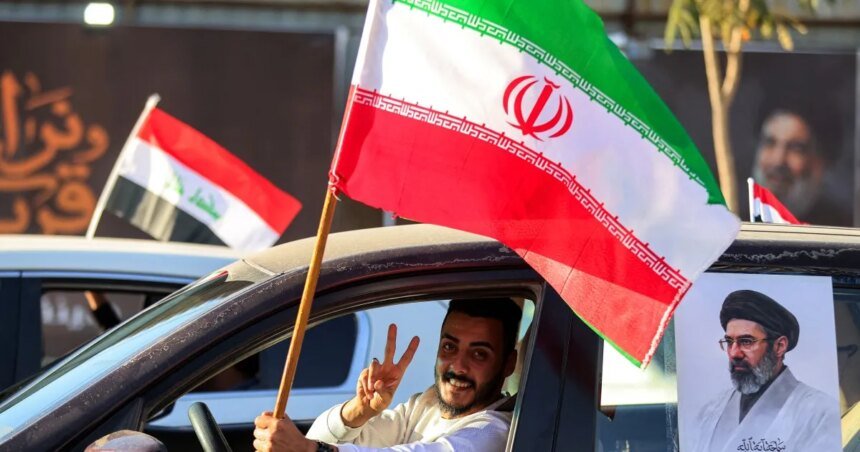
In Iran, the leadership in Tehran faces a dilemma in marketing the proposal. The country, where the war left billions of dollars in damage, and whose population is suffering the highest inflation rate since 1942, will not receive an immediate refund of its money, but will receive controlled money and conditional investments.
Salloum describes this as a “dignity problem,” telling Al Jazeera that Tehran “reads this as supervised and conditional money, not sovereign relief.”
This restlessness is echoed in the words of Foreign Minister Abbas Araqchi, who said on Monday, according to Press TV, that the memorandum will bring economic benefits, but Tehran will not depend on it to meet all its needs, adding: “We have a history of broken promises, non-compliance, and tearing up agreements,” in a clear reference to Washington’s lack of commitment to previous agreements concluded with Tehran.
The new Supreme Leader, Mojtaba Khamenei, has not yet commented, while observers objected to the timing of the announcement, which coincided with Trump’s birthday.
As for President Masoud Pezeshkian, he confirmed that the Iranian Supreme National Security Council approved the agreement “to practically test America’s true commitment.”

What about frozen Iranian assets?
The file of frozen assets remains the most sensitive node, as official Iranian reports and experts indicate that their total exceeds $100 billion, frozen in foreign banks as a result of sanctions accumulated since the 1979 revolution.
The Iranian Mehr Agency reported that the draft, consisting of 14 points, stipulates the release of $24 billion, but Vance denied this, saying that the number “does not appear in any of the texts,” and that “the biggest deal is the lifting of sanctions” as a condition for long-term nuclear commitments.
According to the Financial Times, any easing of sanctions will be in stages and dependent on the progress of the talks, with “small gestures” at the beginning to build confidence, while larger amounts remain linked to general “decent behavior” and not specific criteria.
In this sense, the Fund appears to be an attempt to circumvent the sensitivity of “asset release”: not as a direct sovereign recovery, but as a conditional and fragmented flow.
In light of this, Washington does not offer Tehran ready money nor a full sovereign recovery of its assets, but rather a conditional and installment economic door, linked to every detail of its nuclear, political and security performance.
Muhannad Salloum concludes by saying that the two parties are “talking in isolation from each other; each (speaks) to its internal audience,” adding: “Each party must market this as a victory that it cannot market honestly.”
Questions and Answers
- Will Washington pay $300 billion to Iran?: No, according to the American narrative, the talk is about an investment fund financed by private companies and Gulf states, not direct American government funding.
- What are the conditions for Iran to obtain investments?: Commitment to the agreement, acceptance of nuclear inspections, and progress in the talks.
- What about the frozen Iranian assets?: The issue is still on the table, but Washington denies the immediate release of $24 billion, and links any relief to stages.