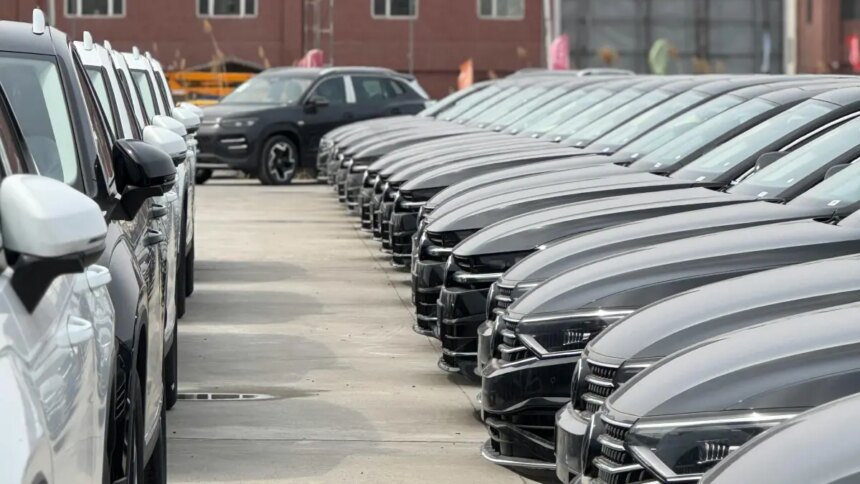
The history of the automobile industry has witnessed widespread recall campaigns that returned millions of vehicles to maintenance centers and factories, after defects in design, manufacturing, or software revealed risks affecting safety, performance, or compliance with environmental standards.
These crises were not limited to small companies or with limited experience, but rather affected major names in the industry, from Toyota, Ford, General Motors, to Volkswagen, as well as the Japanese company Takata, whose crisis ended with the declaration of bankruptcy. This reveals that the automobile industry, no matter how developed it is, remains vulnerable to errors that could turn from a limited technical defect into a global crisis.
Some recalls contributed to changing laws and control standards, and prompted regulators to tighten safety and emissions tests, while others caused huge financial losses, damaged the reputation of well-established companies, and in some cases almost brought them down completely.
Therefore, car recalls cannot be viewed as just an administrative procedure or passing news in company bulletins, but rather it is a necessary legal, technical and commercial tool to protect consumers, reduce risks on the roads, and ensure that safety standards remain under control.
What does the car recall process mean?
A vehicle recall is an action taken by the manufacturer, or imposed by the relevant regulatory authorities, when a defect is discovered in a specified number of vehicles that have already been sold to consumers.
The defect may be related to the design, manufacturing, mechanical, electrical or electronic components, or even software, if it would affect the vehicle’s safety, performance, or compliance with environmental laws.
Usually, the process of inspection, repair or replacement of defective parts is carried out free of charge, as the car owner does not bear the treatment costs, but rather the manufacturer bears them in its capacity as responsible for the safety of the product after its sale.

Why do companies recall their cars?
The reasons for the recall vary depending on the nature and severity of the defect, but they often fall into several main categories:
-
Mechanical defects
Mechanical defects are problems that affect the basic parts responsible for the vehicle’s movement and safe operation, such as the brake system, accelerator pedal, engine, transmission, or oil leakage.
These defects are among the most serious reasons for recall, because they are directly related to the driver’s ability to control the vehicle. A defect in the brakes or transmission not only means a decline in performance, but may turn into an accident if not treated in a timely manner.
-
Electronic and software defects
As modern cars become complex systems that rely on computers, control units, sensors and cameras, electronic defects have become more prominent in recall campaigns.
These problems include errors in electronic control units, malfunctions in operating systems, malfunctions in sensors and cameras, or software that does not respond as it should. In many cases, companies address these defects through a software update or resetting the control unit, but some may require technical inspection or replacement of components.
-
Electrical defects
Electrical defects relate to the systems on which basic vehicle functions depend, such as starting the engine, lighting, security systems, and charging the battery.
These defects may include problems with the battery, dynamo, or wires and connections, and may lead to difficulty starting the car, its sudden stop, or the failure of some safety systems.
These defects appear when the vehicle exceeds permissible emission limits, such as emitting carbon monoxide or nitrogen oxides, as a result of a defect in the emission control systems or in the engine management software.
In these cases, companies resort to recalling cars to address the defect and ensure compliance with environmental standards, especially in markets that impose strict laws on vehicle emissions.

The most famous recalls in automotive history
-
Takata…the airbags that turned into a global crisis
The Takata air bag crisis is one of the largest recall campaigns in the history of the automobile industry, if not the largest ever.
Takata was founded in Japan in 1933, and specializes in producing safety equipment and systems, especially airbags and seat belts. Over time, it became one of the largest global suppliers to automobile companies.
But the company entered into an unprecedented crisis after discovering a defect in some airbags, which caused them to explode in a dangerous way in accidents, leading to deaths and serious injuries. Takata was a supplier to dozens of major companies, including Toyota, Honda, Mercedes, Ford and BMW.
It is estimated that the crisis led to the recall of nearly 100 million airbags, and affected tens of millions of cars around the world. As lawsuits, recall costs, and damages piled up, the company declared bankruptcy in 2017.

-
Toyota…the crisis of sudden acceleration
Between 2009 and 2010, Toyota faced one of its most difficult crises, after reports of sudden and unintended acceleration in some of its cars, in addition to the difficulty of stopping some models.
The problem quickly turned into a crisis of confidence, after it was linked to a number of accidents, and the company was forced to recall millions of cars around the world to make adjustments to the safety systems and pedals and address the defects associated with them.
Although Toyota maintained its position later, the crisis left a clear impact on its reputation at that time, because it affected one of its most important traditional strengths: reliability.

-
Ford.. transmission malfunction
In 1981, Ford Motor Company implemented a massive recall due to a design flaw in the transmission gearbox.
The problem was that the transmission would automatically slip from park to reverse, meaning the car could shift suddenly without driver intervention. This defect has led to accidents and injuries in some cases.
As a result, Ford made modifications to the transmission systems and worked to improve the mechanism to prevent unintentional slippage, with the aim of enhancing safety and reducing the recurrence of the problem.
-
General Motors: An ignition switch that stops the car while driving
In 2014, General Motors faced a major crisis related to the ignition switch in some of its models. The problem was that the switch would move due to vibrations from the on position to the off position while driving.
The defect may seem simple at first glance, but it was very serious. When the key is moved to the off position, the engine may suddenly shut off, the car may lose its ability to accelerate, the power steering systems may be affected, and the airbags may malfunction at a critical moment.
This defect resulted in a number of accidents and injuries, which prompted the company to implement a recall campaign that included millions of cars around the world to fix the problem and make modifications to the ignition key system.

-
Volkswagen.. emissions scandal
In September 2015, the emissions crisis exploded at the German company Volkswagen, after it was discovered that there had been tampering with the emissions tests of some diesel cars.
The problem was not a traditional mechanical defect, but rather was linked to software that was able to show different results during tests compared to what happens in actual driving conditions. This has led to the recall of millions of cars around the world.
The impact of the crisis went beyond the company itself, as it prompted authorities in several markets to tighten laws on car emissions and raise the level of oversight of environmental compliance tests.
Do recalls hurt or protect companies?
Recalling cars puts companies in a difficult position. On the one hand, it costs it large sums of money, exposes it to media and legal criticism, and may weaken consumers’ confidence in the quality of its products. On the other hand, ignoring defects or delaying dealing with them may be more costly and dangerous, both to the lives of users and to the future of the company.
The summons, when done transparently and quickly, can be evidence of taking responsibility. But when it comes late, or after incidents and regulatory and media pressure, it may turn into a harsh admission of mismanagement or weak internal control.

How have recalls changed the auto industry?
Major recall campaigns have reshaped an important aspect of the automotive industry. It has prompted companies to improve quality tests, develop defect tracking systems, strengthen oversight of suppliers, and give more space to the safety of software and electronic systems, after modern cars have become dependent on them to an unprecedented degree.
These crises also helped tighten regulatory laws, especially with regard to safety and emissions, and confirmed that the company’s responsibility does not end when the car is sold, but rather continues throughout its use cycle if a defect appears that may threaten drivers or the environment.