Published on 6/15/2026
The administration of US President Donald Trump sees the framework agreement with Iran as a step to end the war and contain the energy crisis, while readings in American and Israeli newspapers reflect a different picture, considering it a complex moment that may redraw relations between Washington and Tel Aviv, and test Netanyahu’s strategy towards Iran.
Readings of 3 American and Israeli newspapers – the New York Times, the Wall Street Journal and Haaretz – reveal a different picture from Israel’s angle, as analysts believe that the agreement puts Israeli Prime Minister Benjamin Netanyahu’s strategy towards Iran to a difficult test.

Questions
The three newspapers agree that the US-Iranian agreement, the full text of which has not yet been published, leaves more questions than answers, especially in issues that Israel considers fundamental, most notably the Iranian nuclear program, the fate of the highly enriched uranium stock, and the future of the Iranian ballistic missile program, in addition to Tehran’s relationship with its regional allies.
Read also
list of 2 itemsend of list
The New York Times believes that the agreement came far from the goals sought by Israel during the war, as it does not include, according to preliminary data, clear restrictions on Iran’s financing of its allies such as Hezbollah in Lebanon and the Ansar Allah group (Houthis) in Yemen, nor does it yet provide decisive guarantees regarding ending Iran’s nuclear capabilities, an issue that, according to the newspaper, has constituted a central priority in Netanyahu’s political path for years.
anxiety
In the same vein, the Wall Street Journal spoke of the state of concern within the Israeli political and security establishment that easing sanctions would give Tehran an economic outlet that would allow it to rebuild its military capabilities and enhance its regional influence.
The newspaper quoted the former Israeli ambassador to Washington, Michael Oren, as saying that the flow of billions of dollars to Iran may be reflected in the refinancing of its capabilities and its agents, thus limiting the gains that Israel had hoped to achieve from the war.
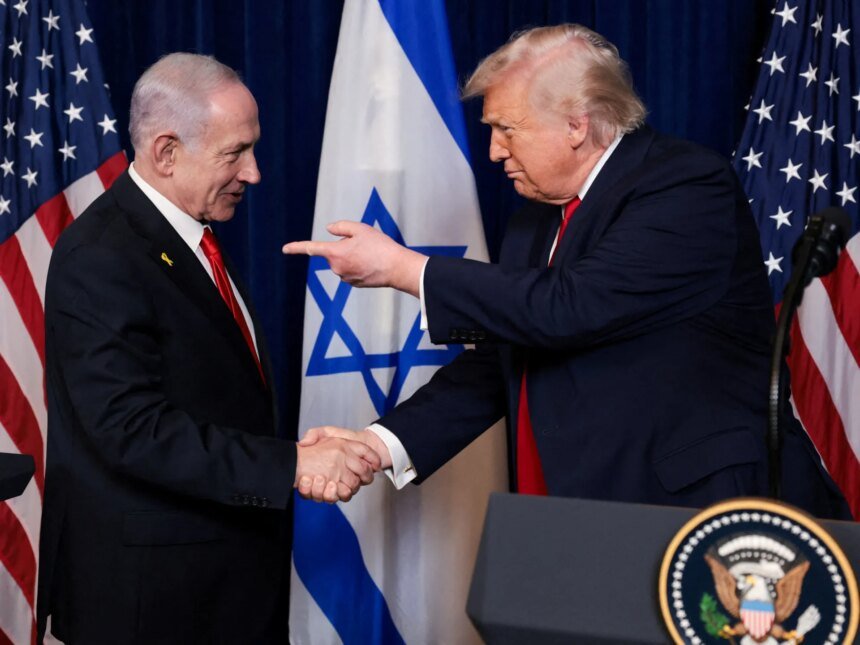
But the disagreement is not limited to the content of the agreement. Rather, according to Haaretz, it extends to the nature of the personal and political relationship between Trump and Netanyahu, which in recent weeks has seemed more tense than it was at any previous stage.
The real question is no longer whether Israel achieved its war goals, but rather whether the relationship between Trump and Netanyahu will survive the first major test that pits Washington’s regional priorities against Israeli security and political calculations.
Israel’s influence
The newspaper believes that Netanyahu has long bet on his belief that he understands Trump’s way of thinking more than any other leader, but the developments of recent days have shown, according to Haaretz’s analysis, that this bet did not lead to strengthening Israeli influence within Washington, but rather may have contributed to weakening it.
The three newspapers point out that the most prominent turning point came after the Israeli strike that targeted Beirut in response to the Hezbollah attacks, at a time when the American administration was seeking to consolidate the understanding with Iran.
According to the New York Times and the Wall Street Journal, Trump considered that the Israeli escalation came at a sensitive time and almost threatened the agreement, which prompted him to direct unusual public criticism of Netanyahu.
Wider disagreement
Haaretz also noted that the tension went beyond a tactical dispute to reflect a broader difference in assessment of interests. While Trump seemed more interested in closing the war file and alleviating economic pressures within the United States, Netanyahu continued to push for continued pressure on Iran and its allies, especially in Lebanon.
The Wall Street Journal adds that this discrepancy also reflects the difference in internal political calculations, as both Trump and Netanyahu face upcoming electoral elections, but the former is dealing with economic repercussions and rising energy prices, while the latter faces internal criticism related to the management of the war and the relationship with Washington.
On the other hand, not all Israeli voices agree to consider the agreement a complete defeat. The Wall Street Journal quoted officials and security experts inside Israel as saying that the war, despite not achieving its major goals, weakened Iran economically and militarily and put Israel in a better position than it was before its outbreak.
However, the three newspapers conclude that the real question is no longer whether Israel achieved its goals from the war, but rather whether the new agreement will reproduce the differences of the 2015 nuclear agreement in a different form, and whether the relationship between Trump and Netanyahu will survive the first major test that pits Washington’s regional priorities against Israeli security and political calculations.
Source: New York Times + Haaretz + Wall Street Journal