Published on 6/16/2026
The Wall Street Journal believes that the agreement reached by US President Donald Trump with Iran does not represent a complete strategic victory as much as it reflects a retreat from the basic goals that Washington set at the beginning of the war, as Washington accepted the reopening of the Strait of Hormuz in exchange for Iranian pledges to resume negotiations on its nuclear program.
In a special editorial, the newspaper’s editorial board said that President Trump has begun to retreat with the escalation of internal political pressures and the increasing risks associated with the completion of military operations. The newspaper acknowledges that Trump’s use of military force has caused significant damage to Iran’s nuclear, military and industrial infrastructure.
Read also
list of 2 itemsend of list
It indicates that Trump did not agree to carry out an operation to control Iran’s stockpile of enriched uranium, despite Israeli pressure, nor did he attempt to use military force to open the Strait of Hormuz.
The newspaper believes that this option was not inevitable, because the American naval blockade was increasing the economic pressure on Iran day after day, while Tehran’s ability to disrupt maritime navigation was gradually declining.
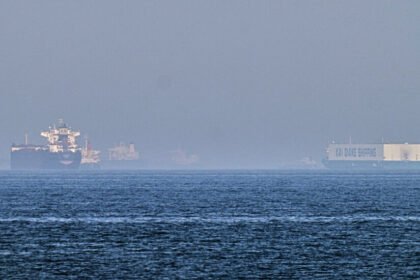
According to the new agreement, the truce will extend for an additional 60 days, with expectations that it could be extended several times, in exchange for an end to the US naval blockade and Iran starting to remove mines from the Strait of Hormuz to allow the return of shipping traffic.
Absence of details
The newspaper believes that reducing fuel prices before the midterm elections is one of Trump’s most important internal goals, but it points out that Tehran announced that the strait will not completely return to its previous state, and that it may impose new fees on passing ships.
The newspaper criticizes the lack of clear details in the memorandum of understanding, noting that Trump himself described some of its provisions as “general concepts,” while the more complex nuclear issues were postponed to a new round of negotiations extending over 60 days.
The newspaper wonders about the feasibility of postponing these files, noting that Trump described Iranian officials a few days ago as not negotiating in “good faith,” which raises doubts about the chances of reaching a final agreement later.
The Wall Street Journal stresses that any strong nuclear agreement must be based on several conditions, including stopping uranium enrichment completely, ending plutonium reprocessing, getting rid of all stocks of enriched uranium, dismantling facilities and centrifuges, while allowing unrestricted inspections.
Insufficient pledges
It believes that Iran’s pledges not to seek to possess a nuclear weapon are not enough, because it has previously made similar pledges in the past while continuing to develop its nuclear capabilities.
The newspaper warns that allowing the resumption of Iranian oil exports will give the Iranian regime a great financial breathing space, while it may become difficult to re-impose sanctions in the future if Tehran uses the threat of closing the Strait of Hormuz as a new pressure card.
It adds that the agreement ignored other sensitive issues, most notably Iran’s ballistic missile program and support for Tehran’s allies in the region, as these issues were referred to “regional dialogues” that the newspaper does not expect to achieve tangible results.
The Wall Street Journal concludes that the greatest danger lies in Trump viewing the agreement as the beginning of an actual partnership with the Iranian regime, warning against repeating what it considers the Obama administration’s mistake, “if Iranian violations are overlooked in an effort to preserve the agreement at all costs.”
The newspaper believes that the US Congress must subject any final agreement to careful review and reject it if it will lead to the revival of a regime that still raises the slogan “Death to America.”