Published on 6/21/2026
The flashing of a light bulb and the fluctuating electrical current have become a source of concern for the farmers of the northern state in Sudan, as it is an announcement that the water pumps have stopped, and with it the pulsation of life in the veins of their crops.
Under the blazing sun, farmers stand helpless in the face of their projects, which are threatened by drought, not because of a lack of water, but because the electricity that it leads to the soil has become a fleeting, unwelcome guest of stability.
With a voice full of sorrow and fear for the future, farmer Al-Hadi Mahdi describes the seriousness of the situation, saying: “If the power fluctuation crisis is not resolved quickly and accurately, we will soon reach the point of no return.”
For Al-Hadi, the matter does not stop with the drying up of a field or the loss of a season, but rather it is a connected chain that touches every Sudanese home, and he explains this with wise simplicity: “The economy is a circular ring. If we lose clover due to the thirst of the land, the price of livestock will automatically rise, and thus food prices will rise for the already exhausted citizen.”
This crisis was not the result of coincidence, but rather an extension of the consequences of the brutal war. In this context, the Minister of Production and Economic Resources in the Northern State, Othman Ahmed Othman, explains the dark side of the crisis, noting that the current suffering is the result of the repeated targeting of the energy and electricity sector by the Rapid Support Forces over the past three years, which has put the national grid in a state of permanent reeling, and this sabotage has pushed the largest agricultural projects to the brink of the abyss.
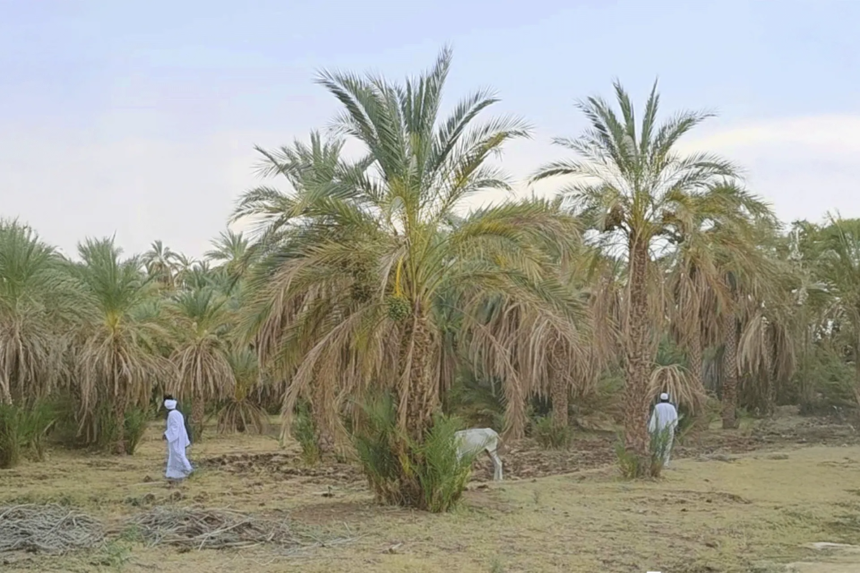
Abdel Halim Saleh, Chairman of the Board of Directors of the government agricultural project “Al-Ghaba”, bitterly narrates how the land turned into a wasteland: “Many farmers lost the most precious thing they owned… palm and fruit crops that took years to grow, died standing due to thirst.”
Saleh reveals the scale of the disaster in numbers, saying that their government project was disrupted for a full 45 days due to the fluctuation of the current, stressing decisively: “In the custom of agriculture, one day of water interruption is enough to lead to the destruction of crops and livestock, so how about 45 days?”
In the face of this harsh reality, farmers and officials in the northern state refuse to surrender to the darkness, and as a last lifeline, the state began to turn forcefully toward the sky to derive energy and rely on clean alternatives to confront the network’s fluctuations and the tyranny of war.
Minister Othman Ahmed Othman confirms that there are serious efforts now being made to intensify reliance on alternative energy, revealing a glimmer of hope amid the crisis: “So far, we have succeeded in generating approximately 40 megawatts of solar and wind energy.”
Between a sun that supplies the earth with alternative energy, and a land waiting for a stable drop of water, northern farmers continue to fight the battle for survival, clinging to their roots, and looking forward to a day when electricity will return to serving the earth, not threatening its existence.