Published on 6/15/2026
|
Last update: 22:55 (Mecca time)
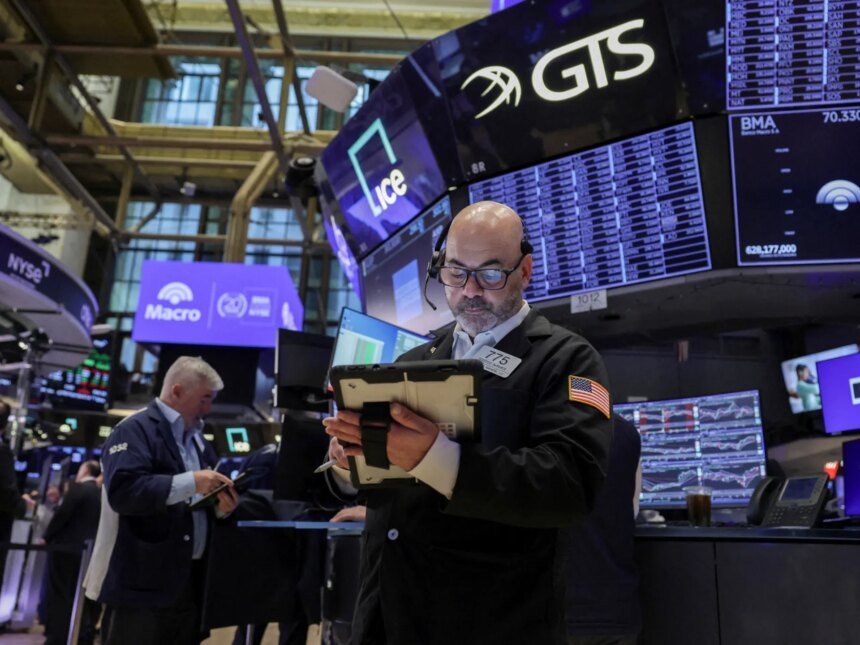
US stocks rose strongly at the opening of trading on Monday, while oil and dollar prices declined, and gold and precious metals rose, after the United States and Iran announced that they had reached a preliminary agreement to end the war and reopen the Strait of Hormuz, which strengthened investors’ appetite for risk and eased fears related to global energy markets.
The Dow Jones Industrial Average rose by 0.32% at the opening to reach 51,364 points, while the Standard & Poor’s 500 Index rose by 1.15% to 7,517 points, and the Nasdaq Composite Index jumped 2.16% to 26,447 points, supported by broad gains in technology and growth stocks.
Read also
list of 3 itemsend of list
These gains came after US President Donald Trump announced the completion of an agreement with Iran that includes reopening the Strait of Hormuz and ending the naval blockade, with the expectation of officially signing the agreement next Friday.
Oil drop
In energy markets, oil prices fell by more than 5% as concerns about global supplies eased.
US West Texas Intermediate crude fell by about 5.9% to $79.9 per barrel, falling below the $80 level for the first time since last March, before recovering some of its losses to settle at $80.95 per barrel, while Brent crude fell by 5.5% to $82.57 per barrel, eventually settling at $83.19 per barrel.
This decline comes after months of turmoil in the Strait of Hormuz, through which about 20% of global oil and liquefied natural gas trade passes, causing one of the largest supply shocks in the history of the energy market.
Despite the optimism, shipping organizations have warned that restoring normal shipping traffic may take weeks, in light of continuing concerns related to sea mines and the safety of shipping lanes.

Gold and metals
On the other hand, gold prices continued to rise for the third session in a row, recording their highest levels in a week, supported by the decline of the dollar and increasing expectations of a decrease in energy-related inflationary pressures.
Gold rose in spot transactions to $4,344.77 per ounce, while US gold futures rose 3% to $4,366.80.
Other precious metals also saw strong gains:
- Silver rose 3.11% to $70.11 per ounce.
- Platinum rose 4.6% to $1,796.45.
- Palladium increased 5.1% to $1,348.30.
Analysts believe that the decline in oil prices eased fears of rising inflation, which boosted demand for gold despite the improvement in risk appetite in the markets.

The dollar fell
The dollar was subjected to selling pressure after the announcement of an agreement ending the Iran war, with investors moving towards riskier assets, and demand for safe havens declining.
The dollar index fell to 99.3 points, a decline of 0.12%, while market expectations regarding raising interest rates in the United States declined, in light of the decline in geopolitical risks and the decline in energy prices.
Investors are awaiting the US Federal Reserve meeting tomorrow, Tuesday and the day after tomorrow, Wednesday, amid expectations that interest rates will remain unchanged, with markets focusing on any signals that Central Bank President Kevin Warsh may provide regarding the course of monetary policy during the coming months.
Analysts believe that the US-Iranian agreement represents a global economic event that reduces risks to energy markets and trade, but it still needs practical translation on the ground, especially with regard to removing mines and restoring full navigation through the Strait of Hormuz.

Gulf markets
Gulf markets closed trading today with mixed performance, at a time when the markets reacted to the announcement of reaching an initial agreement between the United States and Iran to reopen the Strait of Hormuz, the subsequent sharp decline in oil prices and the improvement in risk appetite globally.
The Qatar Stock Exchange recorded the best performance among Gulf markets, as its main index rose by 0.89% to close at 10,553.75 points, benefiting from broad gains in leading stocks.
In Bahrain, the Bahrain General Index rose by 0.42% to reach 2000.23 points, supported by the improved performance of a number of financial and service stocks.
On the other hand, the Kuwait Stock Exchange declined, as the primary market index fell by 0.26% to 9,300.95 points, while the general index fell by 0.04%, despite the rise in the main market and “Main 50” indices.
The Muscat Market Index (MSX30) also ended the trading session down by 0.68% at 7618.3 points, with the majority of traded stocks declining.
As for the Saudi market (TASI), it continued its cautious performance, declining by 0.08% to 11,095.86 points, affected by pressure on energy and petrochemical stocks after the decline in oil prices.
Cryptocurrencies
In the digital currency market, the results were as follows:
- Bitcoin price rose 4.8% to $66,809.
- The price of Ethereum rose 10.2% to $1,831.