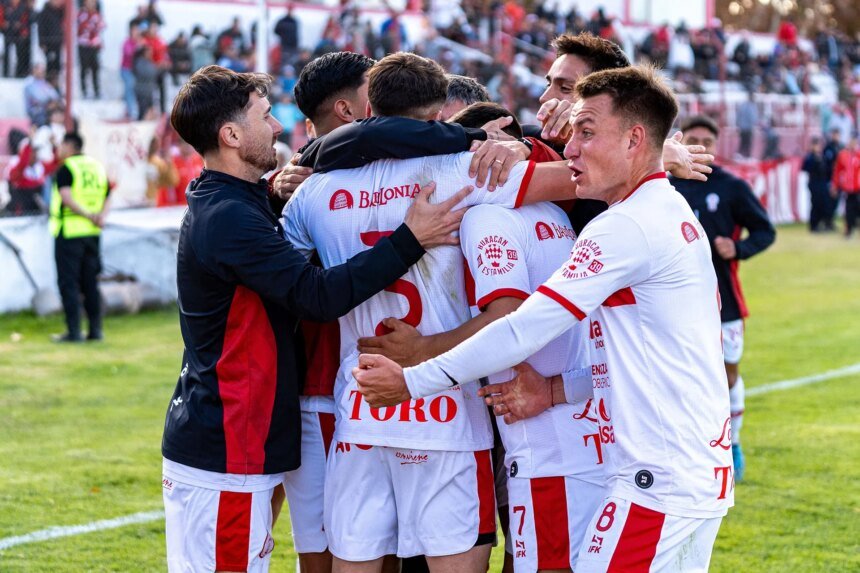
The football team shirt is no longer just a robe for the players or a way to distinguish the two teams during the 90 minutes. Rather, it has become a present piece in the closets of many people. From fans and game lovers to influencers and fashion followers.
With time, the shirt was no longer treated as a regular T-shirt, but rather as a personal sign and icon to express identity and belonging.
Read also
list of 4 itemsend of list
From the player uniform to the fan shirt
For a long period of football history, the shirt was merely part of a player’s kit, rather than a standalone product aimed at fans. The turning point began with the emergence of the idea of “replica” shirts, that is, copies that fans can buy and wear outside the stadium.
A report by the British company “Admiral” on the “50 Years of the Fake Shirt” exhibition at the National Football Museum in Manchester indicates that the 1973-1974 season witnessed the launch of the first commercial replica shirt to the public, a step considered a turning point in British football, and launched a new wave in design, manufacturing and football culture.
With the spread of television broadcasting and the expansion of the game’s audience, the idea did not remain limited to Britain. Fan shirts have gradually become a fan product in other football markets. Here the shirt no longer belongs to the players alone; The fan is now able to own a copy of the image he sees on the screen whenever he watches a match.
The shirt is an archive of the history of the game
Football museums treat the national team’s shirt as a physical document of the history of the game, not just a souvenir. The FIFA Museum, for example, preserves collectibles, documents and photographs from the history of football, and allocates space for the shirts of the 211 member national federations.
From this angle, the shirt can be read as a timeline of the game’s development. In the early 20th century, shirts were made of thick cotton in simple colors and limited designs, due to technical limitations in weaving and printing. With the expansion of the game’s popularity and the advent of television broadcasting, colors became bolder, and visual details became more important because the shirt could be seen clearly on the screen.
Later, the industry moved from heavy fabrics to lighter, more breathable synthetic fibres. The Historical Football Kits website notes that in the 1980s, polyester became a preferred material because it is lighter than cotton, does not retain moisture in the same way, and can withstand repeated movement. But the importance of polyester was not only sporting; It allowed for bolder designs, clearer colors, and printed or woven details that would be difficult to achieve on old cotton.

Small fabric… and plenty of space for your identity
With the development of printing techniques, the national team shirt has become a visual space for expressing national culture and identity. Lines, patterns, gradients, logos and local symbols are transformed into part of the shirt design, and sometimes into a whole story that tells about the country.
In Mexico’s away shirt for the 2022 World Cup, for example, Adidas explained that the design was inspired by ancient civilizations, and combined Mayan and Aztec arts, including the “feathered serpent” symbol inside the shirt collar. In Italy, Puma launched a third shirt in 2019 inspired by Renaissance fabrics and architecture, with the return of the green color associated with a historic shirt from 1954.
At the club level, the English club Coventry City, in cooperation with Hummel, presented a shirt that includes a pattern inspired by tram lines and the windows of Coventry Cathedral. The material and print are no longer just technical details, but a means of transforming the shirt into a carrier of visual and cultural identity and spatial memory.
Animated advertisement on the player’s chest
The commercial transformation was not complete until sponsors entered the front of the shirt. In the seventies and eighties, the stage of commercial sponsorship (sponsorship) appeared, and logos entered the player’s chest, transforming the shirt from a pure sporting piece into a billboard that rotated in front of millions of viewers.
According to Historical Football Kits, the German club Eintracht Braunschweig’s deal with the Jaegermeister logo in 1973 is one of the first examples of sponsorship on shirts. Then pressure mounted in England to allow sponsors’ names to be placed on players’ shirts, before this practice became an established part of the game’s economy.
From here the shirt evolved again, from a color and number to a brand. With the spread of television broadcasting globally, its value has doubled. The shirt that appears in a continental or World Cup final is no longer just a match uniform, but rather an advertising space with great economic returns.

From the terraces to street culture
In the last two decades, the football shirt has moved beyond the confines of the field and the stands into street culture. International fashion brands cooperated with sports companies, and some limited editions were sold as collectible pieces. The shirts also appeared in advertisements, photos of fans, and the accounts of players and their families, then in fashion magazines and social media platforms.
Vogue magazine explains in a report on the evolution of looks associated with the World Cup over 60 years that the World Cup is no longer just a sporting event, but rather a global occasion that extends to fashion and image culture. What is worn around the match has become as much a part of the scene as what is played on the field.
On the other hand, “High Snobity” magazine, which specializes in street culture, points out that trends such as “block core” have strongly contributed to moving the football shirt from the match stadium to everyday street looks. The shirt is coordinated with wide jeans, classic sneakers, and pieces inspired by fan culture. This way, someone might wear a jersey of a team they don’t even follow, because they like its colours, its retro feel or its visual story.
When fashion houses entered the field
The relationship between football and fashion is no longer just a quote; Rather, there have been clear partnerships between clubs and fashion brands. The “High Snobity” website refers to the collaborations that brought together football clubs with well-known brands such as “Moncler”, “Bata” and “Balenciaga”, which redefined the products of clubs and national teams as fashion pieces desired by the fashion crowd, not just the fans.
With the rise of fashion-conscious players such as Hector Bellerin, Jude Bellingham and Kylian Mbappe, the player himself has become a link between the world of sport and the world of fashion. He not only promotes the team’s shirt on the field, but also carries it with him to photo sessions and daily appearances, becoming part of the visual culture surrounding the game.

The World Cup…a global platform for shirts and fashion
In major tournaments, the shirt gains extra strength; Because he does not appear in front of a local audience only, but in front of the whole world. Therefore, the World Cup is no longer just an occasion to launch new playing shirts, but rather a season of visual competition during which sports brands and fashion houses present complete collections inspired by the national teams and football identity.
In the 2026 World Cup, Vogue published a report on cooperation between fashion houses and major clothing companies related to the tournament. Among them are Nike’s cooperation with Palace for the England national team, Adidas Originals with designer Willy Chavarria for the Mexican national team, Nike’s cooperation with Virgil Abloh’s archive for the American national team, and Jacquemus’ cooperation with Nike and the French Federation. Thus, we are no longer talking about one shirt, but rather about complete sets that include jackets, shirts, shoes, hats and street fashion pieces.
Reports from the fashion sector indicate that a significant segment of consumers today are interested in collaborations that bring together luxury brands and sportswear. This percentage explains why fashion houses treat football as a promising market; The game has a huge audience, easy-to-read national symbols, collective moments that can be restored even after the event ends, and a wide visual presence on social platforms.
In the end, the national team shirt is no longer just a match uniform, but rather a piece that combines sport with identity, fashion and memory. It began as a way to distinguish players, then turned into a fan product, a space for sponsors, and an icon within everyday clothing. Therefore, when a fan wears it at the World Cup, he is not only wearing a logo on his chest, but rather wearing it as a way to express himself and his affiliation.