Published On 11/6/2026
|
Last update: 18:08 (Mecca time)
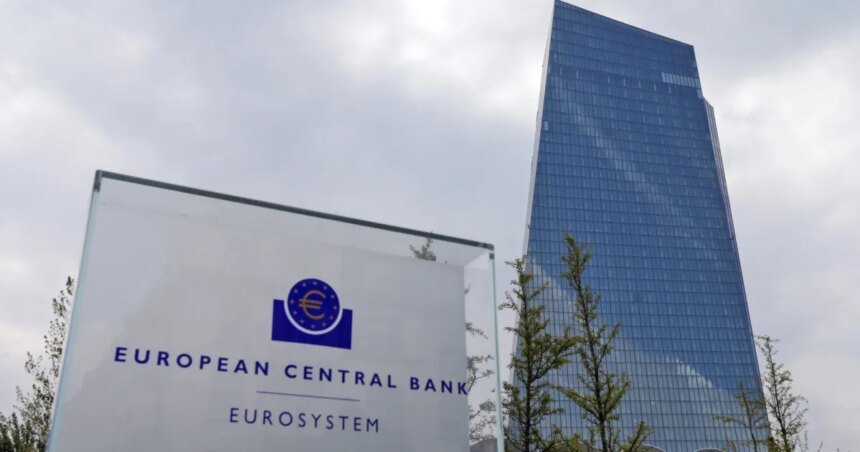
The European Central Bank raised key interest rates by 25 basis points, noting that the war in the Middle East has caused additional inflationary pressures that require tightening monetary policy to ensure that inflation returns to its 2% target in the medium term.
According to the decision, interest on deposits increased to 2.25%, the rate of main refinancing operations to 2.40%, and the marginal lending rate to 2.65%, as of June 17, 2026.
Read also
list of 3 itemsend of list
The bank explained that its new expectations indicate that inflation will average 3% in 2026, and 2.3% in 2027, before declining to 2% in 2028.
He also raised his forecast for core inflation, which excludes energy and food, to 2.5% during 2026 and 2027, and 2.2% in 2028.
The European Central Bank attributed these reviews to the rise in energy prices as a result of the war, and the resulting effects that extend to the prices of food, goods, and services.
The decision to raise interest came after inflation in the euro zone accelerated to 3.2% in May 2026, the highest level since September 2023, driven by a 10.9% rise in energy prices as a result of the repercussions of the war in the Middle East.
Core inflation also rose to 2.5% compared to 2.2% in April, indicating expanding inflationary pressures to include broader sectors of the economy.
Slow growth
The bank cut its forecast for economic growth in the euro zone to 0.8% in 2026 and 1.2% in 2027, compared to previous higher estimates, due to the impact of the war on commodity markets, real income and consumer and business confidence.
The European Central Bank expects growth to improve to 1.5% in 2028.
The decision comes at a time when the euro zone economy is facing increasing pressure, after the gross domestic product contracted by 0.2% during the first quarter of 2026 compared to the previous quarter.
Economic institutions have warned of the risks of the region entering a stage of “stagflation,” which is represented by slow growth, high inflation, and a decline in economic confidence at the same time.
Continuous risks
The bank stressed that the current risks tend to increase inflation and slow growth at the same time, indicating that the future path of the European economy will depend to a large extent on the duration of the war and the size of the energy price shock.
The bank’s Board of Governors stressed that it will continue to follow an approach that depends on the received economic data when making future decisions, stressing that it will not commit in advance to a specific path for interest rates.
He also indicated his readiness to use all available tools to maintain price stability and ensure effective transmission of monetary policy within the eurozone countries.
Financial markets currently expect a probability of approximately 50% that the European Central Bank will raise additional interest rates during next September, which indicates that the June decision may be the beginning of a new monetary tightening cycle and not just an exceptional step.
Member of the Executive Board of the European Central Bank, Isabel Schnabel, had previously warned of the increasing risk of inflation expectations slipping, noting that the bank was no longer able to ignore the impact of the energy price shock on the European economy.
Economists also believe that the war and high energy prices will lead to a revision in inflation expectations upward, while Schnabel suggested that inflation could approach the 4% level before the end of the year if the current pressures continue.