Published On 11/6/2026
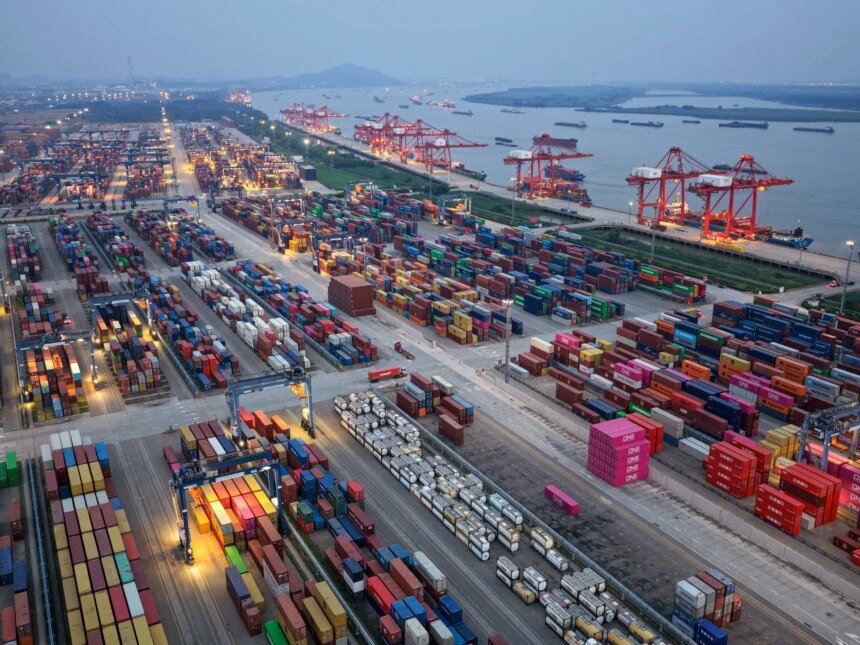
Data issued by the General Administration of Customs of China – according to a report published by the Chinese News Agency (Xinhua) – showed that trade in…Two thieves The Foreign Ministry recorded rapid growth during the first five months of 2026, as the total volume of trade exchange reached about 20.68 trillion yuan (about 2.87 trillion US dollars), an annual increase of 15.3%, with an improvement in the pace of growth compared to the previous months.
This performance reflects a clear cohesion in the structure of trade, driven by a simultaneous acceleration in exports and imports. Exports rose to 11.91 trillion yuan (about 1.65 trillion US dollars) by about 11.8%, supported mainly by advanced technology products, as electromechanical products accounted for 63.6% of total exports, with a growth of 18.4%. Clean energy products, such as lithium batteries and turbines, also recorded Wind, a remarkable growth of approximately 40%.
Read also
list of 4 itemsend of list
In contrast, imports rose by 20.5% to reach 8.77 trillion yuan (about 1.22 trillion US dollars), with growth continuing to exceed 20% for three consecutive months, which produced an improvement in industrial demand, especially for intermediate inputs and manufacturing components, which rose by about 40%.
In terms of structural transformation, the data indicate an acceleration in China’s move towards higher value-added exports. Exports of cars registered a growth of 45.5%, electrical equipment by 24.7%, and ships by 22.5%, which shows the depth of China’s integration into global value chains.

In this context, Director of the Statistics Department at Customs, Lu Daliang, explained that the trade in products related to artificial intelligence recorded a growth of 52.4%, with a continuous upward trend, which meets the needs of domestic modernization, provides stable supplies for global development, and promotes the rise of “intelligence density” in foreign trade.
The significant expansion in exports of intermediate goods, such as processors, chips and lithium-ion batteries, as well as capital goods (means of production) such as equipment and operating machinery, reflects the profound strength of China’s industrial modernization and the strong momentum of innovation-based development.
These indicators intersect with the growing global demand for Chinese industrial products, as officials in industrial companies indicated that orders exceeded production capacity in some sectors.
Director of the Quality Operations Center Department at Bond Laser, Fan Yuenguo, pointed out that orders exceeded production capacity by more than 70%, which means strong external demand for high-tech products.
Researchers also considered that this boom represents the outcome of long-term investments in research and development, which has strengthened China’s position in global supply chains.

Statistics also show the clear positive impact of China’s diversification in its trading partners. Trade with African countries recorded a growth of 18.2% to reach 1.14 trillion yuan (about 158 billion US dollars), exceeding – for the first time – the trillion yuan barrier during this period, supported by preferential policies such as customs exemptions that contributed to enhancing the flow of goods, especially agricultural and food products.
Trade with the Association of Southeast Asian Nations (ASEAN), the European Union and Latin America also witnessed double-digit growth, demonstrating a strategic shift towards reducing dependence on traditional markets and expanding presence in emerging markets.
This geographical expansion comes in parallel with the strengthening of free trade agreements, as China has trade relations with about 250 countries and regions, and has signed 24 free trade agreements with 31 partners, so that these markets constitute about 45% of its total foreign trade.
These indicators indicate that the Chinese economy is moving towards consolidating growth based on innovation, diversifying markets, and enhancing industrial integration, thus supporting China’s position as a major player in global trade despite the increasing international challenges.