Al Jazeera correspondents
Published On 11/6/2026
|
Last update: 18:41 (Mecca time)
Khartoum- After 12 war victims filed the first criminal complaint of its kind before the judicial authorities in Kenya against members of the Rapid Support Forces, legal experts considered that the step opens the door to the prosecution of war crimes perpetrators in Sudan before American and European courts.
Legal experts believe that what happened in Kenya will encourage victims of the war in Sudan to approach the judiciary in countries whose laws allow consideration of such cases related to violations of international humanitarian law.
In this regard, Sudanese lawyer and Assistant Secretary-General of the Arab Lawyers Union, Tariq Abdel Fattah, believes that the case registered by the Sudanese before the prosecution in Nairobi is linked to the justice system in Kenya, which included international criminal jurisdiction in its national law.
Abdel Fattah told Al Jazeera Net that Sudan has included in its criminal law since 2015 cases related to war crimes, crimes against humanity, and genocide, which allows it to consider these cases.

Extensive pursuit
According to the legal expert, jurisdiction in international law does not require that the crime occur or be committed on the territory of the country whose judiciary is examining the case, as happened in Ireland in the trial of elements in the regime of former Syrian President Bashar al-Assad, and Washington’s trial of those accused of bombing the destroyer Cole on the Yemeni coast. The laws of most European countries allow this, including France, Germany, and Britain, but this in African countries is still limited.
According to the legal expert, Kenya’s precedent will push victims, human rights organizations and law offices to pursue members of the Rapid Support Forces and all war criminals in Sudan before the judiciary in many countries, thus reducing impunity and besieging those accused of committing human rights violations in the war that has been going on for more than 3 years.
Early last week, Sudanese lawyers and legal consultants filed a complaint before the African Commission on Human Rights in Banjul, Republic of Ghana, against 6 countries and regional entities on charges of involvement in Sudan’s war and fueling genocide as representatives of victims and human rights violations.
Muhammad Al-Zein and Al-Tayeb Abdel-Jalil, members of the Sudanese Bar Association and the Arab Lawyers Union, said after filing the complaint that the blood of the Sudanese people that was shed, the homes that were destroyed, and the women and children who were forcibly displaced are not just numbers in media reports, but rather full-fledged crimes. They pledged not to give up the victims’ right to just retribution and full reparation, and their determination to pursue criminals and their accomplices in all international forums.

Internal trial
In the first case in the violations file, the Terrorism and Crimes Against the State Court began in April 2025 the trial of 16 RSF leaders in absentia, in the case of the killing of the governor of West Darfur state, Khamis Abkar, who was killed and his body was dragged in El Geneina, the capital of his state, hours after his arrest.
The list of defendants included the Rapid Support Commander, Mohamed Hamdan Dagalo “Hemedti,” his deputy, Abdel Rahim Dagalo, the Commander of the Forces in West Darfur State, Abdel Rahman Jumaa, the Head of the Civil Administration of the Forces in West Darfur, Tjani Karshoum, and others.
An official in the Sudanese Public Prosecution Office told Al Jazeera Net that international criminal law preserves the right of victims of crimes to litigate, and to demand the punishment of those who commit serious violations of international humanitarian law, in addition to their right to compensation for the damages they suffered, as this can be achieved through courts that have jurisdiction over the law, or through international agreements, or through the International Criminal Court.
The judicial official, who requested to remain anonymous because he was not authorized to make a statement, explains that the international community can establish international courts for genocide and war crimes, as happened in Yugoslavia or Rwanda, or mixed courts in coordination with the countries concerned, as happened in Lebanon and Sierra Leone.
The first outside Sudan
The Global Legal Initiative (LAW) and the African Center for Justice and Peace Studies had submitted a complaint through a Kenyan law firm to the Director of Public Prosecutions in Nairobi, demanding that an investigation be opened against 10 members of the Rapid Support Forces suspected of having ties to Kenya or having some of them on its territory.
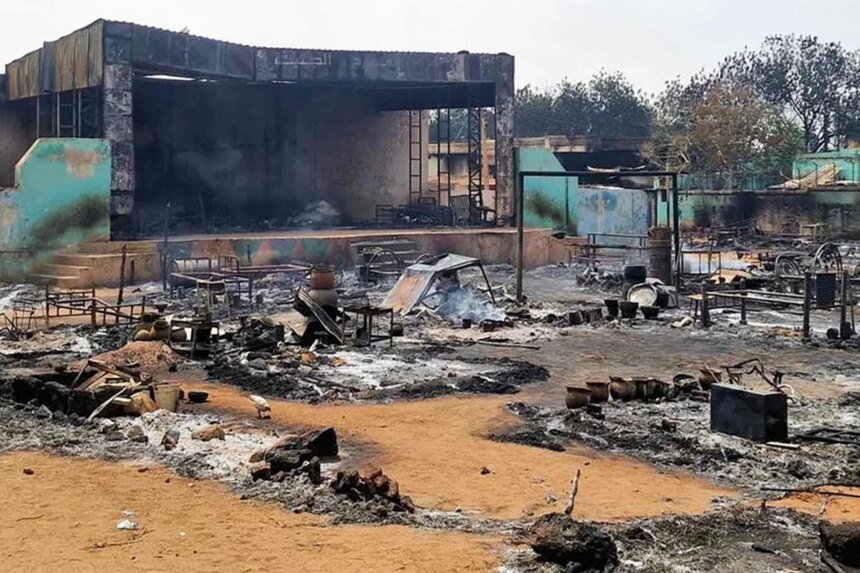
The charges relate to crimes committed in and around Khartoum between April 2023 and March 2025, during the period when the Rapid Support Forces were imposing their control over large areas of the Sudanese capital.
According to the complaint file, the victims were subjected to detention in conditions described as inhumane, including deprivation of food, drinking water, and health care, in addition to being subjected to beatings, burning, electric shocks, suffocation, and sexual violations, including rape and sexual slavery, while some detainees were forced to transport bodies from detention centers.
This case is the first recorded outside Sudan, after the trial of dozens of Rapid Support leaders began inside the country after the head of the Sovereignty Council, Abdel Fattah al-Burhan, issued a decision in August 2023 to form a committee to investigate the violations and crimes committed by the Rapid Support.