Published On 6/6/2026
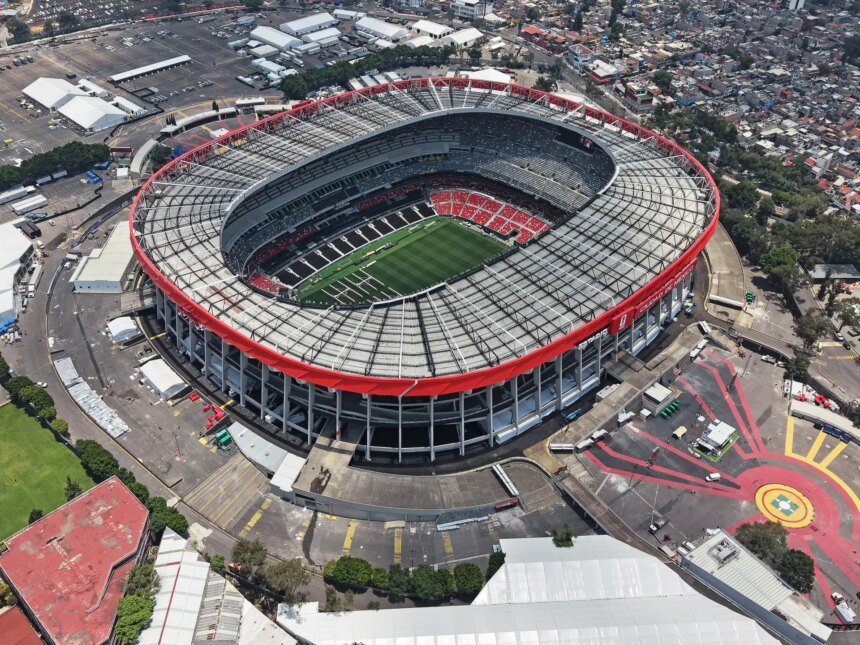
As Mexico prepares to host the world’s most prominent sporting event, the historic Azteca Stadium stands out as a unique case that challenges FIFA’s regulatory authority.
Behind the concrete walls of this edifice that witnessed the coronation of football giants, a silent economic battle is taking place, the heroes of which are booth owners seeking to sell their rights at astronomical prices via instant messaging applications, far from the corridors of the International Federation of Association Football (FIFA).
Read also
list of 2 itemsend of list
“Azteca”… Theater of legends and cradle of history
The current debate over the booths is inseparable from the stadium’s legendary status. “Azteca” is not just a concrete structure, but it is the only edifice in the world that has had the honor of hosting the World Cup final twice. The first was in 1970, when the “Black Jewel” Pele was crowned with the Brazilian national team in one of the greatest football performances, and the second was in 1986, when Diego Maradona painted his artistic paintings to lead Argentina to the title.

This ancient history adds an intangible “added value” to its booths. For today’s buyers, they are not just buying a space to watch a match, they are buying an entry ticket to a “sacred” place that witnessed the greatest moments of human sporting struggle. This emotional connection to history is the real driver behind “Frenzied Demand”; The wealthy do not only seek luxury, but also compete to reserve seats in stands that witnessed the glory of legends.
An island out of control
It is impossible to understand what is happening in Azteca without going back to the 1960s. While FIFA imposes absolute control over all host stadiums in the 2026 World Cup, Azteca remains a legal exception. Its construction was financed by selling private ownership contracts for the cabins and premium seats for a period of 99 years. This historic contract granted the booth owners – an elite of businessmen – sovereign rights that made them “partners” negotiating with FIFA from a position of strength, far from the usual regulatory protocols.
As the starting whistle approached, these cubicles were transformed into high-value investment assets traded on an unofficial black market. What is strange is that the matter is no longer limited to traditional ticketing platforms, but has moved to “WhatsApp”, where luxury cabins are displayed away from FIFA’s oversight.

Owners are facing exceptional demand from major companies and the wealthy, which has led to huge, unprecedented jumps in the pricing of these cabins. According to Bloomberg, a booth that can accommodate 27 people was offered for 27 million Mexican pesos (about 1.6 million dollars), an amount that covers attendance for only 5 matches during the tournament, which reflects the elite’s passion for excellence in a global event.
Legal and logistical challenges
This informal trading opens the door to legal and logistical risks that may disrupt the World Cup, as buyers through messaging applications face real risks. The absence of official contracts documented by FIFA makes tickets vulnerable to cancellation or not being recognized at the entry gates, which could turn the million-dollar investment into a huge loss.
Sales operations via WhatsApp remain far from security scrutiny, making it a fertile environment for fraudulent operations that may exploit buyers’ enthusiasm in the final weeks before the tournament.
This phenomenon raises questions about transparency and the ability to control the flow of audiences within the designated areas, as organizers find it difficult to reconcile their commitment to strict FIFA protocols with the “sovereign” rights held by booth owners.
The phenomenon of Azteca booths being circulated via unofficial platforms highlights a fundamental gap in the structure of organizing cross-border sporting events. It is not just a process of selling and leasing luxury assets, but rather an embodiment of the clash of interests between contractual property rights established in the decades of the 1960s, and the policies of unified regulatory dominance that FIFA seeks to implement to ensure a consistent experience for all fans in the 2026 World Cup.

Whose sovereignty?
This “gray area” in which booth owners operate presents regulators with a complex administrative challenge; The strict security requirements and centralized services imposed by the International Federation intersect with the owners’ legal independence.
These compartments remain “sovereign entities” within the football edifice, forcing the regulatory bodies to manage a delicate relationship based not only on tournament regulations, but also on highly complex legal and economic settlements.
Accordingly, the Azteca Stadium remains the most prominent organizational laboratory in this edition of the World Cup. It proves that the professional management of major sporting events does not depend only on technology and digital marketing, but also collides with the barriers of historical legacy and local legal obligations.
This case sets a precedent that may reformulate the terms of contracts in sports stadiums in the future, to ensure that the rights of historical owners are aligned with the requirements of sports globalization, ensuring that these ancient edifices do not turn into arenas for the “shadow economy” at the expense of the integrity and harmony of the global football competition.