
Published on 6/6/2026
|
Last update: 6/7/2026 00:59 (Mecca time)
In light of the verbal escalation between Beirut and Tehran, relations between the two countries are facing a new test, going beyond the limits of traditional diplomatic disagreement and reaching decision-making circles, with the exchange of direct messages between Lebanese President Joseph Aoun and Iranian Foreign Minister Abbas Araghchi.
This development brings back to the forefront the debate regarding the future of the relationship between the Lebanese state and Iran, and the limits of the Iranian political role and influence within Lebanon, in a country where internal divisions intersect with the calculations of the regional conflict.
This debate comes at a very sensitive regional moment, as the conflict arenas intertwine from Gaza to southern Lebanon, leading to the escalation of the horizon of direct confrontation between Iran on the one hand, and the United States of America and Israel on the other hand, making Aoun’s statements gain a dimension that goes beyond the internal framework, when he stressed that “Lebanon is neither an arena nor a negotiating card.”
Identifying the real enemy of Lebanon
On the other hand, Tehran responded through more than one official level, as Iranian Foreign Minister Abbas Araghchi denied the accusations directed at his country of using Lebanon as a pressure card, stressing that Iran was never the cause of the Lebanese crises.
Araqchi called on the Lebanese president to “save Lebanon from its real enemy,” in direct response to Beirut’s accusations that Tehran was exploiting the Lebanese arena in its negotiations with the United States.
Araqchi said, in a tweet on the The Iranian Foreign Minister continued, “If Lebanon were a bargaining chip for Iran, an agreement would have been reached a long time ago.”
“He sells the one who stands alone”
In the same context, Iranian Foreign Ministry spokesman Ismail Baghaei wrote through his account on the “X” platform in the Lebanese dialect, “He sells those who stand alone, buys those who stand against him, leaves those who support him, and follows those who stifle him.”
This came as part of the Iranian responses to the Lebanese President’s statements, in which he directly criticized Tehran during an interview conducted with him by CNN.
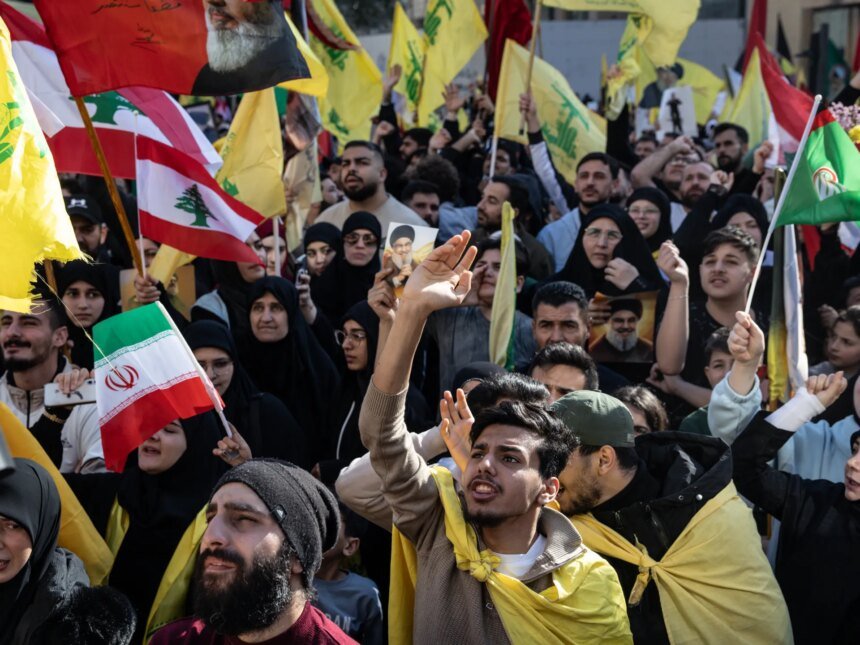
According to observers, the importance of this debate does not lie only in its intensity, but in its structural implications within Lebanon itself. Lebanon is not a unified political party in its approach to its relationship with Iran, but rather it is an arena in which disparate political forces intersect, led by the Shiite component, a large part of which is linked to strategic relations with Tehran, and at the forefront of which is Hezbollah, which constitutes one of the most prominent actors in the internal and regional equation.
This reality makes any official Lebanese position against Iran governed by delicate internal balances that prevent the dispute from turning into a comprehensive rupture or a radical reformulation of the relationship between the two countries.